
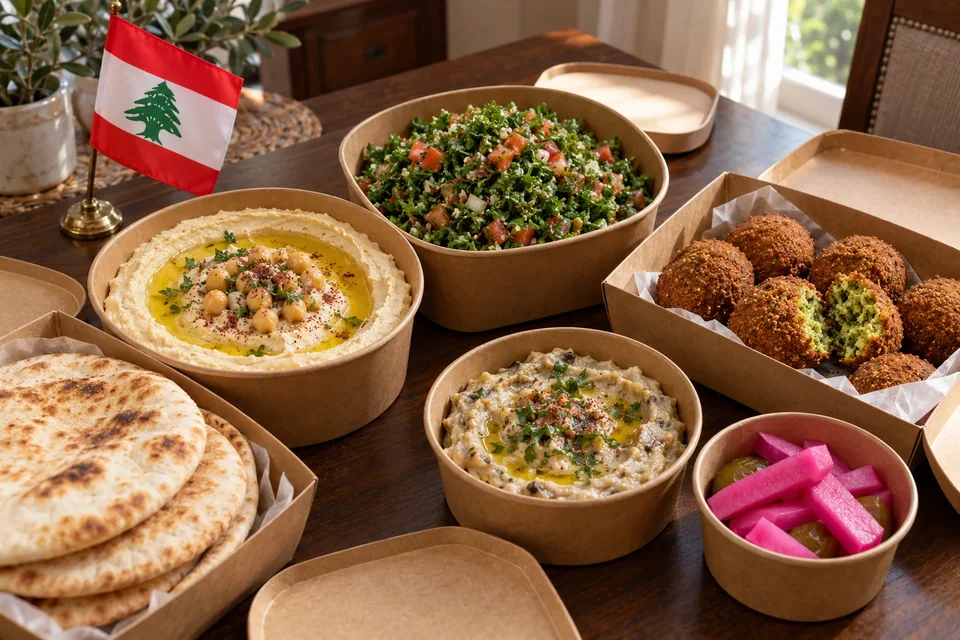
Lebanese food delivery: a table of small plates, ordered in
Lebanese food delivery is the service of bringing Lebanese dishes from a restaurant, bakery, caterer or home kitchen to your door. Its signature is the mezze: a spread of small cold and hot dishes laid out together, followed by grilled meats, rice and sweets. Lebanese food delivery means you can recreate that long, shared meal without the cooking.
The cuisine is built on parsley, mint, lemon, olive oil, garlic, sesame, chickpeas, aubergine, bulgur and flatbread. Meat is often grilled, but vegetable and legume dishes are so central that vegetarians usually find plenty to eat without asking for special arrangements.
Lebanese takeaway options cluster where there are large Lebanese communities, such as in London, Paris, Brussels, Montreal and parts of the United States, with specialist restaurants and bakeries that deliver. In smaller towns, a Middle Eastern or Mediterranean restaurant may offer a Lebanese section on its menu, which is worth reading carefully.
Lebanese mezze delivered: what to put on the table
A good order of Lebanese mezze delivered at home usually combines several of these: - hummus and moutabal (chickpea and smoked aubergine purées) - tabbouleh, a salad that is mostly parsley with tomato, bulgur and lemon - fattoush, a salad topped with crisp fried or toasted bread and sumac - vine leaves stuffed with rice, served cold - kibbeh, croquettes of bulgur and minced meat - sambousek, small pastries filled with cheese or meat - labneh, thick strained yoghurt with olive oil
Cold dishes are the most forgiving. Tabbouleh and fattoush should arrive with their dressing apart, and the bread for fattoush should be in its own bag. Fried pieces such as kibbeh and sambousek regain their crunch in a hot oven within about ten minutes.
For four people, a sensible order is four or five cold dishes, two hot ones, a grill and plenty of bread. Lebanese meals tend to be generous, and leftovers keep well in the fridge.
Shawarma delivery and Lebanese grills
Shawarma is meat roasted on a vertical spit and shaved into thin slices, usually chicken or beef or lamb, rolled in thin bread with pickles, tomato and garlic sauce (toum). Shawarma delivery, whether from a specialist or a general takeaway, works best when the wrap arrives open or loosely assembled, because a tightly rolled sandwich keeps steaming and softens.
Other staples of the grill are shish taouk (marinated chicken skewers, often with garlic sauce and chips), kafta (spiced minced lamb or beef on a skewer) and mixed grills sold as a plate. Platters are better for a group than individual wraps, and meat that has been grilled to order will always beat meat kept warm for an hour.
One practical tip: toum, the whipped garlic sauce, is the first thing people run out of. Ask for extra pots, and a lemon wedge or pickled turnips for balance.
Manakish, bread and the Lebanese bakery oven
Manakish (singular man’oushe) are round flatbreads baked with za’atar and olive oil, cheese, or spiced meat, and they are traditionally a breakfast and brunch dish. Lahm bi ajin is the thin meat-topped version. These breads are at their best straight from the oven, so a delivery that travels ten minutes is much better than one that travels forty.
Pitta, known in Lebanon as khubz, is eaten with almost everything and works as a spoon for dips. Keep it warm in a clean cloth, and refresh it in a dry pan if it hardens.
If you are planning a brunch order, za’atar manakish with labneh, olives, cucumbers and mint, plus a pot of tea, makes a complete table. Check with the baker whether the cheese varieties are made with animal or vegetarian rennet if that matters to you.
Lebanese dishes delivered hot: stews, rice and kibbeh
Beyond the grill, Lebanese dishes delivered from a home-style kitchen include slow-cooked recipes that suit delivery well. Examples include: - molokhia, a dish of finely chopped jute leaves, often served with chicken and rice - fasolia, green beans stewed with tomato and olive oil - mujaddara, lentils and rice topped with caramelised onions - kibbeh bil sanieh, baked kibbeh in a tray - stuffed courgettes or vine leaves cooked in a tomato or yoghurt sauce
Most of these taste better after resting and warm up in a pan with a splash of water. Mujaddara and the olive-oil vegetable dishes are served warm or cold and require nothing more than a serving dish. They are also good for guests who eat no meat, as long as the kitchen confirms that no meat stock has been used.
Knafeh, baklava and Lebanese sweets
Knafeh is a warm dessert of fine pastry or semolina over soft cheese, soaked in syrup with orange blossom or rose water, often eaten in a sesame bun in Lebanon. It does best when eaten very fresh, so if you order it, warm it for a few minutes in the oven. Baklava and maamoul (date or nut biscuits) travel easily and keep for days in a closed tin.
Fresh fruit, nuts and strong coffee flavoured with cardamom often finish the meal. Arak, an aniseed spirit diluted with water, is traditionally served with mezze, though alcohol delivery depends on local licensing and age checks.
Sweets are high in nuts, gluten, milk and sometimes eggs, so allergy information should be requested when ordering.
Allergens, halal meat and dietary needs
Sesame (tahini in hummus and many dressings), tree nuts (pine nuts, walnuts, pistachios), gluten (bread, bulgur, pastries), milk (labneh, cheese, yoghurt) and sometimes celery or mustard are common in this cuisine. Peanuts are not traditional but may be present in shared kitchens.
Many Lebanese restaurants serve halal meat, but others do not, and some serve alcohol alongside. If it matters to you, ask clearly. The same goes for vegetarian or vegan requirements: hummus, tabbouleh, fattoush, stuffed vine leaves and mujaddara are normally meat-free, whereas some rice dishes and pastries contain stock, lard or meat.
A Lebanese takeaway can explain how a dish is made, but cannot replace medical advice. Anyone with a serious allergy should discuss the order directly with the kitchen.
Checking a Lebanese takeaway before ordering
Look for a menu that names the dishes properly, offers some variety beyond the standard shawarma and says whether bread and sauces are made on site. Delivery area, opening hours and typical lead time for large orders should be stated clearly.
Questions that help: - Are cold dishes packed separately from hot ones? - Can the bread arrive warm in a separate bag? - Is there a mixed mezze platter for a larger group? - Which dishes can be made vegan on request?
A restaurant such as L’instant libanais in Paris, which lists chicken taouk, beef and chicken shawarma plates and a vegetarian mezze plate on a delivery platform, shows what a typical Lebanese menu for delivery looks like. For Lebanese food delivery in any city, a small trial order will tell you more than any description.
Frequently asked questions
What should a first Lebanese food delivery order include?
Hummus, tabbouleh or fattoush, a grilled dish such as shish taouk, warm bread and garlic sauce make a balanced meal. Add a hot pastry or kibbeh for variety.
Is Lebanese food mostly vegetarian?
Not entirely, but vegetable, legume and grain dishes are central to a mezze table, so vegetarians usually find a lot to choose from.
How do I keep shawarma from going soggy?
Ask for the filling and bread to be packed separately or the wrap left loosely rolled, and eat it quickly. A dry pan restores some crispness to the bread.
How many mezze dishes are enough for four people?
Four or five cold dishes, two hot ones and a grill with bread are a generous spread. Leftovers usually keep for a day or two in the fridge.