
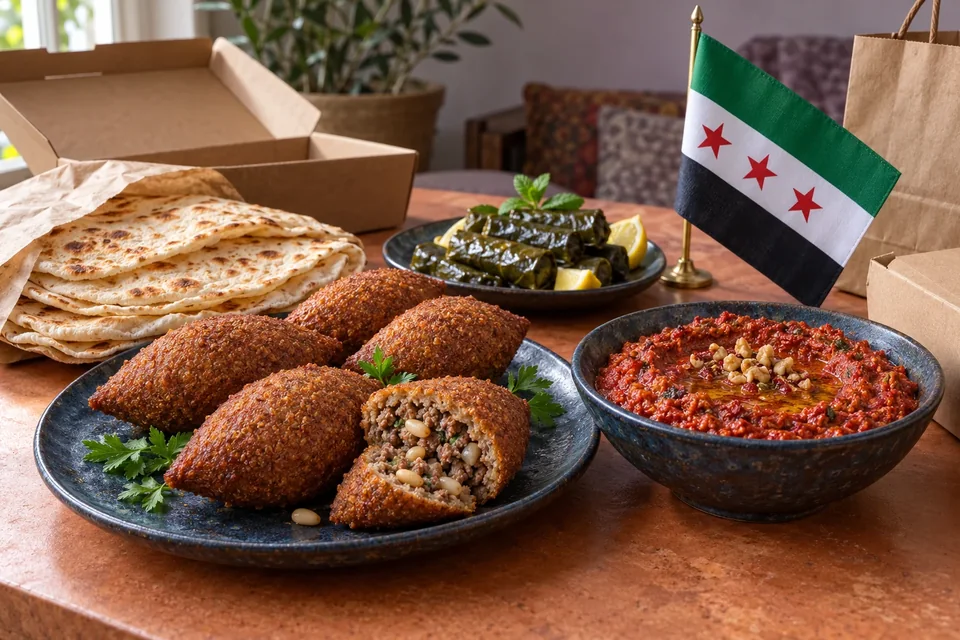
Syrian food delivery: patient cooking brought to the table
Syrian food delivery means having traditional dishes from Syria, prepared by a restaurant, caterer or home cook, brought to your home in containers made for travel. A typical order mixes small plates for sharing, grilled or simmered meat, fresh bread and pastries, and it rewards anyone who is happy to eat slowly and share.
Syria sat for centuries on trade routes, which is why spices from the east, dried fruit, grains, yoghurt, nuts and orchard fruit meet in one meal. The two great culinary reference points are Aleppo, known for bold, spicy cooking and its many kibbeh, and Damascus, usually described as more delicate, with fresh salads and sweets.
Many families keep their own versions of each recipe, so two Syrian takeaway menus rarely read the same. Syrian food delivery is therefore a chance to taste a regional or family tradition rather than a standard formula, particularly when the cook is from Aleppo, Damascus, Homs or Hama and says so.
Mezze from Aleppo and Damascus
Syrian meals delivered usually begin with a selection of starters. Classics include: - muhammara, a purée of roasted red peppers, walnuts and pomegranate molasses, strongly associated with Aleppo - hummus and moutabal, shared across the Levant - fattoush, the Damascene salad with crisp bread and sumac - yabraq, vine leaves stuffed with rice or meat - makdous, small aubergines preserved in oil and stuffed with walnuts and chilli
Olives, pickles, cheese and herbs complete the plate. Cold starters are well suited to Syrian food delivery because they tolerate the journey and sometimes improve after a few hours in the fridge. Keep dressed salads separate from bread until the last minute.
Syrian dishes delivered hot: kibbeh, kebab and slow-cooked mains
Aleppo is celebrated for the range of its kibbeh, croquettes or dumplings made from bulgur and meat. They may be fried, poached in a yoghurt broth (kibbeh labaniyeh) or filled with nuts and spices. Kebab karaz, meatballs cooked with sour cherries, is another dish tied to the city.
The wider menu includes charcoal grills, sfiha (small open pies of spiced mince), shish barak (meat dumplings in warm yoghurt sauce) and vegetable stews in tomato. Fatteh, a layered dish of crisp bread, chickpeas, yoghurt and hot butter, is eaten at breakfast and at dinner.
Yoghurt dishes need extra care when ordered in. Ask for the bread and any crisp topping to travel apart, and reheat the sauce gently so it does not split. Fried kibbeh recovers its crust in a hot oven.
Syrian bread, rice and sides for a home meal
Bread is part of nearly every bite. Flat khobz serves as plate, spoon and napkin; bakers may also supply discs topped with za’atar, cheese or spiced meat, best eaten hot. Rice is often cooked with toasted vermicelli, or with meat, almonds and pine nuts, and freekeh, a smoked young green wheat, appears in some festive dishes. Bulgur forms the base of salads and kibbeh.
For a Syrian meal delivered with its bread still pleasant, ask for it wrapped in paper rather than in a sealed tray, which traps steam. Sauces, especially garlic and mint yoghurt, should come in small pots. A kitchen that cares about these details tends to care about the rest.
Syrian sweets: baklava, maamoul and halawet el jibn
Syrian pastry travels beyond the country’s borders. Baklava is made from thin pastry, pistachios, walnuts or almonds and a light scented syrup. Maamoul are shortbread biscuits filled with dates or nuts. Halawet el jibn, a sweet cheese roll with cream and rose syrup, is closely linked with the city of Hama. Knafeh, hot cheese pastry with semolina and syrup, is best eaten warm, so it handles a long trip poorly and needs a few minutes in the oven.
Dry biscuits and many nut pastries keep for days in an airtight tin, which makes them the easiest part of any Syrian takeaway to send as a gift or share with neighbours who could not join the meal. Cardamom coffee and sweet black tea traditionally end the meal.
Reheating and food safety for a Syrian takeaway
A Syrian takeaway made with meat should arrive hot and be eaten soon after. If you are not eating at once, refrigerate the food within an hour and heat it until steaming hot all the way through before serving. Cold starters should remain in the fridge until the table is laid, and yoghurt or fresh-cheese dishes should not sit out for long.
Fried kibbeh crisps up in a hot oven, while sauced dishes warm up gently in a pan with a spoonful of water if the sauce has thickened. A few common-sense rules apply to every delivery: follow any use-by date, do not refreeze something that was thawed and do not reheat leftovers more than once.
Allergens, halal and special diets in Syrian cooking
Tree nuts are everywhere (walnuts in muhammara, pistachios in pastries, pine nuts in rice), as are sesame (tahini), gluten (bread, bulgur, pastry) and milk (yoghurt, cheese, ghee). Celery and mustard can appear in some recipes.
Mezze, stuffed vegetables, lentil dishes and salads suit vegetarians well. Many Syrian cooks use halal meat, but only a clear statement from the provider confirms that it meets your requirements, so ask. Anyone with a food allergy should tell the provider when ordering and ask how dishes are prepared; for medical questions, a doctor or allergy specialist is the right person to consult.
Finding Syrian home catering and what to ask
A trustworthy cook offering Syrian home catering, or a restaurant with a delivery menu, is happy to explain its recipes. Syrian food delivery works best when the person on the other end can describe each dish simply. Useful questions: - Which dishes are made in-house, and which are bought in? - Is the bread baked the same day? - Can the chilli be reduced for guests who dislike heat? - How much notice is needed for a menu for several people? - How is the food kept at temperature on the way?
Be cautious of enormous menus that mix Lebanese, Turkish, Greek and Syrian dishes without distinction. A cook who focuses on a short list tends to master it, and asking about the specialities of the cook’s home city often leads to the best dishes. In Paris, for instance, the restaurant Brocart lists its Syrian menu on a delivery platform, which is one example of how such kitchens now reach customers at home.
For celebrations, order Syrian meals delivered several days ahead: kibbeh and stuffed vine leaves take many hours to prepare by hand.
Frequently asked questions
How does Syrian cooking differ from Lebanese cooking?
They share many dishes, but Aleppo has its own specialities such as muhammara and cherry kebab, and the seasoning is often bolder. Ask the cook which dishes come from their home region.
Which Syrian dishes survive delivery best?
Cold mezze, kibbeh, stuffed vine leaves, stews and dry biscuits travel well. Crisp or melting dishes such as knafeh need careful reheating.
Are Syrian dishes spicy?
It depends on the cook and the recipe. Aleppo is known for hot, bold flavours, but chilli can usually be reduced when you order.
How far ahead should I order a full Syrian menu?
For a gathering or celebration, allow several days because some preparations are long. The provider will confirm its own lead time.