
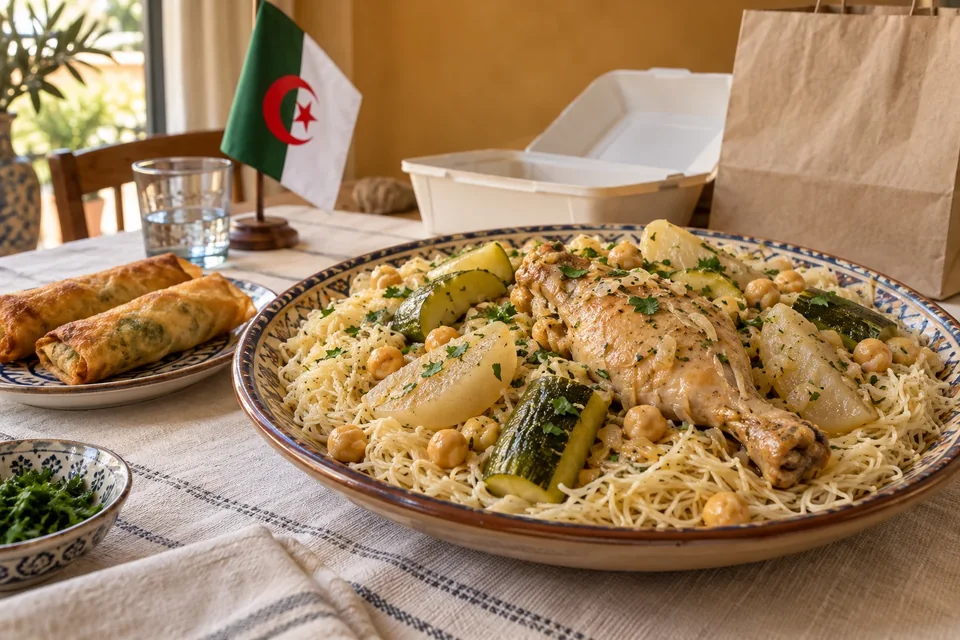
Algerian food delivery: regional dishes brought home
Algerian food delivery means having traditional dishes from Algeria, made by a caterer, restaurant or home cook, brought to your door in insulated or sealed containers. The repertoire falls into a few families: semolina and pasta dishes, soups, fried and baked pastries, stews and tajines, grills and sweets.
Regional identity matters a great deal. Algiers is known for rechta and chorba; Oran for garantita and karantika, chickpea flatbread dishes; Constantine for chakhchoukha and garlicky mtewem; Kabylie for couscous with whey and semolina flatbreads; the Aurès for wheat soups and traditional breads.
That diversity is why two Algerian meals delivered by different cooks may look quite different, even when they carry the same name. Asking where the cook is from is therefore one of the most useful questions you can put.
Couscous, rechta and chakhchoukha: semolina and pasta dishes
Algerian couscous comes with meat and vegetables, with fish on the coast, or as a sweet version with cinnamon and raisins. The sauce is red in many families, especially in the east and centre of the country, and white with chickpeas in others.
Rechta is a festive dish of fine steamed noodles under a broth of chicken, turnip and chickpeas scented with cinnamon. Chakhchoukha, an eastern speciality, uses torn semolina flatbread soaked in a spicy lamb sauce. Mesfouf is fine semolina mixed with dried fruit and curdled milk, served warm.
These dishes should reach you in two or three containers: the semolina or noodles in one, the sauce in another, and the meat with the vegetables in a third. Combine them just before eating so the base stays tender instead of turning to paste.
Algerian takeaway starters: chorba, bourek and mhadjeb
Chorba frik, a soup of crushed green wheat, meat, tomato and herbs, is the best-known starter and is closely linked with Ramadan, though it is also eaten in winter. Some households prefer white chorba or chorba beïda, thickened with egg and lemon.
Bourek is a fried pastry rolled like a cigar and filled with minced meat, cheese, tuna or potato; brik, dolma (stuffed vegetables), chakchouka (peppers, tomato and egg) and mhadjeb, semolina crêpes stuffed with tomato and onion, complete the starter table.
An Algerian takeaway starter list is short on logistics: put soups in sealed pots and warm them gently with a spoonful of water. Reheat bourek in a hot oven, not a microwave, so the pastry keeps its crunch.
Algerian dishes delivered hot: tajines, grills and stews
Algerian tajines are not the same as Moroccan ones. Tajine zitoune pairs chicken with olives in a pale sauce; tajine el hlou, a festive sweet and savoury dish, combines lamb with prunes, apricots and almonds; tajine jben is a baked chicken and cheese dish bound with egg.
Skewers, merguez sausages and grilled chicken are popular in summer, and they travel well when packed hot. Roast chicken with olives or potatoes, white bean stew (loubia) and chickpea stews complete the list.
When ordering Algerian dishes delivered for a group, ask how the cook seasons the sauce: sweet or hot chilli, cumin, caraway or coriander all appear in different households. The better you describe the heat you want, the closer the result will be to what you hoped for.
Pastries and gifts: baklawa, makroud and griwech
Algerian pastry is central to weddings and religious feasts. Baklawa is the thin pastry and nut classic; makroud is a diamond of semolina stuffed with dates or almonds, fried or baked; griwech are honeycombed fried biscuits with honey and sesame; zlabia are syrupy fried spirals; qalb el louz is an almond cake; and dziriettes are almond-paste sweets scented with orange blossom water.
Pastries are normally sold in tasting boxes and keep for several days in a closed container in a dry place. Many families serve them with mint tea or coffee. A carefully composed box makes a better gift than a standard assortment, and provides a gentle way of introducing Algerian food delivery to friends who have never tried it.
Portions, reheating and keeping food safe
Ask first that the components be packed separately. When the food arrives, warm the sauce on a low heat, add the meat and pour everything over warm semolina or noodles. Bourek and brik regain their crunch on a rack in a hot oven. Chorba should simmer for a few minutes but never boil hard. Traditional breads such as kesra and matlouh warm well in a damp cloth in the oven.
Cooked dishes go in the fridge soon after the meal and should be eaten within a few days, following the use-by date. Do not refreeze a dish that has been thawed, and do not reheat the same leftovers repeatedly. Dishes with raw egg, minced meat or poultry deserve extra vigilance.
Quantities deserve thought: festive semolina dishes are often underestimated, so leave a margin when feeding a crowd.
Allergens, halal meat and vegetarian options
Gluten is everywhere in Algerian cooking: semolina, rechta noodles, brik pastry and bread. Eggs appear in pastries and baked dishes, nuts in tajine el hlou and sweets, sesame in griwech and breads, and milk in the whey served with some couscous and in cheese fillings.
Meat at specialist caterers is usually halal, but this is a promise worth checking, ideally by asking where the butcher is. Vegetarians can choose vegetable couscous, chakchouka, mhadjeb and meat-free soups, provided the broth is not made from meat.
Anyone with an allergy or medical diet should inform the caterer at the time of ordering and ask a doctor about their specific needs.
Algerian home catering: choosing a cook and the right questions
To tell a genuine Algerian home catering service from a standardised kitchen, try these habits: - ask which region the cook comes from - confirm that dishes are prepared to order or on the same day - ask which dishes are seasonal - request a photo, or taste a small portion before a large order - confirm lead times for rechta, mechoui and other festive dishes
Common mistakes are ordering too many fried items or underestimating the semolina for a festive couscous. Plan a margin and arrange to receive the order so hot dishes do not wait.
Algerian meals delivered are not offered everywhere. Some businesses concentrate on collection rather than delivery. Chez Tante Farida, listed in a Paris restaurant guide as an Algerian street-food address in the 20th arrondissement, sells dishes such as bricks, mhajeb and couscous to eat in or take away, which is a useful fallback when delivery is not available where you live.
Frequently asked questions
What is the difference between rechta and couscous?
Rechta is made of fine noodles under a chicken, turnip and chickpea broth, while couscous is steamed semolina. Both are festive dishes.
How do I reheat a delivered bourek?
Place it on a rack in a hot oven for a few minutes. A microwave softens the pastry and removes the crunch.
Can chorba be frozen?
Cooked soups usually freeze well, but ask the provider whether the dish was frozen before delivery, since a thawed product must not be frozen again.
Is Algerian food delivery always halal?
Specialist caterers very often use halal meat, but it is not automatic. Check before ordering and ask where the meat comes from.