
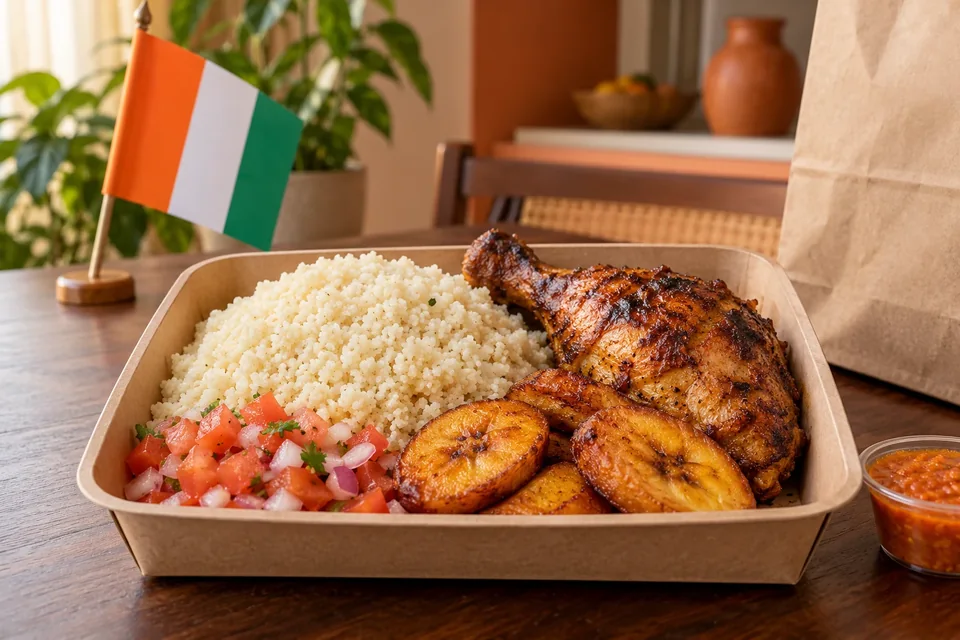
Ivorian food delivery: from the maquis to your kitchen table
Ivorian food delivery means having dishes from Côte d’Ivoire cooked by a restaurant, a maquis, a caterer or an independent cook and brought to your home. The cuisine pairs starches such as cassava, yam, plantain and rice with simmered sauces, marinated grills and fish, flavoured with plenty of onion, tomato, chilli and ginger.
The country runs from the lagoons around Abidjan to the northern savannah, and its table reflects that spread. Lagoon peoples such as the Ebrié made attiéké famous, the Baoulé are tied to kedjenou, and cooks in the north bring grilled meats and leaf sauces.
The maquis, an informal and often open-air eatery, is where this food became everyday. Its style, with grilled fish or chicken, onion-and-tomato relish and a plate of starch, inspires most Ivorian takeaway menus today.
A first Ivorian food delivery order can be simple: one grilled item, one starch and a fresh tomato and onion salad. Because the dishes are built around sharing, it is easy to scale the order up for a family or a few friends. Ask whether chilli is cooked into the dish or served beside it, as Ivorian kitchens differ widely on this point, and request the sauce separately if you are cooking for a mixed group.
Attiéké and garba: cassava semolina with fried tuna
Attiéké is fermented cassava, grated, pressed and steamed into a light, slightly sour grain. It is eaten with grilled or fried fish, chicken, sliced tomato, raw onion and chilli sauce. Garba, born in the working-class districts of Abidjan, combines attiéké with fried tuna and is the street meal everyone knows.
Attiéké stays good for a few hours after delivery but clumps as it cools. Steam it in a colander over a pan, or microwave it with a spoonful of water, and it loosens. Ask for the toppings in separate tubs, since frying oil and tomato juice make the grain soggy if mixed in early.
Garba is cheap, quick and filling, which explains why it travelled from Abidjan street stalls to delivery apps in several countries. At home, a squeeze of lime, sliced raw onion and a spoonful of chilli sauce bring it back to life, and a cold drink balances the oil from the tuna.
Braised chicken, braised fish and choukouya: grills on the road
Grills lead the menu. Braised chicken is marinated with onion, chilli and spices before meeting the embers. Braised fish, often tilapia, carp or Nile perch depending on what is on offer, comes whole. Choukouya is spiced grilled meat, sometimes lamb or beef, served with raw onion and chilli.
These dishes cope with transport, but lose their crispness in a steamy box. Request vented packaging or paper wrapping, and plan a few minutes in a hot oven or a pan before serving. Whole fish stays moist but has bones, so take care with children.
A good Ivorian caterer will tell you the cooking method, the marinade and the approximate time since the grill was lit. Pieces cooked over charcoal carry smoke flavour that a household oven cannot fully copy, so adjust your expectations and do not judge the dish only by what comes out of your own reheating.
Kedjenou, sauce graine and foutou: stews that improve overnight
Kedjenou is chicken, guinea fowl or sometimes fish cooked with vegetables in a sealed clay pot that is shaken now and then. A tightly lidded casserole at home gives a similar result. Sauce graine is made from palm nuts with meat or smoked fish; other staples are clear sauce, okra sauce and leaf sauces made with sweet potato, spinach or cassava leaves.
These sauces go with foutou (pounded plantain or yam), placali (fermented cassava paste) or rice. Delivered Ivorian dishes of this kind reheat well and often taste better the next day. Pack the starch away from the sauce and warm it with steam.
Leaf sauces are particularly rewarding for Ivorian meals at home, since they contain vegetables, oil, fish or meat in one pot and keep well in the fridge. If you have never tried them, begin with the sauce that uses spinach or sweet potato leaves, which tends to be gentler than the palm-nut version.
Alloco, plantain and the small plates
Alloco is ripe plantain cut into pieces and fried, eaten with a spicy onion and tomato sauce, with egg, fish or chicken. It is popular but the least robust item in any delivery, since the sugar caramelises and the pieces go soft quickly. Aim to eat it within fifteen to twenty minutes.
Classic pairings include alloco with braised fish, a Sunday plate of rice and sauce graine, and fish soup or pap for a cold day. Drinks include bissap (hibiscus), gnamankoudji (ginger juice) and bouye (baobab fruit juice), best kept cold.
Plantain is also sold boiled, which survives the journey better than fried slices. If your order includes both, eat the fried portion first and keep the boiled one for later.
Ivorian meals at home: portions, reheating and fridge time
Ivorian meals at home may be ordered as single portions, but sharing dishes such as a whole fish with attiéké, a whole chicken or a large pot of sauce are designed for two to four people. Ask for weights or the number of pieces rather than a vague label.
For reheating: steam or microwave attiéké and foutou with a little water; warm sauces gently in a covered pan, stirring; give grills a few minutes in a hot oven, and only once. Refrigerate leftovers within two hours and eat them within two days. Do not reheat food a second time. Braised fish and seafood spoil fastest, so deal with them first.
Peanut, smoked fish and gluten in delivered Ivorian dishes
Sauces may include peanut, smoked or dried fish, shellfish, celery and mustard. Fritters and bread bring gluten. Attiéké itself contains no gluten, but it comes with fried dishes cooked in shared oil, so the restaurant must confirm that a meal is gluten-free.
Plenty of African restaurants serve halal meat, though not all do. If it matters, ask where the meat comes from and whether there is a certificate. For severe allergies or medical diets, speak to a doctor or dietitian and ask the restaurant to put its answers in writing.
Picking an Ivorian caterer and dodging typical mistakes
A trustworthy Ivorian caterer describes each dish, says whether attiéké is included, states whether the fish is fresh or frozen and can offer a milder chilli. It also knows what travels: kedjenou does, while alloco on a forty-minute drive does not.
Check the fish species and the stated weight, since braised fish covers very different products. Ask for sauces on the side, mention allergies before paying and, for a party, book a delivery slot with ten minutes of margin. A cook working from home can sometimes prepare kedjenou close to the traditional method.
The usual slips with Ivorian food delivery are ordering fried food for a long journey, skipping the attiéké reheating step, and expecting charcoal flavour from a chicken warmed in a microwave.
Frequently asked questions
What is garba and can it be delivered?
Garba is attiéké served with fried tuna, a favourite Abidjan street dish. Many Ivorian kitchens will deliver it; ask for the fish and grain in separate containers.
Does attiéké reheat well?
Yes. Steam it or microwave it with a spoonful of water, then fluff with a fork. Keep fried toppings and sauces in separate tubs until serving.
Is kedjenou spicy?
It is usually fragrant and moderately hot, depending on how much chilli the cook adds. Ask for a milder version if you are feeding children.
Will braised chicken stay crisp when delivered?
Only partly. Steam in the box softens the skin, so ask for vented packaging and finish the chicken for a few minutes in a hot oven or frying pan.