
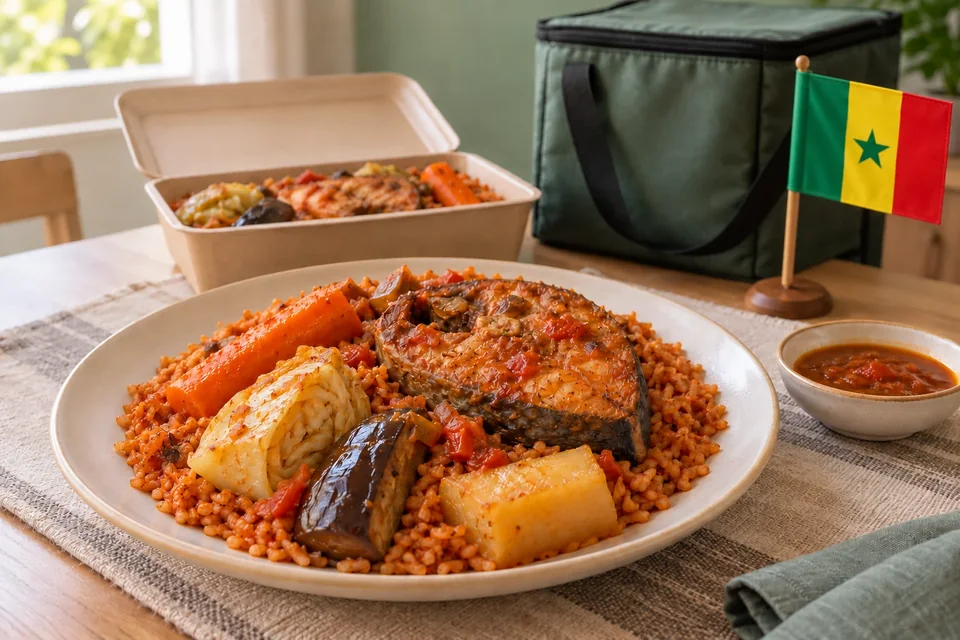
Thieboudienne, yassa and mafé: the plates people ask for first
Thieboudienne (also written thieb) is the national dish: broken rice cooked in tomato sauce with fish stuffed with a parsley and garlic mix, plus cabbage, carrot, cassava, aubergine or sweet potato and often a touch of tamarind.
Yassa, which comes from the Casamance, pairs grilled chicken or fish with a mass of onions cooked down with lemon and mustard. Mafé is a meat stew in peanut paste, served over white rice. Among the other favourites are dibi, grilled lamb chopped on a board and served with onions and mustard; soupou kandia, an okra and palm oil sauce with smoked fish; and thiou, a lighter meat or fish stew.
On the side, expect pastels (fish-filled fritters), fatayas (small savoury pies) and accras. For drinks and afters, bissap (hibiscus), ginger juice, thiakry and baobab-fruit juice called bouye appear on many menus.
What survives the journey in a Senegalese takeaway
In any Senegalese takeaway, slow-cooked dishes are the best travellers. Thieboudienne keeps its soft texture in sauce, and mafé thickens without losing its flavour. Yassa also holds up as long as the onions are boxed apart from the grilled meat, otherwise the skin goes soft.
Fried items are the weak point. Pastels, fatayas and accras are at their finest in the half hour after cooking, and steam trapped in a lidded tub will make the dough limp. Ask for a vented container or kitchen paper, then crisp them in a hot oven rather than a microwave.
Grilled fish should arrive without extra moisture and with the bones pointed out. Dibi stays fairly well but dries if reheated too long, so use a frying pan with a splash of water or oil for a short time.
Reading an order: rice, protein, vegetables and condiments
A Senegalese meal at home normally has four parts, and it helps when the order form separates them: the rice (white, red or sauced), the protein (fish, chicken, lamb or beef), the vegetables cooked in the pot and the condiments.
Many kitchens put chilli sauce, onion-and-mustard relish or the pepper paste known as kani in a small pot, so guests choose their own heat. The prized crust at the bottom of the pan, xooñ, is a bonus that some cooks add to the box. The vegetables are part of the dish, not a garnish, so a family should not count them as optional.
Fermented and dried ingredients, such as guedj (fermented dried fish), nététou (fermented locust bean seeds) and yeet (dried sea snail), have strong aromas. They belong in the recipe, but if you are unsure, ask whether they are included rather than discovering them when you open the lid.
Senegalese meals at home: portions, reheating and storage
Delivered Senegalese dishes such as thieboudienne often arrive in single boxes or in a family tray. For several people, a large shared tray is cheaper and closer to the spirit of the meal.
To reheat, put rice in a covered pan with a spoonful of water over low heat, or microwave it covered, stirring halfway. Warm fish gently so it does not fall apart. Crisp fritters belong on a rack in a hot oven.
Rice and fish should not sit at room temperature. Put leftovers in the fridge soon after the meal, eat them within two days and make sure they are piping hot all the way through. Rice that cools slowly gives bacteria a comfortable home, which is why it should not linger on the table.
Plan Senegalese meals at home around the appetite of the group, because leftovers of fish and rice are the first things to cause trouble.
Peanuts, fish, mustard and halal: what to ask
Peanuts are central to mafé and domoda; fish and shellfish appear in thieboudienne and smoked-fish sauces; mustard comes with yassa and dibi; and wheat flour is found in pastels, fatayas and fritters. When one fryer is used for several items, cross-contamination is possible.
Most restaurants offering Senegalese food delivery use halal meat, since the country is overwhelmingly Muslim, but never assume. Ask where the meat comes from. Alcohol should not be in the recipes, though mixed restaurants can differ.
For frail people, young children and pregnant women, avoid raw or lightly cooked fish and take out the bones. Anyone on a medical diet should check with a doctor or dietitian before ordering.
Choosing a Senegalese caterer and avoiding common mistakes
A dependable Senegalese caterer lists what is in each dish, says whether rice is included, adjusts the chilli and can tell you how soon the food should be eaten. A menu with Wolof names and a plain explanation of each one is a good sign.
Ask whether the fish is fresh or frozen and which species it is (thiof, bream or grouper, depending on season). Check how many portions a tray really holds. Give allergies at the time of ordering.
Typical errors in Senegalese food delivery are ordering too many fried items for a long drive, ignoring the sauces packed on the side, and expecting dibi from a kitchen that does not grill lamb. If the nearest restaurant does not deliver, an independent cook may prepare a dish to order, with a longer wait but often a result closer to family cooking.
Ndogou, naming days and Friday dishes: occasions to order
During Ramadan, the evening ndogou often begins with dates, curdled milk, Touba coffee spiced with grains of Selim and fritters before the main course. Caterers get a flood of orders for the same hour, so book several days ahead.
Family occasions are the other peak: naming ceremonies, weddings and reunions. For a group, people usually order a big dish of rice, meat on the side, starters and drinks, with the delivery time set before the guests arrive. Friday, the day of congregational prayer, is also a traditional day for sharing one large dish.
For friends trying Senegalese food delivery for the first time, a mixed order works well: one rice dish, one mafé and a few pastels, then a bolder choice next time.
Frequently asked questions
Which Senegalese dish is easiest to have delivered?
Thieboudienne and mafé travel best, because both are slow-cooked and stay moist in sauce. Fried snacks are the most fragile and should be eaten within half an hour.
Is yassa always spicy?
No. Its character comes from onions, lemon and mustard rather than heat. The chilli is usually in a side pot, so you can add as much as you like.
How do I reheat thieboudienne without drying it out?
Use a covered pan over low heat with a spoonful of water, or a covered dish in the microwave, stirring halfway. Warm the fish gently and separately if you can.
Should I worry about bones in delivered fish?
Yes, particularly with children and older people. Fish is often cooked whole or in thick pieces, so check each portion and remove the bones before serving.