
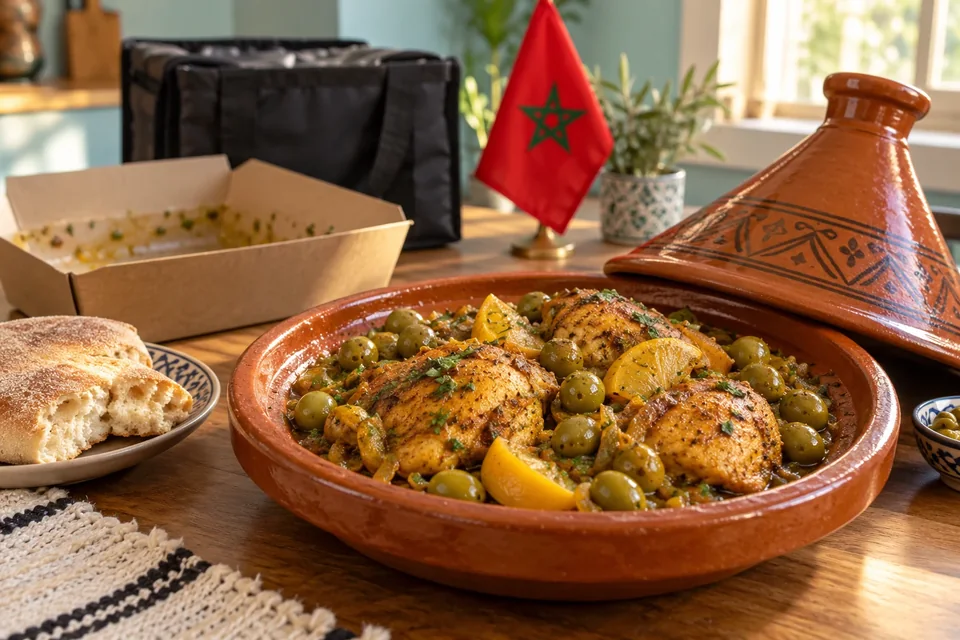
Moroccan food delivery: slow cooking in a box
Moroccan food delivery means ordering dishes from Moroccan cuisine, cooked by a restaurant, caterer or home cook, and having them delivered or collected for you to eat at home. The core repertoire is tagines (slow-cooked stews named after the conical clay pot), couscous with vegetables and meat, savoury pastries, soups and a table of cooked salads, followed by mint tea and pastries.
The flavours come from ras el hanout and other spice blends, preserved lemon, olives, saffron, ginger, coriander and cumin, with dried fruit and nuts adding sweetness to the meat. It is a cuisine of long, gentle cooking, which is exactly why it suits being carried.
The reach of Moroccan food delivery is wide. Large Moroccan communities in France, Belgium, the Netherlands, Spain, the UK and Canada keep restaurants, caterers and pastry makers busy, and many offer a Moroccan takeaway service for family occasions and weekend meals.
Tagine delivery: what to expect from the clay pot
A tagine delivery usually comes in a sealed dish or container rather than the clay pot itself. Typical recipes include chicken with preserved lemon and olives, lamb with prunes and almonds, beef with vegetables, and kefta (spiced meatballs) with egg in tomato sauce. A vegetable tagine with chickpeas and seasonal vegetables is a good option for those who eat no meat.
Because the dish is stewed, reheating is easy: warm it gently in a covered pan or a low oven, adding a spoonful of water if the sauce is too thick. Avoid boiling hard, which toughens the meat. Bread (khobz) is the usual cutlery, so ask for a few extra rounds.
Tagine tastes better after a rest. A tagine delivered at lunchtime and eaten in the evening is often better than one eaten straight away.
Couscous delivery: grains, broth and vegetables
Couscous is steamed semolina, traditionally served on Fridays and for celebrations. In Morocco it is often topped with seven vegetables, such as carrot, courgette, turnip, cabbage and pumpkin, with chickpeas, caramelised onions and raisins ("tfaya") on top. Meat can be lamb, beef, chicken or merguez sausage.
For couscous delivery, the grain, the broth and the vegetables should travel in separate containers. If everything is packed together, the grain soaks up the liquid and turns heavy. Steam the semolina over simmering water for a few minutes, or sprinkle it with a little hot water and fluff it with a fork, then pour the broth over at the table.
Ask whether the grain is hand-rolled or instant: the first is a mark of care but needs longer notice.
Pastilla, briouats and Moroccan starters
Pastilla (also spelled bastilla) is a pie of very thin pastry layered with spiced pigeon or chicken, almonds, eggs and cinnamon with a dusting of sugar. Seafood versions also exist. It is a dish for special occasions, and a good caterer will ask for notice. Briouats are small triangular or cigar-shaped pastries filled with cheese, mince or almonds, fried or baked.
Reheat them in a hot oven rather than in the microwave so the pastry stays crisp. Cooked salads such as zaalouk (aubergine and tomato), taktouka (peppers and tomato) and carrot with cumin are served cold and deliver extremely well. They make an easy starter for a group of any size.
Harira, Ramadan dishes and festive orders
Harira, a tomato soup with lentils, chickpeas, herbs and sometimes vermicelli and meat, is the soup most associated with breaking the fast during Ramadan, served with dates and chebakia, fried honey-sesame pastry. Caterers often receive heavy demand in this period, so order early.
Moroccan meals delivered for a celebration, such as a wedding anniversary or Eid, may include several tagines, a couscous, pastilla and trays of pastries. Large orders need lead time, and asking for a written list of dishes and quantities avoids confusion.
Other festive dishes include mechoui, slow-roasted lamb, and tangia, a Marrakech speciality of meat cooked slowly in a clay jar with spices and preserved lemon. Both are best discussed directly with the cook.
Moroccan food delivery for dessert: pastries and mint tea
Moroccan pastries use almonds, honey, sesame, orange blossom and cinnamon. Gazelle horns (kaab el ghzal) are crescent-shaped almond pastries; sellou is a crumbly mix of toasted flour, almonds and sesame; briwat are honey-soaked fried triangles; msemen and baghrir are pancakes served with honey and butter at breakfast.
Any Moroccan takeaway worth ordering from will offer sweets too. Mint tea, prepared with green tea, fresh mint and often a lot of sugar, is poured from height into small glasses. If you order it, make sure that the pot or a flask arrives hot. Dry pastries keep for several days in a closed tin, which makes them ideal gifts.
Nuts, sesame, gluten, eggs and milk appear in many of these sweets, so list your allergies when you place the order.
Halal meat, special diets and allergens in Moroccan meals delivered
Most Moroccan restaurants and caterers use halal meat, though a business that says so in writing is more reliable than an assumption. Pork is not part of traditional Moroccan cooking, but ask about merguez and other sausages in a mixed order.
Vegetarian and vegan eaters can choose vegetable couscous, vegetable tagine, cooked salads, harira without meat and olives with bread, provided the broth is vegetable-based. Broths often contain butter (smen, a fermented butter) or meat, so confirm this before ordering vegetable couscous.
Common allergens include gluten (couscous, bread, pastry), nuts (almonds in tagine and sweets), sesame, eggs, milk and celery. Cross-contact is possible, and personal medical advice belongs with a doctor.
Choosing a Moroccan caterer: practical checks
A good Moroccan caterer describes its dishes by name and by region, explains what is made fresh and gives clear delivery or collection information. Some, like Mansouria in Paris, run a takeaway menu where customers phone or text an order and collect it, showing that not every provider offers a van and an app.
Ask these questions before paying: - Are the dishes cooked on the day of delivery? - How are couscous, broth and meat separated? - What is the minimum order and the notice for pastilla? - How many people does one portion feed? - Are halal certificates or statements available?
A trial order of one tagine and one couscous for two people will show portion size and packaging before you commit to a larger Moroccan food delivery for a family gathering.
Frequently asked questions
Can a tagine be reheated safely?
Yes, if it is refrigerated promptly and warmed until steaming hot all the way through. Heat it gently in a covered pan or low oven and do not reheat it more than once.
Why should couscous be delivered separately from the sauce?
The semolina absorbs liquid and turns heavy if packed with the broth. Separate containers let you steam the grain and pour the sauce over at the table.
Is Moroccan food halal?
Most Moroccan restaurants use halal meat, but practice varies. Ask the caterer to confirm in writing or by phone.
Do I need to order pastilla in advance?
Usually yes, because it is made by hand with delicate pastry. The caterer will tell you how much notice it needs.