
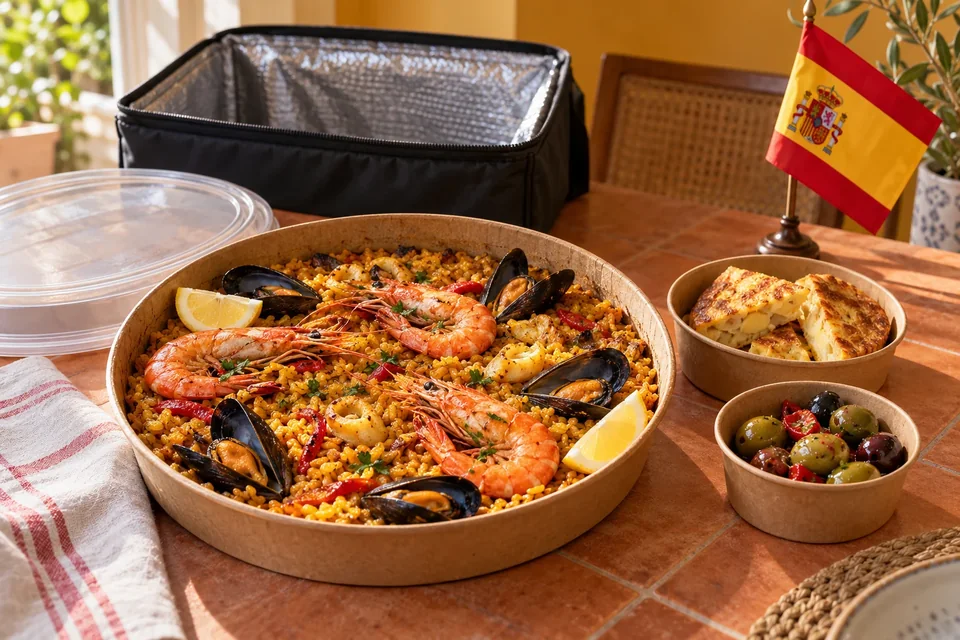
Spanish food delivery: a meal made for sharing
Spanish food delivery means ordering dishes from Spain, from a restaurant, caterer or specialist delicatessen, and eating them at home: tapas, raciones, paella, tortilla, cold soups, slow stews, cured meats and sweets. It appeals because the cuisine is built for sharing, with several small plates set in the middle of the table.
That habit of grazing explains the popularity of Spanish meal delivery. A board of croquetas, tortilla, padrón peppers, jamón and manchego comes together in minutes with no last-minute cooking, which makes a night in with friends or a match on the television easy to organise.
Spain is also a country of strong regions: Andalusia, Catalonia, the Basque Country, Galicia, Castile and Valencia. With Spanish food delivery, the dishes you receive change with that geography, and a supplier who states where each recipe comes from is usually a good sign.
Tapas delivery: croquetas, tortilla and patatas bravas
Tapas are small portions, hot or cold, designed to go with a drink, while raciones are larger plates for sharing. To make the trip, favour those that do not suffer from waiting:
- Tortilla española: a thick potato omelette, lovely warm or at room temperature.
- Croquetas: crumbed béchamel with ham or chicken, which recover their crunch in the oven.
- Patatas bravas: fried or roasted potatoes with a spicy sauce, best delivered with the sauce on the side.
- Gambas al ajillo: garlic prawns that must be eaten fast.
- Pulpo a la gallega: Galician-style octopus with olive oil and paprika.
- Pimientos de Padrón: small fried green peppers, a few of which are hot.
Fried tapas delivery tends to go limp in a closed tub, so ask for a vented box or plan a quick blast in the oven before serving.
Paella delivery: rice, stock and socarrat
Paella was born in the region of Valencia. The Valencian recipe combines short-grain rice, chicken, rabbit, flat green beans, sometimes snails, saffron, paprika and olive oil. A mixed paella adds seafood, a marisco version concentrates on the sea, and fideuà swaps the rice for short noodles.
Rice keeps cooking while it is hot, so Spanish food delivery of paella works best in a wide, shallow dish covered loosely enough to let steam escape. Reheat it in a frying pan with a splash of stock or water.
Some caterers cook the paella on site in a big gas pan; others deliver it ready to serve. State the number of guests, because portions depend on the pan size, and ask whether the seafood is fresh or frozen and where it comes from.
Spoon dishes, cold soups and slow stews
Spanish cuisine has a whole family of spoon dishes that travel perfectly and sometimes improve with a rest: cocido madrileño with chickpeas, fabada asturiana with white beans and chorizo, lentejas, callos, rabo de toro and the Basque marmitako of tuna and potato.
Andalusian gazpacho and Córdoba’s salmorejo, cold tomato soups, are summer allies. They arrive in bottles or jars, chilled, and should be served very cold. Sauces such as alioli need strict temperature control, since some versions are made with raw egg.
Pulse-rich and sauce-rich dishes reheat gently in a saucepan. Add a little water if the stew has thickened on the way.
Jamón, cheese and tinned fish from Spanish delicatessens
Spanish delis sell cured hams (ibérico, serrano), chorizo, cheeses like manchego, mahón and idiazábal, tinned fish, peppers, olives, olive oil and wine. These keeping products are ideal for building a spread at home.
Ham tastes best sliced at the last minute and served at room temperature. Pre-sliced ham should be kept cold and eaten soon after opening. Labels explain the breed and origin, so take a moment to read them.
A few specialists send hampers of aperitif foods, a solid base for anyone who wants Spanish dishes delivered cold, with no cooking at all. A board built from these items takes ten minutes, needs no hob and suits a crowd where tastes differ, which is why many households order one alongside a hot dish such as a stew or a tray of rice. Add bread, a bowl of olives and something fresh, such as tomatoes or a green salad, to balance the salt and richness.
Spanish desserts: crema catalana, churros and turrón
Crema catalana with its caramelised top, Santiago almond tart, flan, arroz con leche and churros with hot chocolate make a varied dessert list. Turrón, an almond nougat, and polvorones are staples of the festive season.
Creamy desserts need to stay cold throughout the journey and are best served in individual pots. Churros should be eaten straight after frying, so collect them yourself or crisp them in the oven. Santiago tart is flourless and travels well, but it contains nuts.
On the drinks side, sangria made without excess, Spanish wine and horchata, a tiger-nut drink free of dairy but not of calories, all pair with Spanish food delivery. Alcohol deliveries usually involve an age check.
Allergens and precautions with Spanish dishes
Shellfish, fish, eggs, gluten, milk and nuts appear throughout Iberian cooking: prawns, octopus, squid, croqueta béchamel, almonds in the Santiago tart and bread under many tapas. Anyone using Spanish meal delivery with an allergy should insist on the allergen list before ordering.
Cross-contact is real in tapas kitchens, where the same frying oil may cook croquetas and squid and the same board may carry ham and cheese. A responsible kitchen will say so and suggest alternatives.
Chorizo, ham and some tinned products contain pork, which matters for religious diets. For a pork-free table, ask for the composition of every dish and stock.
Choosing a Spanish caterer without regrets
For good Spanish meal delivery, a precise menu is a reliable indicator: paella valenciana, tortilla de patatas, pulpo a la gallega or croquetas de jamón show real know-how. Be wary of menus that mix several countries’ cooking under a vague label.
Ask how paella stays warm, what the minimum order is for a group, whether the price per head is shown before payment, and which vegetarian options exist, such as pisto, escalivada, patatas bravas, tortilla or gazpacho.
Order early, set out plates, cutlery and napkins before the doorbell rings, check that serving spoons are not forgotten, and keep cold items cold until the last moment. The classic errors are too many fried dishes, too few vegetables and no margin on the arrival time.
Frequently asked questions
Can paella be delivered without losing its texture?
Yes, if it arrives in a wide, shallow dish, loosely covered. Warm it in a frying pan with a little stock to restore a tender rice.
Which tapas travel best?
Tortilla, oven-reheated croquetas, cured meats, cheese, olives and marinated vegetables. Fried items and garlic prawns are more fragile.
Is Spanish food suitable for vegetarians?
There are many meat-free dishes: tortilla, gazpacho, escalivada, padrón peppers and pisto. Check stocks and any ham in croquetas or sautéed vegetables.
How many people does one paella serve?
That depends on the dish size and appetites. Tell the caterer how many guests you have, and they will work out the rice and toppings.