
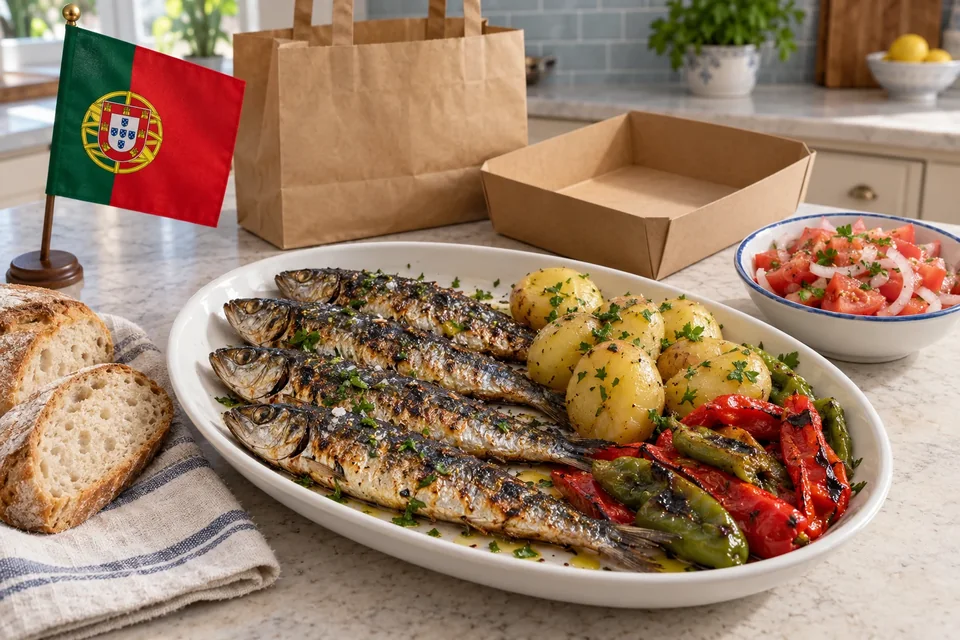
Portuguese food delivery: a table of fish and charcoal
Portuguese food delivery means ordering the dishes of Portugal from a restaurant, pastry shop, caterer or Portuguese delicatessen and eating them at home: salt cod, sardines, grilled chicken, soups, meat stews, seafood rice and custard pastries. It is generous cooking from simple produce, with olive oil, garlic, bay, paprika and white wine doing much of the talking.
Large Portuguese communities in the United Kingdom, France, Canada, the United States and Switzerland keep this tradition alive. Neighbourhood cafés, bakeries, grills and shops, often family-run, are behind many of the best takeaway offers, which explains why Portuguese food delivery can be remarkably good value for the quality. Many of these kitchens also cook for the local community at weekends, so their delivery menus often mirror what families eat at home rather than a tourist version of the cuisine.
With its Atlantic coast, Portugal eats fish everywhere. The north is more rustic, with soups and meats, while the sunny south cooks shellfish and herbs. A good supplier knows where each of its recipes comes from.
Bacalhau delivery: the national ingredient
Dried and salted cod, bacalhau, is Portugal’s national ingredient. People often say there is a recipe for every day of the year, and the range is wide: bacalhau à Brás (shredded with onions, matchstick potatoes and egg), à Gomes de Sá (baked with potatoes and olives), com natas (gratinated with cream), pastéis de bacalhau (fritters) and bacalhau à lagareiro (roasted in olive oil).
For bacalhau delivery, most cooked dishes travel well because they are baked, stewed or mixed with potato. Fritters are best eaten at once or refreshed in the oven.
If you buy the dried fish itself from a delicatessen, it must be soaked for twenty-four to forty-eight hours in cold water, changed several times. Some shops sell cod already soaked, to be cooked the same day.
Grilled fish and seafood brought to your door
Grilled sardines belong to the Portuguese summer, especially in Lisbon during the June saints’ festivals. Grilled sea bream, sea bass, mackerel and swordfish arrive with boiled potatoes and a splash of oil.
Grilled fish delivered by a Portuguese takeaway needs discipline, and the same goes for any Portuguese dishes delivered hot over a long distance. It must be cooked just right, packed without crushing the skin and eaten quickly, because reheated fish dries out and smells strongly. Where possible, choose a delivery within thirty minutes of cooking, or finish it briefly in your own oven.
More forgiving options include juicy seafood rice (arroz de marisco), the Algarve’s cataplana, a fish and shellfish stew cooked in a copper pot, and octopus roasted in the oven. Shellfish demand a flawless cold chain, so refuse any delivery that arrives warm.
Piri-piri chicken, bifana and francesinha
In Portuguese meal delivery, charcoal-grilled piri-piri chicken, with its chilli, oil and garlic sauce, is among the most ordered dishes. It travels well whole or in pieces, with chips and rice, and the sauce usually comes on the side so you can adjust the heat.
Other favourites are the bifana, a pork sandwich marinated in white wine and garlic, and Porto’s francesinha, a towering sandwich of meats, sausage and melted cheese under a spicy beer sauce. They are indulgent, rich in calories and meant to be eaten hot. The bread softens quickly in the sauce, so a fast delivery matters.
Grilled pork, beef and sausage are traditionally served with potatoes, rice and a tomato salad. Say whether you like the meat well done or medium, because long reheating toughens it.
Caldo verde, cozido and feijoada: soups and stews
Among Portuguese dishes delivered, caldo verde, a soup of potato, kale and sliced chouriço from the north, is a dependable choice. It reheats well and tastes better after a rest. Vegetable and pumpkin soups are usual evening starters.
Cozido à portuguesa pairs boiled meats, charcuterie, cabbage, carrots and potatoes. Feijoada, a bean and meat stew, and alheiras, poultry sausages, round out the list. These hearty dishes suit a family lunch on a Sunday.
If you want Portuguese food delivered that sticks to the ribs, this type of dish is very reliable, because slow cooking absorbs the knocks of transport. Warm gently with the lid slightly ajar to avoid reducing or scorching.
Pastéis de nata and other Portuguese pastries
The pastel de nata, a small custard tart in flaky pastry, is the star of Portuguese baking. The Belém district of Lisbon made it famous, and bakeries around the world now make it. At home, warm them for five to ten minutes in a hot oven with cinnamon and icing sugar.
The Portuguese table also includes pão de ló, a moist sponge, arroz doce with cinnamon, queijadas, the Christmas bolo rei with candied fruit and Aveiro’s ovos moles. Many desserts are egg-heavy, which matters for allergies.
They arrive well in a rigid box: dry cakes at room temperature, cream-filled ones chilled. A Portuguese food delivery of pastries is an easy way to test a new supplier, since a bakery that gets the custard and the pastry right usually cooks the rest of the menu with care too.
Portuguese delicatessens: tinned fish, cheese and wine
Portuguese delis that deliver send tinned sardines, tuna and mackerel in beautifully illustrated tins, charcuterie (chouriço, presunto, linguiça), cheeses such as Serra da Estrela, olive oil, chilli, biscuits and coffee. These keeping products suit a platter or a gift.
Portuguese food pairs with wines from the Douro, Dão and Alentejo and with vinho verde from the Minho, but any drink delivered must respect local alcohol-selling rules. A short, strong coffee or a digestif closes the meal.
Read labels carefully: tins may contain gluten, soy and sulphites, while charcuterie may carry allergens or pork. A shop worth trusting states the origin and composition of each product.
Choosing Portuguese dishes delivered without disappointment
To sort Portuguese food delivery offers, look at the dish names: bacalhau à Brás, caldo verde, arroz de pato and polvo à lagareiro suggest genuine Portuguese recipes. Ask whether the cod is good quality, whether the fish is fresh or frozen, and whether the food travels in an insulated container.
Practical questions: how long is the delivery time, are dishes ready to serve or to reheat, are there children’s portions and vegetarian options such as vegetable soup and rice, and how do you flag an allergy?
Avoid ordering several fried dishes at once, build the order around a stew and keep desserts separate. A trial on a quiet evening shows how a kitchen performs before a family event.
Frequently asked questions
Which Portuguese dishes reheat best?
Soups, stews, feijoada, cozido and gratinated cod reheat well on a low heat or in the oven. Grilled fish and fried items are more delicate.
Do I need to soak salt cod before cooking?
Yes. Dried salted cod needs twenty-four to forty-eight hours in cold water, changed regularly. Delivered cooked dishes are ready to eat and need no soaking.
How do I reheat pastéis de nata?
A few minutes in a hot oven revive the pastry and custard. A microwave makes the tart soft.
Is Portuguese cooking suitable for a pork-free diet?
Many dishes contain pork or chouriço, even soups. Ask for the exact composition of each recipe before ordering.