
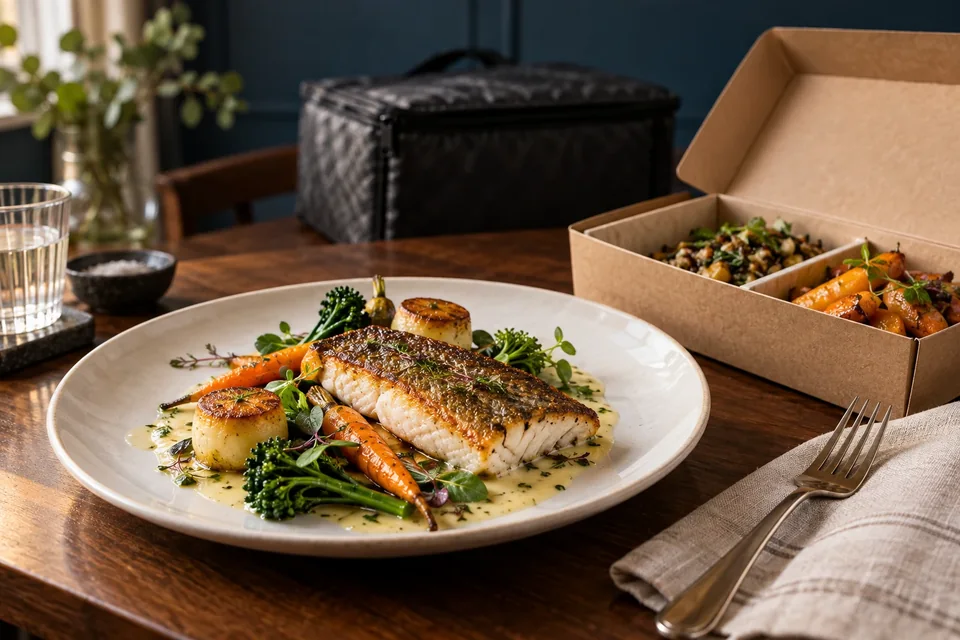
New Year meal delivery: what you can have brought to the door
New Year meal delivery is the arrangement of a celebration dinner, buffet or lunch that is prepared by a caterer, restaurant, shop or specialist and brought to your home for 31 December or 1 January. The food may arrive hot in insulated boxes, chilled with reheating instructions, or frozen to be cooked on the day.
Households choose it for many reasons. Hosts want to enjoy the party instead of spending the evening in the kitchen. Smaller households do not wish to buy a whole turkey-sized joint. Older relatives find it hard to cook for a crowd. Others simply prefer a restaurant-standard menu at the table without leaving the sofa.
The offers range from a canapé platter for six to a full multi-course dinner with matching sides. Local butchers, delis, independent caterers, hotel kitchens and national chains all run seasonal menus, and some publish them weeks ahead.
New Year’s Eve dinner or New Year’s Day lunch: two different orders
The two meals ask for different things, and a provider may handle them very differently.
- New Year’s Eve dinner is usually late, often built around small plates, shellfish, a roast or a showpiece main course, with dessert held back until after midnight. Delivery tends to be in the late afternoon, so everything must keep until the evening.
- New Year’s Day lunch is a slower family meal. Roasts, stews, pies, soups and leftovers-friendly dishes dominate. Many suppliers close on 1 January, so a delivery on 30 or 31 December, with reheating instructions, is often the only option.
In Scotland, Hogmanay brings its own traditions, including a first-footing visitor and dishes such as steak pie or black bun, which some local bakers and butchers prepare to order. Whatever your tradition, say clearly which meal and which date you want when you book.
Booking a festive meal delivery: why the date matters
The most common problem with New Year meal delivery is a late order. Limited kitchen capacity, courier slots that fill early and a short supply of ingredients can mean that a caterer closes its books well before the end of the year. Popular items such as shellfish platters, hams, festive pies and desserts may sell out.
A sensible timeline looks like this:
- as soon as the dates are known, ask what is available and when the order deadline falls;
- confirm the delivery window in writing, including the name of the person who will receive the box;
- check what happens if you are out or the address is difficult to find;
- agree the payment and cancellation terms. Deposits and non-refundable orders are normal for large events.
If a provider quotes a price, treat it as an example until you see the final basket including delivery, because festive surcharges are common.
Cold chain, reheating and serving your New Year’s Eve dinner at home
Food safety matters more on a holiday, because fridges are full and timings are tight. Chilled items should go straight into the fridge, at a temperature of about 5 degrees Celsius or below. Frozen meals need defrosting according to the instructions, ideally in the fridge over a day or more.
Plan the oven timetable on paper. Write down what goes in when, which dish needs resting and what can be heated in the microwave, on the hob or in a slow cooker. Warm plates make a surprising difference to a reheated dinner.
Reheat until steaming hot, serve promptly and refrigerate leftovers within two hours. Do not leave a buffet sitting at room temperature through the night.
Allergies, special diets and the preferences of your guests
A New Year gathering often mixes generations and diets. Ask guests in advance about allergies, vegetarian or vegan needs, halal or kosher requirements and any foods to avoid for health reasons.
Pass this information to the caterer when you book your New Year meal delivery, and request a written allergen list for every dish. Do not rely on a verbal assurance on the day of delivery. For severe allergies, ask how the kitchen separates ingredients and whether a separate allergen-free meal can be supplied in sealed packaging.
Children, older relatives and guests who do not drink alcohol deserve proper options too: a good non-alcoholic drink, a gentle main course and a dessert without nuts can make the evening easier for everyone.
Where to order festive meal delivery: caterer, restaurant, shop or frozen range
Four routes cover most needs.
- An independent caterer or restaurant can produce a tailored menu and may deliver themselves. It is usually the most personal option and often needs the earliest booking.
- A butcher, fishmonger or delicatessen sells ready-to-cook items, such as a stuffed joint or a seafood platter, which you finish at home.
- A supermarket or national chain offers fixed festive boxes with online ordering and delivery slots.
- A frozen food specialist provides appetisers, mains and desserts that keep in the freezer, which is useful if the delivery date and the party date are far apart.
Compare what each supplier includes, how long the food lasts and whether delivery is in a temperature-controlled vehicle.
Common mistakes on New Year’s Eve
A few errors turn up year after year.
- Ordering too late and then accepting whatever remains;
- Forgetting that 1 January is a bank holiday, so shops, couriers and customer service may be closed;
- Not checking oven space, serving dishes or fridge room before the delivery;
- Having no plan B if the box is late. Keep a few simple foods in the cupboard;
- Leaving the reheating until guests arrive, which puts stress on the host.
Treat the celebration as a project with a timetable. A page of notes on the fridge door, listing what is delivered, when it goes in the oven and who carves, is worth more than any extra course.
Frequently asked questions
When should I order New Year meal delivery?
As early as you can once you know the number of guests. Many caterers set a deadline in mid-December, and popular items can sell out earlier.
Can I get festive meal delivery on 1 January?
Some providers deliver on the day, but many close. A delivery on 30 or 31 December with reheating instructions is the safer plan.
How do I keep delivered food safe overnight?
Put chilled items in the fridge on arrival, keep frozen items frozen until needed and reheat until steaming hot. Refrigerate leftovers within two hours.
What if a guest has a severe allergy?
Tell the caterer when you book, ask for written allergen information and consider a separate sealed meal for that guest.