
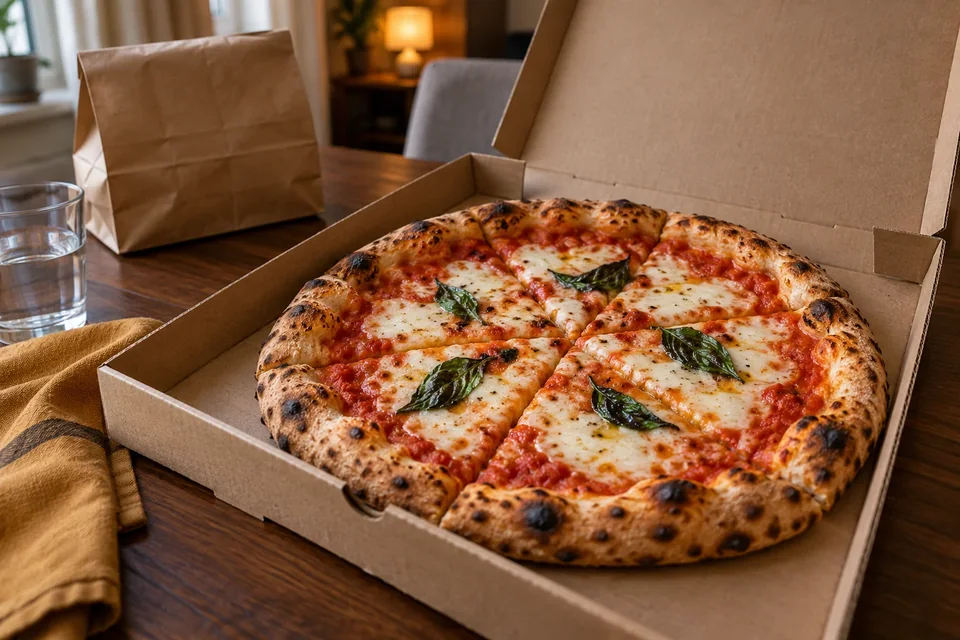
Pizza delivery: a takeaway classic
Pizza delivery means that a pizzeria, chain or restaurant makes pizzas to order and brings them to the customer’s door, usually by scooter, bicycle or car. It is one of the most widespread forms of takeaway because a pizza is quick to make, easy to share and fits many occasions: a night in with friends, a children’s supper, a late dinner or a football match on the television.
A pizza is built from a dough of flour, water, salt and yeast, a tomato or cream base, cheese and a choice of toppings. The Neapolitan tradition, whose pizzaiolo craft was added to UNESCO’s list of intangible cultural heritage in 2017, is a reminder of how much a well-risen dough and a very hot oven matter.
Pizza delivery also suits very different budgets and tastes, from a quick weekday supper to a shared feast for a birthday. The common thread is timing: the closer the oven is to your front door and the shorter the wait between baking and eating, the better the result. Today a pizza order may bring a Neapolitan, Roman, American-style or thin Italian-style pizza, or a house recipe invented by a local craftsperson.
Thin, thick or deep-pan crust: what the journey does to a delivered pizza
In a pizza takeaway the dough decides how the pizza holds up in the box. A thin base stays crisp in the middle on a short ride but softens fast in the steam. A thicker or American-style base keeps its structure, holds its heat for longer and carries generous toppings.
Soft, airy Neapolitan dough is wonderful straight from the oven and trickier to carry, because the centre can turn damp. Wholemeal or multigrain doughs keep well and have a more rustic bite.
- Thin crust: excellent if the delivery is quick, otherwise it goes soft.
- Thick crust: sturdier, useful for longer trips.
- Folded pizza and calzone: keep their heat very well inside.
- White base with cream: less moisture than a tomato sauce.
Toppings that survive the trip and those that suffer
Cooked toppings such as ham, chorizo, peppers, onions, mushrooms, olives and melted cheese hold up well. They keep their flavour and texture after half an hour in the cardboard.
By contrast, ingredients added after baking, such as rocket, cured ham, burrata, fresh mozzarella and basil, lose freshness and shape on the way. Many pizzerias will deliver them separately so you can add them just before eating.
Eggs and seafood are more sensitive, so make sure the pizza arrives very hot and is eaten without delay. Sweet pizzas with banana or chocolate are nicer lukewarm than cold.
Sizes and quantities: personal, large and sharing
Most places offer several sizes: small, medium, large, and sometimes a family or by-the-metre option. A personal pizza is enough for one meal; a large one can be shared by two with a starter or a dessert. For a group it is common to order several pizzas with different toppings rather than one enormous one.
A useful rule is to count one large slice for a small child, two or three for an adult with a side dish, and more for hungry teenagers. Think about real appetites: teenagers eat more than small children, and leftovers from delivered pizza keep poorly. Match the number of pizzas to the number of guests without overdoing it. A salad, a pasta dish or garlic bread can round out the meal.
Menus and offers change from one outlet to another. Compare the real content, the stated diameter and any drinks included before deciding.
Placing a pizza order: app, website, phone or local pizzeria
For pizza delivery from the big chains such as Domino’s, the website describes a process in which you first choose the nearest store, then pick delivery or collection. It adds that delivery terms, charges and timings depend on each store, and that bad weather can lengthen the wait.
An independent pizzeria often takes orders by phone or through a delivery platform. The advantage is that you can ask for a more or less well-done base, a changed topping or a realistic estimate of the journey time.
For any pizza order, give a full address, the floor, an entry code and a phone number that will be answered. A rider who has to hunt for the entrance loses time, and the pizza cools.
Reheating and storing a delivered pizza
Delivered pizza is best eaten within a quarter of an hour of arriving. If it has cooled a little, the best method is a few minutes in a hot oven or a covered frying pan, rather than the microwave, which makes the base soft.
Leftovers go into the fridge in a closed container or wrapped, and should be eaten quickly, the same day or the next. A pizza left on the table for several hours, especially in summer, should not be eaten.
Do not leave the box closed for too long before the meal: steam builds up and soaks the dough. Opening the lid slightly or moving the pizza onto a rack lets the moisture escape.
Allergens, diets and special pizzas
Pizza almost always contains gluten and milk. Gluten-free bases exist, but if they are prepared in a kitchen where wheat flour is handled, cross-contamination is possible. People with coeliac disease should ask how the pizza is made, baked and boxed.
Vegetarian, vegan and pork-free pizzas are common on pizzeria menus, from chains and local makers alike. State the diet when ordering and check the toppings on arrival, especially the cured meats and cheeses. For halal or kosher food, choose a place that clearly says so.
Serious allergies, for example to nuts, shellfish or sesame, mean contacting the outlet directly before ordering and getting the written allergen information. Personal medical advice belongs with your own doctor.
Common mistakes and tips for pizza delivery done right
Most disappointment with pizza delivery comes from a poor match between pizza and distance, an incomplete address or ordering at the peak hour. Avoiding eight o’clock on a Saturday evening often saves time.
- Choosing a very thin base for a long trip.
- Forgetting drinks, plates and cutlery.
- Stacking boxes upside down during transport.
- Letting the pizza go cold while waiting for latecomers.
One last tip: if you order regularly from the same pizzeria, keep a note of your preferred bake and toppings, and the kitchen will get to know your taste.
Frequently asked questions
Which pizza handles delivery best?
A thicker or American-style base with cooked toppings holds up better. Very thin crusts, or pizzas topped with fresh ingredients added after baking, deteriorate faster.
How do I reheat delivered pizza without making it soggy?
Put it in a hot oven or a covered frying pan for a few minutes. The microwave leaves the base soft and rubbery, so it is best avoided.
Are delivery charges and times the same everywhere?
No. For a chain such as Domino’s they depend on the chosen store, and bad weather can add to the wait. An independent pizzeria sets its own terms.
Can I have gluten-free pizza delivered?
Some outlets offer it, but cross-contamination can still occur. Ask how the pizza is prepared and boxed, and request the allergen list before ordering.