
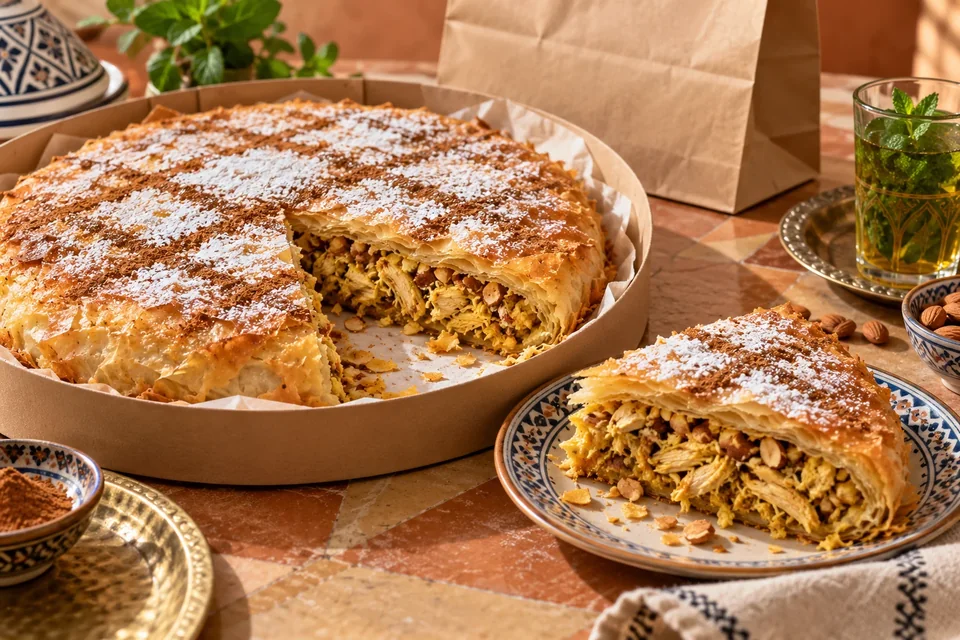
Motorhome meal delivery: what it involves
Motorhome meal delivery means having cooked meals, takeaway food or ready-to-heat dishes brought to a campervan, caravan or motorhome that is parked away from home. The address is a pitch, a bay on a stopover or a car park rather than a front door, and that single fact shapes everything else.
Travellers use it in several ways. A family on a rainy site orders a pizza to the pitch. A couple arriving late after a ferry wants a hot dinner without unpacking the kitchen. A group of friends at a rally books a caterer for the weekend. Some people on a long tour stock the fridge from a farm shop or a delivery of local produce.
Not every courier, restaurant or app will agree to deliver to a vehicle, and rules differ between private campsites, public car parks and rural lanes. A short phone call usually settles it.
Giving an address for a takeaway to your pitch
A takeaway to your pitch only works if couriers have a place they can find in daylight and in the dark. A standard postal address often stops at the site entrance, so you have to supply the rest.
- Give the name of the site, its full postal address and the pitch or bay number;
- Mention landmarks, such as the shower block, the shop, a numbered gate or the bar;
- Share your mobile number and keep the phone with you, since signal can be patchy;
- Offer to meet the courier at the reception or the barrier;
- For off-site stops, send a map pin or coordinates from a navigation app.
If the site has a reception, ask whether staff accept deliveries or pass on a message. Many large sites have rules about vehicles after dark, so a courier on a moped may not be allowed past the barrier.
Campsite, aire or farm stop: three different situations
For campsite food delivery, a staffed site is the easiest case. There is a postal address, pitch numbers, lighting and often an on-site restaurant or shop that can deliver to your pitch. Some operators even arrange a bread or croissant delivery in the morning.
A stopover area, known in France as an aire, is trickier. It may be a car park with a service point and no staff at all. Local restaurants might agree to bring food to a parked vehicle, but access can be restricted and overnight rules vary.
A farm or vineyard stop, offered through networks of hosts who welcome motorhomes, works differently. The hosts usually sell their own produce, such as cheese, wine, eggs, bread or ready-made dishes, and they may prepare a plate if asked. There is no courier: you walk to the shop. Such networks exist in several countries, and the French one is described in the link below.
Wild camping, where it is lawful, offers the fewest options. Plan your food in advance.
Keeping and heating motorhome meal delivery orders at the pitch
Space is tight in a motorhome. Think about where a tray will go before you order.
- A small 12-volt or gas fridge may hold less than you expect, and it takes hours to cool a warm item;
- Hot takeaway food should be eaten quickly. Chilled dishes should go into the fridge on arrival;
- Use a gas hob, microwave on mains hook-up, or a combination oven if you have one, and remember that hook-up power limits the number of appliances you can run together;
- Never use a barbecue, stove or heater inside the vehicle. Carbon monoxide is a serious risk;
- Take the rubbish away or use the site’s bins, and keep food sealed to deter wasps and wildlife.
A cool box and a few ice packs give extra margin for any campsite food delivery or takeaway to your pitch when the delivery window is wide.
What to order for meals at the campsite
For motorhome meal delivery, the best dishes are those that travel and survive in a small kitchen. Pizzas, burgers, curries, rice dishes, fish and chips, wraps and barbecue boxes are the classics, along with pastries and bread for breakfast.
Think about washing up. Disposable plates or boxes that double as plates can save water on a site with limited facilities, although they create waste. Choose a menu where one pot or one tray is enough.
Travellers on a longer trip may prefer ready-to-heat meals from a frozen or chilled supplier, delivered to a relative’s address or a friend’s house on the route and collected in person. For something local, buy produce at the farm gate, the market or a village shop.
Check allergens when the menu is unfamiliar or the language is not yours, and tell the kitchen about any allergy when you place the order.
High season, bad weather and late arrivals for food delivery for campervans
In July and August, couriers are busy, restaurants near beaches and lakes are full, and a delivery that would take 30 minutes in March can take much longer. Order early, ask for a realistic time and keep a back-up plan, such as pasta in the cupboard.
Bad weather increases demand for takeaway and also slows riders. Long unlit paths, mud and flooded fields can stop a courier at the gate. In storms or high winds, your safety comes first.
If you arrive late, phone ahead from the road. Some sites keep a kitchen open for arrivals, and some restaurants will hold a plate. Ask politely rather than assuming, and be prepared to eat from the cupboard.
Good manners and safety when parked
Remember that you are a guest on someone’s land. Park where you are allowed, keep noise low at night and respect quiet hours. A courier arriving at 11 pm with a loud engine may annoy neighbours, so choose an earlier delivery time.
Do not block roads, gateways or emergency access with your vehicle while you wait. Switch on a light so that the courier can see the pitch. Tip according to local custom and thank staff.
Cash can be useful when mobile data is poor. Keep a small amount of change and a pen to write down the order number.
Mistakes to avoid when eating on the road
A few errors cause most problems.
- Ordering to a location the courier cannot find;
- Choosing a menu that needs too many pans or too much fridge space for meals at the campsite;
- Forgetting that shops in small villages close on Sunday afternoon or on public holidays;
- Relying on a phone signal that is not there;
- Leaving food outside overnight, which attracts animals.
Plan the first night’s meal before leaving, since food delivery for campervans is not available everywhere, keep a stock of long-life food and learn a handful of useful phrases if you travel abroad. Eating well on the road is less about the perfect order than about preparation.
Frequently asked questions
Can I get motorhome meal delivery to any campsite?
Many restaurants and couriers will deliver to a campsite pitch, but some sites limit vehicle access. Ask reception and the restaurant before you order.
What address should I give for a pitch?
Give the site’s postal address, your pitch number, a landmark and a mobile number. For a stopover without an address, send a map pin.
How do I keep food cold in a small fridge?
Cool the fridge before you set off, add ice packs and avoid overfilling it. Eat perishable items first.
Is it safe to cook with gas inside a motorhome?
A fixed gas hob designed for the vehicle is normal, but barbecues and portable heaters should not be used inside. Keep ventilation open and fit a carbon monoxide alarm.