
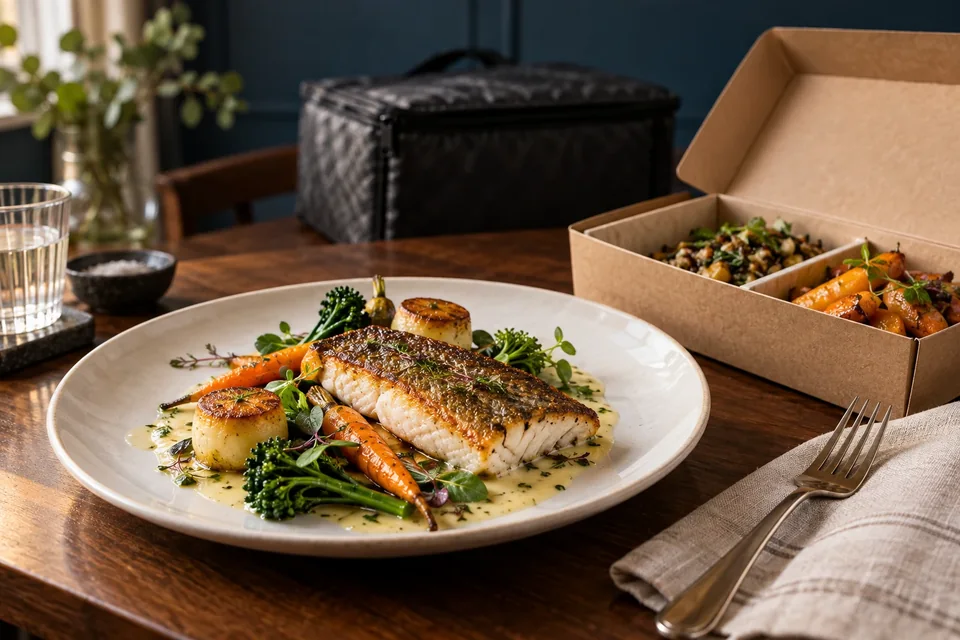
What gourmet meal delivery covers
Gourmet meal delivery is a service in which a chef, a high-end caterer or a fine-food house prepares a menu in a professional kitchen and sends it to your home, ready to be reheated, assembled and plated. What sets it apart from an everyday takeaway is the quality of the ingredients, the precision of the cooking, the presence of worked sauces and the care given to presentation.
Behind the label sit very different businesses. Some distinguished restaurants opened a takeaway counter and a delivery round for their menu. Established caterers in Paris, London or Lyon sell reception menus that can also be ordered for four guests at home. Others send a chef to cook in your kitchen, which is closer to a private chef, but the aim is the same: a festive table without a day at the stove.
The common promise is a result close to the dining room. It holds only if the menu was designed to travel: dishes are stopped just short of done, sauces are packed apart, garnishes cope with reheating. A pan-seared plate served at the pass cannot be delivered, whereas a braise, a terrine, a fish cooked at low temperature or a dessert set in a glass can.
Chef-prepared meals at home: starter, main, dessert and petits fours
Most houses selling chef-prepared meals at home build their offer like a restaurant meal. Few customers order a single plate; they choose a three-, four- or five-course menu, sometimes with an amuse-bouche and petits fours for coffee. That sequence paces the evening and lets you reheat each element at the right time.
For a gourmet dinner delivered for guests, a few simple principles help you put together a coherent menu:
- alternate textures: a velouté or terrine first, then meat or fish with its garnish, then a fresh or crunchy dessert;
- keep only one very rich dish per meal, so guests leave the table feeling comfortable;
- ask which components are served cold and which need the oven, so the timing is clear before the evening starts.
Decide the order of service before the day, and note when each dish goes in the oven. A written running order stuck to the fridge door is the best guard against panic when guests arrive.
From the pass to your table: the journey of the meal
The quality of gourmet meal delivery depends first on the cold chain. Preparations are chilled quickly after cooking, kept in a refrigerator and carried in insulated crates or chilled vans. Many houses pack dishes in trays, jars or vacuum bags, which extends keeping time and preserves flavour.
On receipt, check three things: the temperature by touch (dishes should be cool, never lukewarm), the state of the packaging, and a label giving contents, use-by date and reheating instructions. Put everything in the fridge straight away.
If the delivery slot is wide, be at home or arrange for someone reliable to receive it. A parcel left outside in summer undoes all the chef’s work. Ask in advance what happens if nobody answers the door.
Reheating and plating without betraying the chef
Reheating is where most gourmet dinners delivered to the door lose their shine. Read the card enclosed: it states the oven temperature, the time and the order of operations. A conventional or fan oven suits meat and gratins; a pan over gentle heat with a little liquid looks after sauces; a bain-marie respects fish and creams.
The microwave is kept for simple garnishes, because it heats unevenly and softens crusts. A sauce containing butter, cream or egg should never boil hard or it may split. Let pink meat rest for a few minutes out of the oven so the juices settle.
For plating, warm the plates, wipe the rims, and bring herbs, a drizzle of oil or a spoon of sauce at the last second. Fine dining at home is as much about the plate and the pace as about the food, and a clean cloth and good glasses lift a simple table.
Allergens, diets and food safety
In the UK and the European Union, prepared food must declare fourteen allergens, among them gluten, crustaceans, eggs, fish, peanuts, tree nuts, milk, celery, mustard and sulphites. In a gourmet dinner delivered to your door they hide in sauces, stocks, breadcrumbs and compound butters. An allergic person should ask for the exact ingredient list of each dish and enquire about cross-contamination in the kitchen.
Special diets need foresight: a halal, kosher, vegetarian or gluten-free menu is not improvised the day before. Ask the house about its sourcing and whether the dish is prepared separately.
Keep chilled items at a safe temperature, reheat until piping hot in the centre and do not refreeze what has been defrosted. If anything arrives warm, smells wrong or has a damaged seal, do not serve it; contact the provider the same day.
Luxury meal delivery: caterer, restaurant or fine-food shop?
Three kinds of provider share the market for gourmet meal delivery. The renowned caterer offers menus designed for delivery, with tried-and-tested logistics and clear lead times. The restaurant with a takeaway menu offers a more personal signature, but its delivery capacity may be limited to a perimeter or certain days. The fine-food shop mostly sells prepared dishes, platters and hampers to assemble.
To compare them calmly, ask each the same questions:
- Are the dishes cooked on the day or packed in advance?
- What is the delivery area, and how wide is the time slot?
- How are allergens listed, and can the menu be adapted?
- What is the policy if the order arrives late or damaged?
A provider that answers precisely and without fuss is usually the one that will deliver precisely.
Occasions, drinks and mistakes to avoid
Luxury meal delivery suits wedding anniversaries, small business dinners, New Year’s Eve and family meals where the host wants to enjoy the guests. It also helps when a restaurant outing is difficult: a less mobile grandparent, a newborn, a convalescence or the plain wish to stay in.
Choose the drinks when you order: a crisp white with shellfish, a supple red with poultry or game, a sweet wine or champagne with dessert. Some providers offer matched selections, which saves a dash to the wine merchant at the last minute.
The usual mistakes are ordering too late for a holiday weekend, forgetting to say how many people eat, skipping the reheating card and leaving no time for plating. Book early and keep the evening simple: one rich course, one sharp one, and a dessert prepared in advance.
Frequently asked questions
Can gourmet meal delivery really rival a restaurant?
It can come close if the menu was designed to travel and you follow the reheating card. Dishes that need cooking at the last second will always be better in the dining room.
How far ahead should I order a chef’s menu?
Allow several days for a normal evening and longer for festive dates such as Christmas or New Year’s Eve, when popular houses fill up. Ask for the cut-off time.
Can I request a halal, vegetarian or gluten-free gourmet menu?
Many houses can adapt, but it needs notice. Ask what is guaranteed, how the dish is prepared and whether cross-contamination is controlled.
What should I do if the meal arrives lukewarm or badly packed?
Do not serve anything that has warmed up or whose seal is broken. Take a photo, keep the label and contact the provider the same day.