
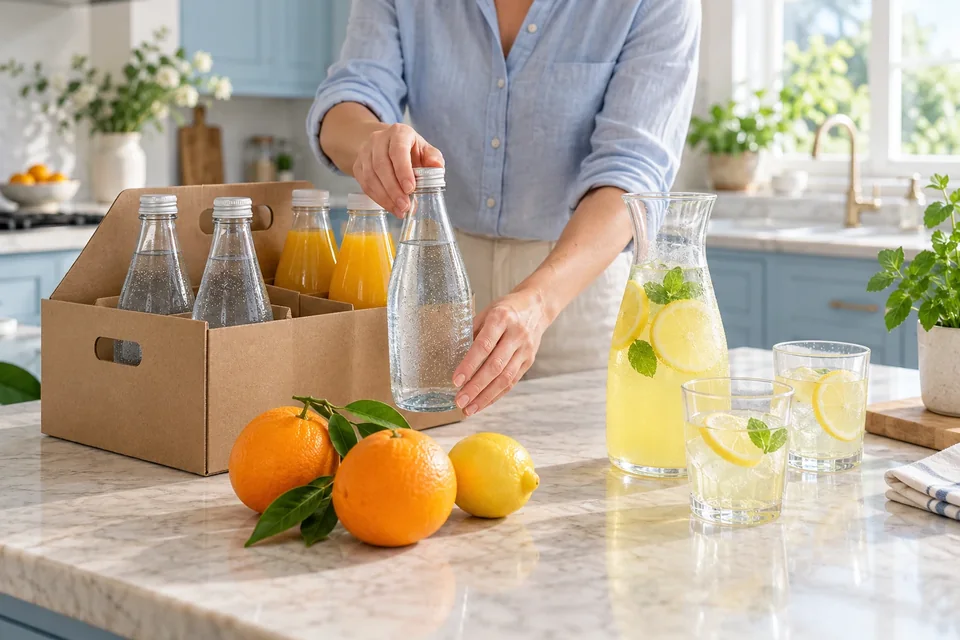
Drinks delivery: what the service is
Drinks delivery is the service by which bottles, multipacks, cartons or kegs are brought to your door by a shop, a wine merchant, a distributor or a grocery platform. It answers a very practical need: a large pack of water, a case of juice or a crate of beer weighs more than most people want to carry, particularly without a lift or a car.
The service wears several faces. An online wine merchant ships wines and champagnes, supermarket chains bring packs of water and soft drinks with the weekly shop, and specialist distributors supply households and offices with bottled water, coffee and soft drinks. Breweries deliver crates and kegs for family gatherings, and some independent shops run a local round on their own van.
Drinks delivered to your door follow the same logic everywhere, whatever the brand, but each supplier has its own rules on minimum orders, delivery areas and time slots, so the first job is to be clear about what you want to receive and where.
Water delivery and everyday soft drinks
Non-alcoholic drinks are the most regular use. Packs of water are the textbook case: a family, an older person or a small office saves time and effort. Water delivery can be a one-off or a recurring order, with a weekly or monthly visit depending on the supplier.
A few points deserve attention before you sign up to a subscription:
- the size of the bottles and where they will be stored: shelf, cupboard, or a shaded balcony;
- whether deposit bottles or large containers are collected and how that is arranged;
- the floor and the access to your flat: some drivers carry loads upstairs, others leave them at the kerb;
- what happens if you are away, and how to pause or cancel.
For an older relative, a regular water delivery with a driver who brings the packs into the kitchen can make a real difference to independence at home.
Wine delivery, beer and spirits
Wine delivery grew out of the mail order of wine estates and merchants. Today an online wine shop lists thousands of references, from an everyday bottle to festive champagne, with advice on food pairing and gift boxes. Craft breweries send crates or kegs for family meals, while distilleries and spirit specialists rely on careful packaging of the bottles.
Bottles dislike knocks and swings in temperature. A well-prepared parcel has cardboard dividers or protective fill, and sometimes insulation for hot spells or frost. Check the parcel on arrival and report any breakage at once, with photographs, because suppliers usually set a short window for claims.
A mixed case is a friendly way to discover new wines, but read what is inside: the grape, the vintage and the alcohol level are normally shown on each product sheet.
Age limits, identification and responsible drinking
Selling alcohol to minors is prohibited in the United Kingdom, Ireland, France and almost everywhere else, and traders who deliver alcoholic drinks must make sure of the buyer’s age. In practice a serious supplier asks you to confirm your age when you order and may ask for identity when the parcel is handed over. If no adult is present, the driver can refuse to leave the goods.
Other local rules govern the sale and delivery of alcohol: hours, types of premises, advertising. They differ from one country and sometimes from one region to another, and they change. Whether you are in Canada, Switzerland, Belgium or elsewhere, check the rules where you live, because the legal age and licensing requirements are not the same.
Keep an eye on responsible consumption: offer water and non-alcoholic choices at gatherings, and keep the keys of anyone who has been drinking.
Drinks delivered for a party, an office or a wedding
For an event, drinks delivery from water to champagne saves repeated trips to the shop. A birthday for twenty, a street party or a small wedding call for a method when you estimate quantities: you generally need more cold drinks in summer, more hot drinks in winter, and it is wiser to overestimate water and soft drinks slightly.
Distributors and brewers often offer event services: a beer tap with a keg, ice in bags, glasses on hire and, in some cases, collection of what has not been opened. Ask about taking back unopened bottles and about the deposit on kegs and glassware.
Give the delivery address, the contact on the day, and the place where the goods should be left. Do not forget the ice, the cool boxes and a spot in the shade.
Transport, heat and storage: looking after drinks at home
Temperature matters. A case of bottles left for an hour in full sun on a balcony can suffer swings that spoil the taste of wine, beer or juice. In winter, frost can burst bottles of water, juice or fizzy drinks, which expand as they freeze.
A few common-sense habits protect what you have bought:
- bring the parcel in quickly, preferably into a cool, dark room without strong smells;
- store wine away from light and away from the radiator, the hot kitchen or the oven;
- keep fizzy drinks upright and avoid shaking them before opening;
- chill in advance what is drunk cold, because a bottle takes several hours to cool in a fridge.
Water and juice have a use-by date too: rotate your stock and put the newest at the back.
How to choose a drinks delivery service
A few criteria help you decide between beverage delivery offers. The delivery area comes first: a supplier that does not serve your town is useless however famous it is. The minimum order and any free delivery above a certain basket weigh on the final cost, as does the choice between delivery and collection in store.
Then look at the quality of the information: a precise product sheet, mention of origin, vintage or volume, allergen details and the legal notices on alcohol. How quickly customer service reacts to breakage, delay or a wrong item often separates a good supplier from a frustrating one.
With any beverage delivery, test the slot: a two-hour window you can keep is worth more than a vague promise of all day. Read recent reviews, start with a small order and keep the supplier’s contact details to hand.
Frequently asked questions
Can wine and beer be delivered like ordinary drinks?
Yes, but with age checks and, in some places, extra licensing rules. You will usually need to confirm that you are an adult at ordering and show identification on receipt.
How can I avoid breakage during drinks delivery?
Choose a supplier that uses dividers or protective fill, check the parcel on arrival and photograph any damage straight away.
What happens to empty bottles and containers?
It depends on the supplier. Some collect deposit bottles or large containers on the next visit; others expect you to use the usual recycling points. Ask before you subscribe.
Do chilled drinks arrive cold?
Generally not. Most parcels are delivered at room temperature, so plan to refrigerate in advance what you want to serve cold.