
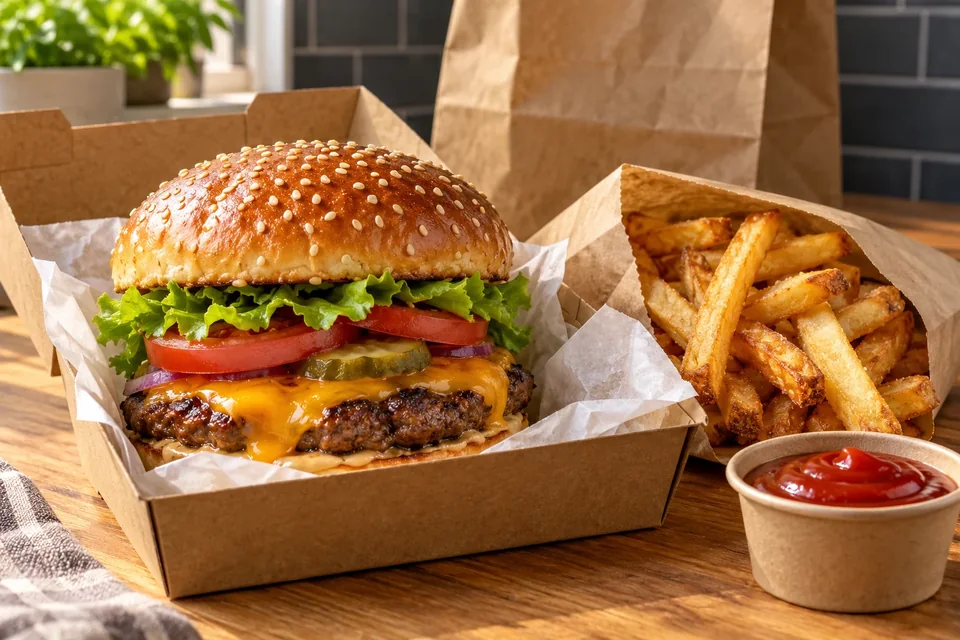
Burger delivery: what you are really ordering
Burger delivery is the service in which a restaurant, dark kitchen or takeaway prepares a burger and a courier brings it to your door, usually within half an hour to an hour of the order. The order may come through a restaurant’s own website, through a phone call, or through a platform such as Deliveroo, Uber Eats or Just Eat in the UK and Ireland, or DoorDash and Grubhub in North America.
What arrives is not quite the same product that would be served at a table. A burger on a plate is eaten within a minute of leaving the grill. A burger at home has spent ten or twenty minutes in a box, sealed against steam, jostled on the back of a bike or car and then waited on a hall table. A restaurant that understands this adjusts its recipe and packing; one that does not simply boxes up the dine-in version and hopes.
Knowing this makes burger delivery easier to get right. The best choice is rarely the tallest or messiest burger on the menu, but the one whose structure can survive a journey.
The bun and the patty: foundations of burgers delivered to your door
The bun does the hardest work. A soft brioche absorbs juice and collapses; a sturdier potato roll, sourdough bun or toasted bap holds shape. Many good kitchens toast the cut sides with butter or oil, creating a thin barrier that slows sogginess. If the bun arrives flattened and damp, the burger has probably sat too long or was packed with too much sauce.
The patty determines flavour and texture. Beef patties from freshly ground meat, cooked on a flat-top or grill, are the classic, though chicken, lamb, fish, and plant-based patties are all common. Thickness matters: thin smashed patties stay juicy for a short trip, while thicker ones retain heat longer but can dry out if overcooked to compensate for the wait.
Cooking preferences also carry weight. In many countries restaurants cook delivered burgers well done, and this is routine for food safety reasons since a burger is made from minced meat. If a medium-rare burger is wanted, it is better enjoyed in the restaurant, where the cook can control temperature and the guest can eat it at once.
Toppings and sauces: what travels well and what does not
Some toppings survive transport well. Cheese melts and clings to the patty, caramelised onions and pickles stay in place, and bacon keeps flavour even if it loses crispness. Others are risky: sliced tomato releases water, lettuce wilts when it touches a hot patty and a sauce applied generously turns the bun to paste.
A few practical tricks help:
- Ask for sauce on the side when it is a messy one, such as a mayonnaise-based or barbecue sauce, and add it just before eating.
- Choose burgers with firm vegetables, such as pickles, onions or jalapeños, over delicate leaves.
- Request that salad items are packed separately if the restaurant allows it.
- Avoid very tall stacks held together with a skewer, which collapse in transit.
Regional preferences vary. British menus often feature cheddar and bacon, North American ones lean towards American cheese and pickles, and many cities have fried-chicken burgers. Whatever the style, a simpler build usually arrives in better shape.
Burger delivery packaging and journey time: getting it home in one piece
Packaging is the unsung hero of any burger takeaway. A cardboard clamshell box with small vents lets some steam escape, a paper wrap around the burger keeps the stack together and a separate pot for sauce stops leaks. Plastic containers that trap steam produce a sad, damp bun. Chips packed in the same sealed bag as the burger suffer the same fate.
Journey time is the other variable. Delivery within ten to fifteen minutes of leaving the kitchen is ideal, and the quality falls quickly beyond thirty. When the app shows a long wait or a distant kitchen, choosing a closer restaurant often produces a better meal than choosing a famous one. Ordering during the peak dinner rush also raises the risk of a cooling burger, since couriers may batch several orders.
At home, open the box straight away so steam escapes. If the burger is slightly cooled, a minute in a hot oven or a quick toast of the bun in a dry pan revives it far better than the microwave, which turns bread rubbery.
Chips, sides and drinks: the rest of the order
Chips are the weak link of a delivered burger. Thin fries lose their crunch within minutes, while thick-cut chips, wedges, onion rings and sweet potato fries hold up better. Some restaurants offer a seasoned coating that stays crisp longer. Keep the side loosely wrapped, not shut tightly in a bag, and refresh them for a few minutes in the oven if they have softened.
Cold items such as coleslaw or milkshakes need attention too. A milkshake in a sealed cup can melt on a long journey, so it is wise to order one only when the restaurant is close. Cans and bottles travel more safely, and some restaurants include a canned soft drink in a combination deal.
Sharing offers, such as a platter of several burgers with sides, can be a good way to feed a family. It is worth checking portion sizes in the description, since the same word can mean very different quantities from one place to another.
Allergens, diets and burgers for everyone
A burger can hide many allergens. The bun usually contains gluten and often sesame, the sauce may contain egg and mustard, and the cheese brings milk. In the UK and Ireland, businesses selling takeaway food are required to provide allergen information on request or through their ordering platform, and the same expectation exists in many other markets. Anyone with a serious allergy should contact the restaurant before ordering, because a note typed in an app might not reach the kitchen.
Dietary preferences are well served by modern menus. Vegetarian burgers use bean, mushroom or vegetable patties, vegan versions replace the cheese and sauce, halal and kosher outlets use certified meat, and gluten-free buns are widely offered, although a shared fryer or grill can cause cross-contact. Parents may like a smaller portion, while those watching salt or fat can ask for a lighter build without sauce.
Ask direct questions about the fryer, the grill surface and the preparation area, and trust a restaurant that answers confidently and honestly.
Choosing where to order and avoiding disappointment
Not every kitchen suits burger delivery. Restaurants with a dedicated takeaway menu, a short and well-tested list of burgers and a reputation for sturdy packaging are the safest bets. Independent burger bars, small chains and dark kitchens can all produce excellent results, so reviews that mention how the food arrived are more helpful than ones about the dining room.
A short checklist avoids most letdowns:
- Read recent reviews for words like "soggy", "cold" or "missing".
- Compare the restaurant’s own site with the platform’s menu, as items and fees can differ.
- Check delivery fees, service charges and any minimum basket before paying.
- Save the receipt and photograph problems immediately, since refunds are easier to obtain when the evidence is fresh.
Ordering directly by phone or from the restaurant’s website sometimes saves commission and gives the kitchen a more reliable view of the order, though the platform can offer faster couriers. Weigh the two and pick whichever has given the best burgers in the past.
Frequently asked questions
How long should a burger delivery take?
Most deliveries arrive within thirty to forty-five minutes of ordering, but quality is best when the journey itself is under fifteen minutes. Longer waits are common on busy Friday and Saturday evenings. If the app estimates much longer, look at nearer restaurants.
Why do delivered burgers often taste different from eating in?
Steam builds up in the closed box, softening the bun and lettuce, and the heat fades during transport. Restaurants that design a dedicated delivery recipe, with sturdier bread and sauce separated, reduce this effect noticeably.
Can I ask for a burger cooked medium or rare at home?
Some restaurants will do this for dine-in guests only. Because burgers contain minced meat, and the meal will sit for a while, many kitchens cook delivered burgers through. Ask the restaurant about its policy instead of assuming.
Is a burger takeaway from a restaurant better than one from a delivery-only kitchen?
Neither is automatically better. What counts is recipe, packaging and distance. A delivery-only kitchen can be excellent because its whole menu is designed to travel, while a restaurant may offer better ingredients but less experience with transport.