
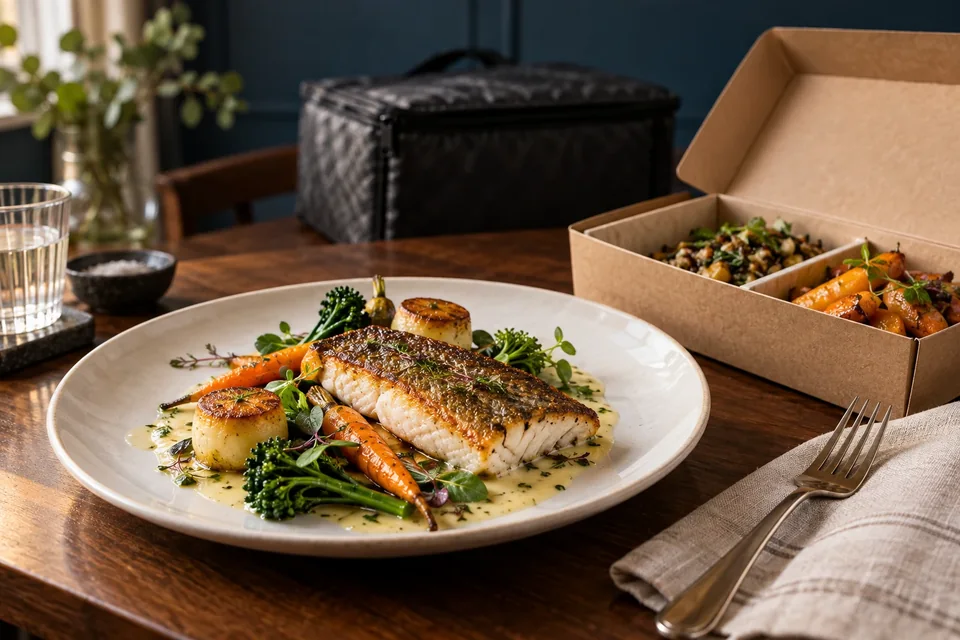
Chef-prepared meals delivered: what you actually receive
Chef-prepared meals delivered to your home are dishes designed and cooked by a professional kitchen, whether a restaurant, a caterer or a dedicated production kitchen, then sent out chilled, frozen or hot for you to reheat, finish or simply plate. The idea is to bring restaurant-quality meals delivered to your own dining table without any shopping, chopping or washing up of pans.
The word chef has no legal definition in Britain. It normally describes the person in charge of a kitchen, who writes the menu, chooses suppliers and trains the team, and it says nothing about qualifications. What matters to a customer is whether the dish was built to survive a journey, and whether the business will tell you what is in it and how it was made.
The range is wide: seasonal multi-course tasting menus from a restaurant that began delivering during the pandemic, braises and pies from a gastropub, curries from a regional Indian kitchen, seafood platters, and desserts from a pastry chef. Some businesses were built for delivery from the start and have no dining room at all.
Meals sent out versus a chef who cooks in your kitchen
Two services get confused. In the first, the cooking happens elsewhere and the food is carried to you. In the second, a private chef arrives with ingredients, cooks in your home, plates the dishes and may stay to serve and clear. The second is theatrical and offers fresh, last-minute cooking such as seared fish or a steak rested for the right minutes, but it needs a workable kitchen, tolerance of the mess, and a larger budget.
Delivered meals have different strengths: a fully equipped professional kitchen, simpler logistics, and the freedom to eat when you like. Some marketplaces connect households with independent private chefs. You describe the occasion, receive menu proposals, agree the details by message and pay online. Decide which of the two you want before comparing prices, otherwise you will end up weighing two things that cannot be compared.
Packaging formats: trays, pouches, jars and finishing kits
Chef meals delivered arrive in several forms, and each one reheats differently.
- Sealed trays: a plastic or card tray with a film lid, reheated in the microwave or oven according to the label.
- Vacuum pouches: food cooked slowly at low temperature and sealed, then warmed in simmering water. The method keeps meat and fish tender.
- Glass jars: good for stews, soups and terrines, and often reusable.
- Finishing kits: the components arrive separately, with sauces and garnishes, and you complete the last steps such as searing, saucing or adding fresh herbs. This gives the pleasure of cooking without the preparation, and it suits a dinner with friends.
Desserts, entremets and ripened cheeses usually travel in insulated packaging and are bought separately. They come with exact instructions: out of the fridge half an hour before serving, glazing at the last moment, or a rest before slicing.
Reheating and plating chef-made meals at home
The quality of the reheating decides how the dish turns out. Always follow the instructions printed on the pack, because the chef knows how each component was cooked. As a general principle, slow-cooked meat is warmed gently in a low oven or a water bath so that it does not carry on cooking, sauces are heated separately over a low flame while being stirred, and crisp elements such as tuiles or potato croquettes go back into the oven for a few minutes uncovered. Green vegetables fare better steamed or tossed in a hot pan than boiled in their bag.
For plating, warm the plates, set the main element slightly off centre, pour the sauce around rather than over it, add the garnish and finish with the herbs or edible flowers supplied. A few small gestures separate a tray tipped onto a plate from something that looks like it came from a pass.
Check that the food is properly hot all the way through before serving, especially poultry, pork and anything containing rice or eggs.
Hygiene, allergens and ratings for chef-cooked dinners
A business that prepares and sells chef-cooked dinners must be registered with its local authority, follow food safety procedures based on HACCP principles, keep records and control temperatures along the cold chain. In England, Wales and Northern Ireland most food businesses display a Food Hygiene Rating of 0 to 5, and Scotland runs a separate pass-or-improvement scheme; both can be looked up online by business name.
Allergens are a legal matter. Britain recognises fourteen major allergens, and businesses selling food, including non-prepacked dishes, must be able to tell customers whether they are present. A menu should say so in writing or direct you to someone who can. If a guest has a severe allergy, ask the question in writing and keep the answer.
The phrase homemade has no tight legal meaning in the same way, so judge a supplier on how clearly it explains its methods rather than on adjectives. A sound approach to hygiene is a more reliable sign of quality than a glossy photograph.
Occasions that suit chef meals delivered
Chef-made meals delivered are useful when the occasion matters but the cooking would spoil it for the host. A small wedding anniversary, a birthday dinner for six, a first dinner after moving house, a thank-you meal for relatives who helped, or a romantic evening in all fit that description. At Christmas and New Year, orders for dishes that few people cook regularly, such as a whole beef Wellington, oysters, a glazed ham or a truffled bird, often justify the price.
They also help when someone is recovering from illness or has just had a baby, because a carefully cooked meal says more than a standard supermarket tray. Festive menus usually have a fixed number of portions and a booking deadline weeks ahead, with set delivery or collection days, so planning early avoids disappointment.
Questions to ask and mistakes to avoid before you order
Before paying for chef-prepared meals delivered to your door, ask how the dish is stored and reheated, how many days it keeps after arrival, what allergens it contains and whether the kitchen can adapt a menu for a vegetarian, gluten-free or halal diet. Ask where the meat and fish come from and whether the produce is seasonal.
The mistakes are predictable: under-ordering quantities, lacking the right equipment (an oven-proof dish, a deep pan, a large saucepan), arranging delivery when nobody is at home, and putting off reheating without following the instructions. Read the instructions when the box is opened, not when guests are already seated.
Compare what is included as well. Cutlery, crockery and container return policies vary. Delivery charges, minimum orders and cancellation terms can turn an attractive menu price into a more expensive one at the checkout.
Frequently asked questions
How does a caterer differ from chef-prepared meals delivered?
A caterer often serves events and may bring staff, equipment and service. Chef-prepared meals delivered are typically packed for reheating at home and sent by courier or van, with no on-site team. The line blurs, since many caterers now sell both.
Can chef meals be reheated in the microwave?
Some can, and the label will say so. Dishes designed for the oven or a water bath, such as slow-cooked meat in a pouch or pastry-based items, can turn out poorly in a microwave. Follow the maker’s instructions.
Can a chef adapt a menu to a special diet?
Many kitchens can, particularly for vegetarian, dairy-free or gluten-free requests, but it depends on the business and how much notice it needs. State requirements at the time of ordering and ask for the allergen information in writing.
How do I find a chef who cooks in my own home?
Search for private chef services in your area, or use a booking marketplace that lists independent chefs. Check reviews, ask for a sample menu, agree who buys the ingredients and who cleans the kitchen, and confirm the insurance and hygiene arrangements.