
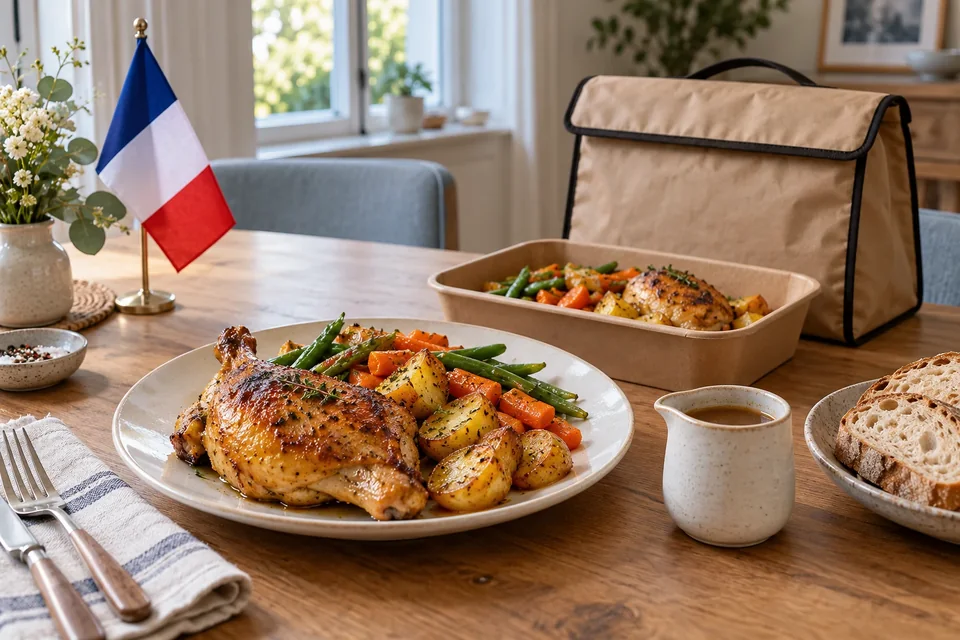
French Caribbean food delivery: Creole heritage on a plate
French Caribbean food delivery means having the Creole cooking of Guadeloupe, Martinique and the neighbouring islands, prepared by a restaurant, a caterer or a home cook, brought to your door. It is a blend of influences: African techniques, Amerindian ingredients, European habits and spices from India carried by indentured workers in the nineteenth century.
A short list of ingredients keeps returning: yam, sweet and plantain bananas, breadfruit, christophine (chayote), cassava, sweet potato, coconut, red beans, lime, thyme, chives and the local hot pepper. Fish and seafood such as snapper, tuna, octopus, conch and crab sit at the centre of the table.
Creole food delivery is routine in the islands and in cities with a large diaspora, such as Paris, London or Montreal. Familiarity does not remove the need for care, though: fish, chilli and fried items all call for a little attention. The two islands share many dishes but not every recipe, so a Martinican cook and a Guadeloupean one may season the same stew differently, and that is part of the appeal when you explore French Caribbean food delivery for the first time.
Accras and Creole starters: freshness and crunch
Accras de morue are small fritters made from a batter of soaked salt cod, chives, garlic and chilli, deep fried. Prawn, vegetable and pumpkin versions exist. Once delivered they are at their best for about twenty minutes; after that the batter turns greasy.
To restore some crispness, place them on a rack in a hot oven for five to eight minutes and never leave them in a closed box. A sauce chien (oil, lime, spring onion, chilli and onion) or a spicy mayonnaise should come in a small pot of its own.
Other starters you may meet:
- boudin créole, a spiced black pudding, warmed gently in a pan;
- vegetable accras for guests who avoid fish;
- green papaya or christophine salad, served cold;
- féroce d’avocat, a rich mix of avocado, mashed salt cod and cassava flour.
Colombo, court-bouillon and blaff: Creole takeaway stews
Colombo is a stew seasoned with a spice blend of the same name, built from turmeric, coriander, mustard, fenugrec and chilli and inherited from Indian cooking. It is made with chicken, pork, kid or vegetables, with pieces of squash, aubergine and potato. It reheats well and the aroma often deepens by the next day.
Court-bouillon is fish or seafood simmered in a tomato sauce with herbs, chilli and lime; blaff is a lighter, aromatic fish broth. Both should be warmed very gently so that the flesh does not break up.
When ordering Creole takeaway of this kind, white rice or rice with red beans, boiled green bananas and yam are the usual partners. Ask for them in a separate tray so they do not soak up all the sauce.
Creole takeaway: bokit, smoked chicken and street food
Bokit is a fried bread from Guadeloupe stuffed with chicken, fish, ham, cheese or salad. It is eaten hot straight from the fryer. When delivered it softens, though a few minutes in the oven bring it back to a pleasant state.
Poulet boucané, smoked chicken, is a Creole tradition, sometimes cooked over a wood fire in halved metal drums, giving a strong smoky taste. It is sold by the portion with rice, red beans and salad.
A hungry group can treat Guadeloupe and Martinique food delivered as a sharing feast. Street food from the islands also includes filled pastries, Creole roast chicken, cassava flatbreads and plantain crisps. These are easy to share, which makes Caribbean food delivered for a group of friends a relaxed choice.
Caribbean food delivered: chilli, allergens and fish safety
The Caribbean pepper, close to the habanero, is extremely hot. It may be whole, chopped or puréed in a dish. Ask for the hot sauce on the side and warn children and sensitive eaters; any request for no chilli should be stated when ordering.
The usual allergens in Creole food delivery are fish and shellfish, gluten (accra batter, bokit dough), egg, milk in some desserts and mustard in colombo. Crab and octopus are unsuitable for people allergic to crustaceans or molluscs.
For fish, a good provider knows its supplier and picks safe species. In Caribbean waters, large reef fish can sometimes cause ciguatera, a toxin-related poisoning, which is why a professional who knows the source matters. Eat the leftovers promptly: cooked fish should not be kept for more than a day or two in the fridge.
Choosing and ordering Creole food delivery well
A serious provider describes each dish, separates Guadeloupean from Martinican cooking, gives quantities and explains how to reheat. It uses a real colombo spice mix rather than a flavourless industrial powder, and can tell you if the sauce was cooked the day before. It also tells you how long a dish keeps, which is valuable when you plan to eat half of it on the following evening. Ask whether the provider cooks in small batches or reheats from a large pot, since a stew made in small quantities usually tastes brighter and its spices are more distinct.
Useful questions:
- Is the colombo made with a traditional spice blend?
- Are the accras fried to order?
- Is the chilli in the dish or served apart?
- Is there a pork-free option?
- What are the portions for a shared Caribbean meal?
Common mistakes with Creole food delivery are ordering too many fried items for a long journey, forgetting to mention allergies and not ordering enough rice. A simple, hot meal beats a sprawling menu that turns up lukewarm.
Frequently asked questions
What is colombo in French Caribbean cooking?
A stew flavoured with a spice blend of the same name, containing turmeric, coriander, mustard, fenugrec and chilli. It is cooked with chicken, pork, kid or vegetables and served with rice.
How should delivered accras be reheated?
Put them on a rack in a hot oven for five to eight minutes. Do not keep them in a sealed container, which makes the batter soggy.
Is Creole food always very spicy?
Not always. The chilli can be served separately, and you can ask for a mild version. The local pepper is very strong, so taste a little first.
Can I find Creole dishes without pork or fish?
Yes, in many cases. Chicken colombo, vegetable accras, and rice with red beans are common alternatives, but ask about stock, lard and other ingredients when you order.