
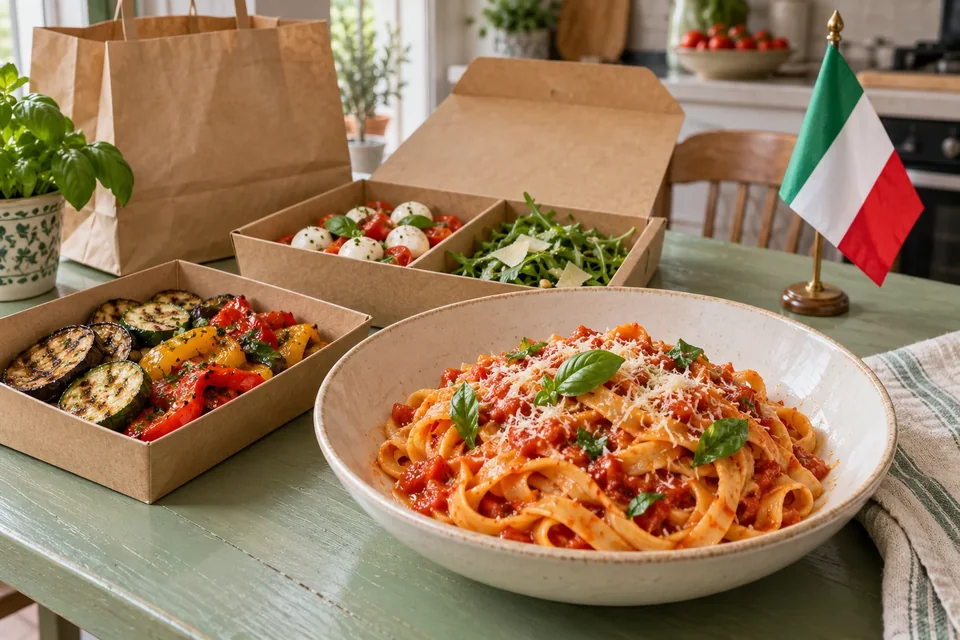
Italian food delivery: more than pizza and pasta
Italian food delivery means ordering the dishes of Italy from a restaurant, pizzeria, caterer or delicatessen and having them brought home: fresh or dried pasta, pizza, lasagne, risotto, antipasti, meat and fish dishes, and desserts such as tiramisu or cannoli. In Britain, Ireland, Canada and the United States, where Italian takeaway is a weekly habit for many households, the choice is enormous.
Italian cooking is regional above all. There is no single Italian cuisine, only the cooking of Lombardy, Emilia-Romagna, Tuscany, Campania, Sicily and many more. A serious provider says which tradition its recipes come from and names its ingredients: Parmigiano Reggiano, buffalo mozzarella, olive oil, San Marzano tomatoes, cured ham.
The format changes with the occasion: a single dish for lunch, a four-part meal in the Italian manner (antipasto, primo, secondo, dolce), or sharing platters for a birthday or a football match with friends.
Pasta delivery without the soggy surprise
Time is the main enemy of Italian food delivery. Pasta that has been cooked and sealed in a box keeps cooking in its own steam and turns soft. Clever kitchens get round this by undercooking slightly, packing the sauce separately, or sending fresh uncooked pasta with the sauce for a two or three minute finish at home.
Baked formats travel best: lasagne, cannelloni, gratinated gnocchi and pasta alla Norma. Short shapes such as rigatoni or penne hold up better than fine spaghetti, and filled pasta like ravioli or tortellini is happiest delivered fresh with clear cooking instructions.
For pasta delivery that still tastes good, and a pizza delivery that still crackles, pour the hot sauce over the pasta just before serving, loosen it with a splash of pasta water or oil if needed, and finish with freshly grated cheese. Tipping everything into a warm pan for a minute often rescues a tired portion.
Pizza delivery: dough, bake and temperature
Neapolitan pizza-making, the art of the pizzaiuolo, is on UNESCO’s list of intangible cultural heritage. It is traditionally baked in a very hot oven and eaten at once. In delivery, quality depends on dough thickness, the amount of topping and a ventilated box that prevents condensation.
Pizza delivery from an Italian kitchen works best when wet ingredients are limited: very watery mozzarella or a fresh salad on top will soften the base. Thinner Roman-style pizzas and thicker focaccia hold up well. To bring back some crispness, put a slice into a hot oven or a lidless frying pan for two or three minutes, not into a microwave.
For a group, ask whether pizzas are delivered together or in waves, since a ten-minute gap between the first and last box is quickly noticed. A takeaway that bakes to order and rides a short distance is a different proposition from a central kitchen that ships across town, so ask where the pizza is actually baked and how long the journey usually takes. Boxes left cooling on a doorstep are the enemy; a driver who rings the bell and hands over the pizza is worth a small tip.
Antipasti, cured meats and cheeses at home
Antipasti are among the best foods to have delivered: grilled vegetables in oil, artichokes, olives, sun-dried tomatoes, cured meats such as prosciutto, mortadella and bresaola, and cheeses including burrata, mozzarella, pecorino and gorgonzola. They come on composed boards or in separate tubs.
Burrata and buffalo mozzarella should be eaten soon after opening and dislike temperature swings. Check the date and keep them in their liquid until serving time.
Italian delicatessens also deliver dry goods: bronze-cut artisan pasta, carnaroli rice, oils, tinned tomatoes, coffee and biscotti. Those items complement Italian food delivery by letting you cook with good ingredients when you prefer to stir the pot yourself.
Italian desserts: tiramisu, panna cotta, cannoli
Tiramisu, panna cotta, Neapolitan pastiera and Sicilian cannoli travel best in individual chilled pots. Cannoli shells soften fast once filled with ricotta, so some bakers deliver shells and cream separately for assembly at the last moment.
At Christmas, Milan’s panettone and Verona’s pandoro are safe bets because they keep for a long time and arrive in sturdy packaging. Espresso, amaretti and Tuscan cantucci round off a delivered meal nicely.
Be careful with desserts containing alcohol, coffee or lightly cooked egg if children or pregnant guests will be eating. Ask for the exact recipe.
Allergens and dietary care with Italian dishes
Gluten, eggs, milk, tree nuts and celery crop up constantly in Italian recipes. Pasta, pizza, gnocchi and breadcrumbs contain wheat; cheese, butter and cream sauces contain milk; pesto often contains pine nuts and cheese.
Some kitchens make gluten-free pasta or pizzas from alternative flours. Where wheat flour is everywhere, cross-contamination is a genuine risk, so anyone with coeliac disease should ask how the food is prepared and whether the workshop is dedicated.
Vegetarian options are plentiful, from margherita to vegetable pasta, parmigiana and mushroom risotto. Still check for meat stock or bacon in the sauce.
How to pick Italian meal delivery that delivers
A few markers sort a good Italian food delivery from an average one: a short menu rather than a hundred items, ingredients named with their origin, packaging suited to each type of dish, and realistic delivery times. A family-run Italian kitchen is not automatically better, but it can usually explain its recipes.
Ask simple questions before you commit to a regular order. Is the pasta fresh or dried? Does the sauce come separately? Is the pizza baked on order? Are half portions available? What happens when a delivery is late?
For a big group, avoid dishes that must be served the second they are ready, such as risotto or thin pasta, and lean on baked dishes and platters. A simple midweek trial order tells you more than a hundred online reviews.
Frequently asked questions
How do I stop delivered pasta overcooking?
Ask for slightly undercooked pasta or the sauce on the side, then finish in a pan with a little water. Baked pasta like lasagne travels better than thin spaghetti.
How can I reheat delivered pizza without making it soggy?
Put it into a hot oven or a lidless frying pan for two to three minutes. A microwave softens the base and makes it rubbery.
Is Italian takeaway suitable for vegetarians?
Yes, there are plenty of meat-free dishes: margherita, parmigiana, vegetable risotto and tomato pasta. Just check sauces for stock or cured meat.
Can I order a complete Italian menu?
Many caterers offer antipasti, a main course, cheese and dessert. Order ahead for groups and give the arrival time and any allergies.