
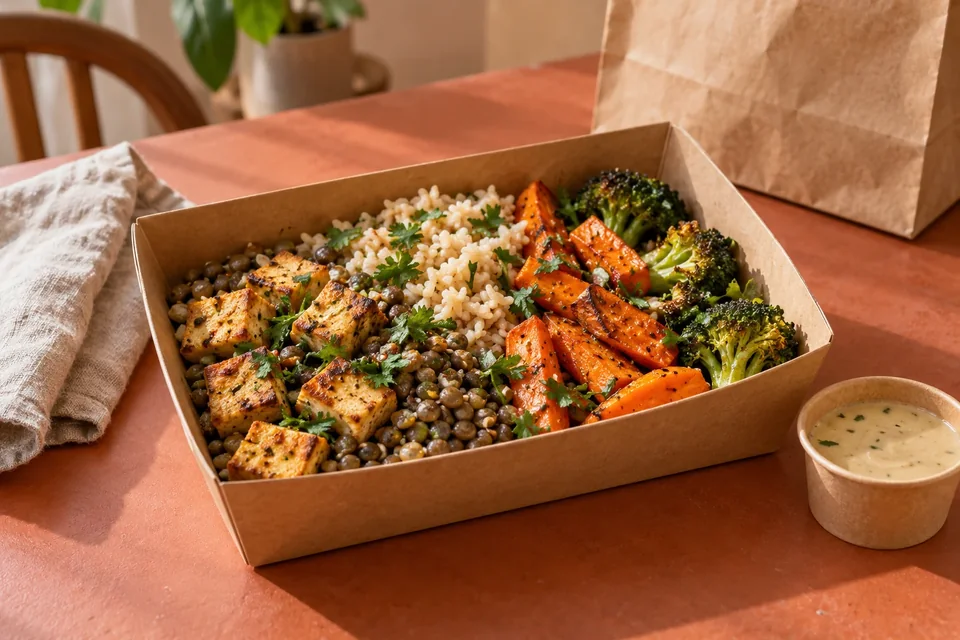
What vegan meal delivery covers
Vegan meal delivery means ready-to-eat or ready-to-heat dishes made without any animal product, brought to your home by a specialist company, a restaurant or a food shop. That excludes meat, fish, dairy, eggs and honey, and in strict kitchens it also covers ingredients such as gelatine, some food colourings and processing aids of animal origin. The service can take the form of chilled trays for the week, frozen meals, a hot dinner from a local café or a recipe kit with the ingredients portioned.
The audience for vegan meal delivery is wider than committed vegans. Flexitarians cutting down on meat, people with lactose intolerance, those who dislike cooking after a long day and families trying a plant-based week all use these services. Because the diet is defined by what is left out, the most important question is not how good the photograph looks but how the dish is made and described.
Quality in plant-based meal delivery varies greatly. A well-designed meal is varied, seasoned and filling. A poor one is a pile of boiled vegetables with a spoonful of rice, which explains why many first-time customers give up quickly.
Reading the label: where animal products hide
A dish called "vegetable curry" is not always vegan. Animal ingredients appear in places many people do not expect: butter or ghee in sauces, cream in soups, egg in pasta and fresh noodles, honey in dressings, fish sauce in Asian pastes and anchovies in some stocks. Some red colourings come from insects, certain wines and beers are clarified with fish or egg products, and some sweets and desserts use gelatine.
The reliable approach is to look for the full ingredient list and for a vegan logo from a recognised body, such as the Vegan Society’s sunflower trademark in the UK. A logo gives reassurance, but plenty of genuinely vegan meals carry none, so the ingredient list stays the final word. Words such as "may contain milk" signal possible cross-contact in the factory, not an ingredient, and strict vegans differ on how much this matters to them.
Restaurants and small kitchens sometimes use the term loosely. If a menu says "vegan option", ask whether the sauce, the bread and the frying oil are free of animal products, particularly when the kitchen also cooks meat.
Protein, iron and balance in plant-based meals delivered to you
A varied plant-based diet can meet nutritional needs, but delivered meals deserve a closer look because a single tray rarely tells the whole story. Protein comes from lentils, chickpeas, beans, tofu, tempeh, seitan, nuts and seeds, and a satisfying main dish normally contains at least one of them in a visible quantity. Wholegrains, such as brown rice, quinoa or bulgur, add fibre and energy.
Certain nutrients need attention over time rather than in a single meal: vitamin B12, which is not reliably found in plant foods unless fortified, plus iron, calcium, iodine, zinc, vitamin D and omega-3 fats. Fortified plant milks, seaweed, nuts, leafy greens and supplements all play a part. Anyone who is pregnant, breastfeeding, very young, elderly or managing a medical condition should discuss their diet with a doctor or registered dietitian instead of relying on a meal supplier.
When comparing offers, look at whether the nutritional information is published, whether portion sizes are generous, and whether meals include a mix of vegetables, protein and starch. A tray that is mostly pasta in a tomato sauce is fine occasionally and thin as a weekly pattern.
Vegan meals delivered: dishes that travel well, and dishes that do not
Some recipes are naturally suited to the journey. Curries, dahls, stews, chillis, soups and tagines taste better after a rest, and hold their texture when reheated. Grain bowls, noodle salads, falafel wraps and roasted vegetable dishes with sauces packed separately also arrive in good shape. Lasagne-style bakes made with cashew or soya béchamel survive well too.
Others struggle. Tempura and fried items lose their crunch, delicate salads wilt, and creamy desserts based on coconut or cashew can split if jostled or warmed. Fresh herbs and crispy toppings are best sent in a small separate pouch, a sign of a supplier that understands the delivered format.
- Choose slow-cooked dishes for midweek evenings when time is short.
- Keep one or two fresh additions at home, such as lemon, herbs or a handful of salad leaves, to lift reheated meals.
- Order sauces and dressings separately where offered.
Plant-based meals delivered from restaurants usually need eating within the hour, whereas chilled trays and frozen meals offer more flexibility on timing.
Allergens: plant-based does not mean allergy-free
It is easy to assume that vegan food is safe for anyone with an allergy, and this is wrong. Plant-based cooking leans heavily on nuts, soya, sesame, celery, mustard, lupin and gluten-containing grains, all of which are among the 14 allergens that food businesses in the UK must declare. Nut-based creams, seitan, which is pure wheat gluten, and soya-based meat alternatives are examples of common vegan ingredients that are problematic for some people.
Anyone with an allergy should read the allergen statement on each meal, ask the supplier about cross-contact on the production line, and never rely on a "vegan" badge as a safety guarantee. Parents choosing meals for a child with a food allergy should check each new product, even from a supplier already used, as recipes change.
Gluten-free vegan meals exist but are less common, and the combination of coeliac disease and a vegan diet needs a supplier who can show dedicated procedures, not just a statement.
Storing and reheating plant-based meals safely
Food safety rules for vegan meals are the same as for any other cooked food, and cooked rice, pulses and soy products deserve particular care. Chilled meals should be put in the fridge on arrival, kept at 5 degrees Celsius or below and consumed by the use-by date. Frozen trays go into the freezer at once and are defrosted according to the label.
Reheat until the dish is steaming hot throughout, stirring partway so no cold spots remain. Cooked rice is a known risk if left at room temperature, because bacteria can produce toxins that reheating does not destroy, so cool leftovers quickly and keep them in the fridge for no more than a day. A dish that has been reheated should not be cooled and reheated again.
Check delivery packaging when it arrives. Cool bags and ice packs should still be cold, and boxes should be intact. If the contents feel warm, photograph them and contact the supplier before eating anything.
Choosing a vegan meal delivery provider: criteria that matter
Several criteria separate a dependable vegan delivery supplier from a disappointing one. Transparency comes first: complete ingredient lists, allergen declarations and clear explanations of what "vegan" means in that kitchen. Variety follows, with a rotating menu that includes different cuisines, textures and flavours, so that Monday’s meal is not the same as Thursday’s.
Practical points count too. Flexible subscriptions that can be paused, reasonable delivery windows, recyclable packaging, a customer service that responds and fair minimum orders matter in everyday use. Sourcing may be important to some buyers, whether that is organic produce, local farms or fair-trade ingredients, but these claims should be backed with specifics.
Start with a small order and judge how the food tastes, how it is packed and how the company handles any issue. A trial of three or four meals will reveal more than any website.
Common mistakes and moments when vegan delivery makes sense
The commonest error in vegan meal delivery is treating the first order as a test of veganism rather than of the supplier. A person who dislikes a bland curry may dislike that curry, not plant-based food. Other frequent mistakes include ordering too few meals and ending up bored, ignoring protein, forgetting to check labels on sauces and sides, and keeping meals in the fridge beyond their use-by date.
Vegan meal delivery is especially useful in specific situations: a busy week at work, a change of diet that still feels unfamiliar, recovery from illness when cooking is hard, a visit by a vegan guest or a family event where a plant-based dinner is needed. It can also help someone who lives in an area with few vegan restaurants.
For most people, the service works best as a complement to home cooking, filling the gaps on tired evenings, rather than as an everything-delivered diet.
Frequently asked questions
Is every dish labelled plant-based automatically vegan?
Not always. "Plant-based" is a marketing term that can describe a product with small amounts of animal ingredients, such as honey or milk powder. A vegan claim should be backed by an ingredient list without animal products, and a recognised vegan logo adds confidence.
Can children eat delivered vegan meals?
Children can follow a well-planned vegan diet, but they need enough energy, protein, vitamin B12, iron, calcium and other nutrients. Parents should seek advice from a doctor or dietitian, and treat a delivery as one part of the diet, not a full plan.
Do vegan meals delivered by a restaurant stay safe for long?
Hot meals from a restaurant are best eaten within an hour or two. If you want to keep them, cool them quickly, refrigerate and eat within a day, reheating until steaming hot. Chilled and frozen trays from specialists carry a use-by date and follow different rules.
How do I find out whether a vegan delivery reaches my address?
Providers usually ask for a postcode or ZIP code on their website or app. Coverage can differ by day and by courier zone, so check the delivery area and the next available slot before choosing a subscription.