
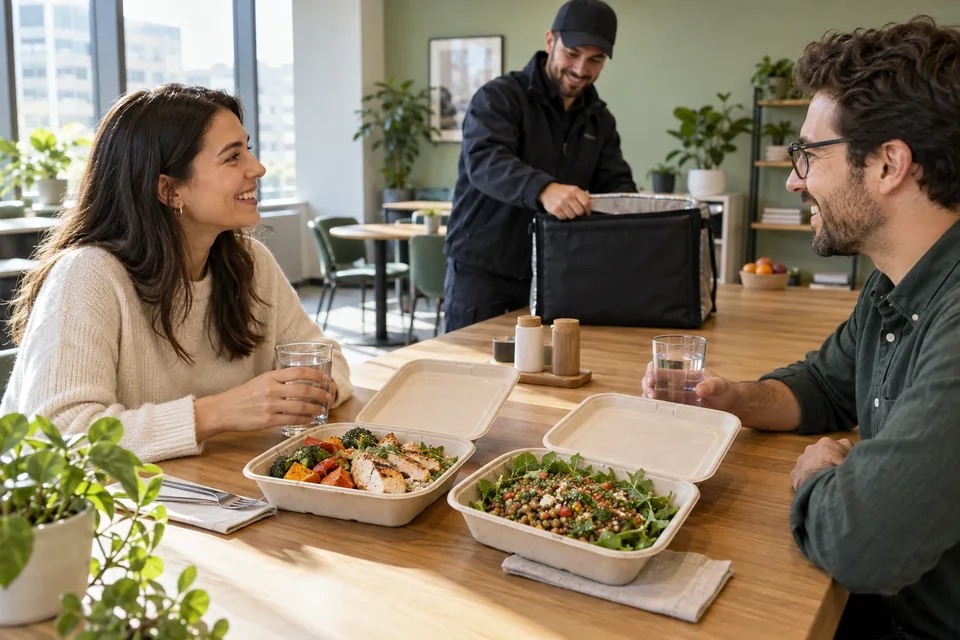
Halal meal delivery: a definition and who it serves
Halal meal delivery is the supply of cooked or ready-to-heat dishes prepared according to Islamic dietary law and brought to the customer’s home by a restaurant, caterer or specialist company. "Halal" is an Arabic word meaning permitted, and it applies to the ingredients, the way meat is sourced and the cleanliness of the kitchen. The service is used by Muslim households, by hosts who invite Muslim guests, by hospital visitors, students away from home and anyone who prefers the ethical standards associated with halal meat.
In the UK, large Muslim communities have created a rich halal takeaway market, from curry houses and kebab shops to grill restaurants and meal-prep brands that advertise halal menus. Similar offers are found in Ireland, Canada, the United States, Belgium and Switzerland, particularly in larger cities. The main challenge for the customer is not finding a business using the word, but judging how reliably it is applied.
The label can mean different things. For one outlet it covers only the meat; for another the whole kitchen, including sauces, oils and desserts. Knowing which is the case avoids unpleasant surprises at the table.
The principles that make a dish halal
Several principles apply. Pork and its derivatives are prohibited, as are alcohol and any ingredient made with it, blood and animals that died without proper slaughter. Meat must come from a permitted animal slaughtered by a Muslim in line with prescribed practice, with the name of God invoked and the blood drained. Fish and vegetables are generally permitted, though schools of thought differ on certain seafood.
Beyond the ingredients, the preparation matters. Utensils, surfaces and fryers must not have been contaminated by forbidden substances, so a kitchen that cooks pork on the same grill may not qualify without proper cleaning, depending on the strictness of the customer and the scholar they follow.
There is also a lively discussion among scholars about practices such as stunning before slaughter and machine slaughter. Different certifying bodies accept different methods, and it is the customer’s choice which opinion to follow. A trustworthy supplier explains its position instead of claiming that everyone agrees.
Halal certification: who checks and what the label says
Halal is not protected by a single national legal definition in every country, which means a "halal" sign on a shop window can mean anything from a verified certificate to a personal assurance. In the UK, bodies such as the Halal Food Authority and the Halal Monitoring Committee certify butchers, processors and restaurants, and each follows its own standard on slaughter methods. In other countries, local mosques and councils take a similar role.
A certificate normally names the business, the products or premises covered, the issuing body and a period of validity. Customers can ask to see it or look at a logo on the packaging, and many serious suppliers display the certificate in the shop and on their website. A fully halal restaurant or kitchen is usually more reassuring than a menu that offers a few halal dishes beside non-halal ones.
When a supplier cannot name its certifier, or says only that "the meat is halal" without explaining where it comes from, ask further. Honest businesses are used to the question and answer it without offence.
Mixed kitchens and the risk of cross-contact
Many restaurants serve both halal and non-halal food. Where this happens, the main worry is cross-contact: shared grills, deep fryers, chopping boards, tongs or marinades. A halal chicken breast fried in oil that earlier cooked bacon would not be acceptable to most observant customers.
Questions worth asking include whether the halal items are prepared on separate equipment, whether the meat is stored apart, whether the oil is shared and whether pork is on the premises at all. A kitchen with a firm answer, a separate section or a fully halal menu is a safer partner than one that gives vague reassurance.
- Delivery-only kitchens frequently operate with one menu, which makes full halal status easier to control.
- Chains sometimes designate certain branches as fully halal and others not, so check the branch, not just the brand.
- Platter and mixed-grill offers can combine halal and non-halal items in one box, so confirm the packing arrangements.
Customers should not feel awkward about asking a halal takeaway or caterer. Halal meals delivered to a home are a matter of faith, and questions of faith are matters of conscience, and a business serving the community expects them.
Dishes that suit halal food delivery
Many traditional dishes are well suited to halal home delivery, and halal meals delivered from curry houses or grills keep their flavour. Biryani, curries, tagines, kofta, grilled kebabs, shawarma wraps, mixed grills, stews and rice dishes retain flavour and heat. Mezze, soups and breads arrive in good condition. Sweet items such as baklava, kunafa and date pastries are easily transported, though cream-based desserts need chilling.
Some dishes are less ideal: delicate fried items lose crispness, fresh salads become wet, and flatbreads soften in steam. Ask for dressings and bread separately where possible.
Meal-prep and ready-meal companies offering halal food delivery are also growing, supplying chilled or frozen portions that can be heated at home. These suit families who want to stock the freezer, and travellers staying in a flat without a kitchen.
Ramadan, Eid and festival orders
Demand for halal meal delivery peaks in Ramadan, when families break the fast at sunset and often order a dinner for larger groups. Suppliers may run special iftar menus with dates, soup, samosas, grills and sweets, and many arrange deliveries timed to the minute of the sunset prayer. The same pressure applies at Eid, when celebration lunches and dessert trays are in high demand.
To avoid disappointment, order well ahead, because popular caterers fill their diaries early, and confirm the delivery time against the local sunset timetable. Check the number of portions, the way food is packed for reheating, and the supplier’s policy on cancellations. A deposit may be requested for large orders.
Bear in mind that the dates of Ramadan and Eid follow the lunar calendar and can move by a day, depending on moon sighting, so a flexible arrangement with the caterer is wise.
Questions to put to a halal meal delivery supplier
A short list helps judge a halal meal delivery supplier quickly. Who certifies the meat and the kitchen, and can the certificate be seen? Is the whole menu halal, or only some items? Is alcohol used in any dish or sauce? How is cross-contact avoided in storage, preparation and packing? Where does the meat come from, and how is it slaughtered?
Add practical questions about delivery area, timing, packaging and allergens. Many halal dishes contain nuts, dairy, wheat and sesame, and the same law that requires allergen information from takeaways in the UK applies to halal businesses as to any other.
Keep the confirmation or the certificate details for future reference. A regular, trustworthy supplier is worth more than a long search each time.
Frequently asked questions
Does "halal" on a delivery app guarantee the food is certified?
No. The word can be used by a business on its own authority. Look for a certificate, a named certifying body or a clear explanation from the restaurant, and ask directly if the information is missing.
Is halal meal delivery available outside big cities?
Coverage is best in larger towns and cities, but some meal-prep and frozen-food companies deliver nationwide. Check the delivery area by postcode or ZIP code, and compare suppliers that ship chilled or frozen products.
Can a restaurant that serves alcohol still offer halal delivery?
Some do, and some customers accept it provided the food is prepared separately and contains no alcohol. Others prefer fully halal premises with no alcohol at all. Ask about preparation, and choose according to your own conscience and religious guidance.
Are halal and kosher the same thing?
No. They are different religious dietary systems with different rules on slaughter, ingredients and preparation, although they overlap in forbidding pork. A kosher label is not a halal certificate, and the reverse is also true.