
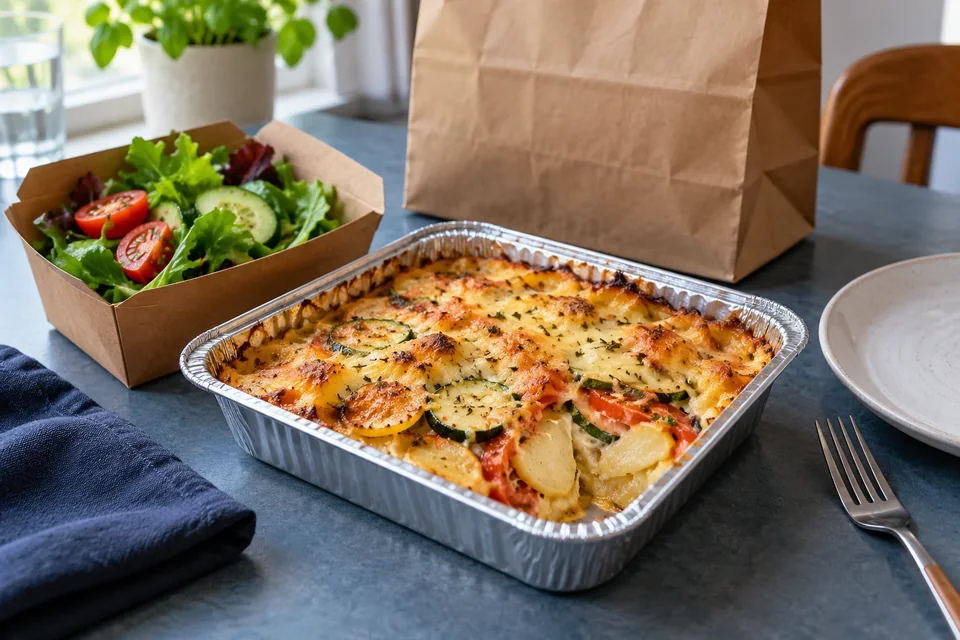
Vegetarian meal delivery: what the term covers
Vegetarian meal delivery means having dishes made without meat, poultry, fish or shellfish brought to your home, either as ready-cooked food from a restaurant, caterer or kitchen, or as a box of measured ingredients that you cook yourself. In everyday British usage, a vegetarian eats dairy and eggs but nothing that comes from slaughter, which is why a cheese and onion pie qualifies and a prawn curry does not.
The label is looser than it looks. Some people who call themselves vegetarian still eat fish, others avoid eggs but keep milk, and vegans avoid every animal product, including honey. A supplier who writes only the word vegetarian on a menu has told you very little, so the useful information sits in the ingredient list and in any recognised logo on the packaging.
Demand for vegetarian meal delivery comes from several directions: long-standing vegetarians who are tired of the same three dishes, households cutting down on meat for health, cost or environmental reasons, and mixed families where one person eats differently from the rest. A delivered dinner removes the daily question of what to cook for them.
Vegetarian meals delivered: cuisines that survive the journey
Some food is simply better at travelling than other food. Slow-cooked and baked dishes reheat well, whereas anything that depends on crispness or a last-minute flourish tends to disappoint after twenty minutes in a bag.
- Indian and Sri Lankan: dal, chana masala, saag paneer, vegetable kormas and aubergine curries improve if anything on standing. Rice and breads can be packed separately.
- Middle Eastern and Levantine: hummus, baba ganoush, falafel with sauces on the side, stuffed vine leaves and spinach pastries make a good sharing spread.
- Italian: baked pasta, vegetable lasagne, aubergine parmigiana and gnocchi with a tomato sauce all go back into the oven happily.
- British comfort food: cottage pie made with lentils and mushrooms, nut roast with trimmings, leek and potato bake, and a good vegetable soup.
- East Asian: dumplings, noodle soups packed with the broth in a separate pot, and stir-fries that are best eaten within minutes of arriving.
Tempura, soufflés and fresh chips are the classic losers. If you want them, collect rather than wait for a courier.
Recipe boxes or ready dinners for vegetarian food delivery
Two quite different products share the vegetarian food delivery label. A recipe box brings pre-portioned ingredients and a card, and you do the cooking in thirty minutes or so. You choose from a weekly menu, and most schemes let you skip a week or cancel before a cut-off day. The advantage of this kind of meat-free meals delivered is fresh, hot food and some control over seasoning; the drawback is that you still need a hob, a pan and the energy to cook after work.
Ready meals arrive cooked, chilled or frozen, and need only reheating. They suit people who are tired, unwell, new to a flat or caring for someone else. Chilled meals demand quick eating, usually within a few days, while frozen ones last much longer but lose some texture in dishes built on vegetables with a high water content.
Before signing up for vegetarian meal delivery, count how many of the week’s options are actually vegetarian. A menu with two meat-free choices out of twelve will not feed a vegetarian household for long, and it helps if the website can filter for them. Check whether the vegetarian dishes are repeated every week or genuinely change.
Eating well on a meat-free diet
Removing meat does not by itself create a balanced meal, and vegetarian meal delivery is no exception. A plate of cheesy pasta supplies plenty of energy but not much fibre or variety. A rounded vegetarian dinner usually combines vegetables in quantity, a protein source such as beans, lentils, eggs, dairy, tofu or tempeh, a starchy base such as rice, potatoes or wholemeal bread, and a modest amount of healthy fat from olive oil, nuts or seeds.
Pairings such as lentils with rice or beans on wholegrain toast give a wider spread of nutrients than any one ingredient alone. Over the longer term, keep an eye on iron, vitamin B12 (found mainly in animal foods and fortified products), iodine and calcium.
Needs differ with age, pregnancy, athletic training and medical conditions. Children, teenagers, older adults and anyone under medical care should take advice from a GP, a dietitian or a registered nutritionist rather than rely on general guidance. The NHS states that a well-planned vegetarian diet can meet nutritional needs, which is the right frame: planning matters more than the label.
Storing and reheating vegetarian meals safely
Vegetarian meals delivered chilled should go into the fridge as soon as they arrive. Dishes made with eggs, dairy, cooked pulses or cooked rice are particularly sensitive to time at room temperature. Follow the use-by date on the pack, and once a container has been opened, finish it quickly.
- Bakes, pies and lasagne: a moderate oven until piping hot in the centre.
- Dal, curry, soup and stew: hob or microwave, stirring halfway through so no cold pockets remain.
- Rice dishes: eat promptly, and never reheat the same rice repeatedly.
- Salads of grains, beans or pasta: take them out of the fridge ten minutes before eating, and keep dressings separate until the last moment.
If food smells sour or shows mould, throw it away even if the date has not yet passed.
Ordering for guests, parties and mixed households
Vegetarian guests often avoid asking what they can eat, so the host who orders ahead does them a favour. State the number of vegetarians when you place the order, say whether eggs and cheese are acceptable, and ask for meat-free dishes to be packed separately so they do not sit in juices from other trays. This matters most at buffets, where serving spoons migrate between dishes.
For a work lunch or a christening, order a little more than you expect, since vegetarian options are frequently the first to disappear. For Christmas and other festive tables, many caterers take orders weeks ahead and set delivery slots, so book early.
How to choose a vegetarian meal delivery supplier
Three things separate a reliable vegetarian meal delivery supplier from a mediocre one: how openly it lists ingredients, how seriously it treats vegetarian food, and how well it delivers.
Start with transparency. Every dish should have a full ingredient list with the fourteen major allergens highlighted, as British food law requires. The supplier should also be happy to say which stock, cheese and fat were used. Then look at range: a good menu rotates through seasonal vegetables and different proteins rather than repeating mushroom stroganoff.
Finally, compare the practical terms: delivery area and time slots, charges, the cut-off for changing an order, and what happens if the parcel arrives late or damaged. A supplier that answers these questions plainly before you pay is usually the one that will answer them again afterwards.
Frequently asked questions
Is vegetarian food the same as vegan food?
No. Vegetarian food excludes meat, poultry, fish and shellfish but normally allows eggs, dairy and honey. Vegan food excludes all animal products. A cauliflower cheese is vegetarian but not vegan, so check the label if you need the stricter standard.
Can a vegetarian dish contain fish?
Not under the usual British definition, but some people who describe themselves as vegetarian still eat fish. Hidden fish ingredients such as anchovies in Worcestershire sauce also catch people out, so ask about sauces and dressings as well as the main ingredients.
Do vegetarian meals delivered to the door provide a balanced diet?
They can, provided they include vegetables, a protein source and a starchy base. Judge the whole week rather than one box. People with medical needs, pregnant women and children should take advice from a health professional.
Can I get vegetarian dinners delivered at the weekend?
Often yes, but it depends on the supplier and your postcode. Some firms deliver only on set weekdays, while restaurant couriers work evenings and weekends. Check the available slots and cut-off times before choosing.