
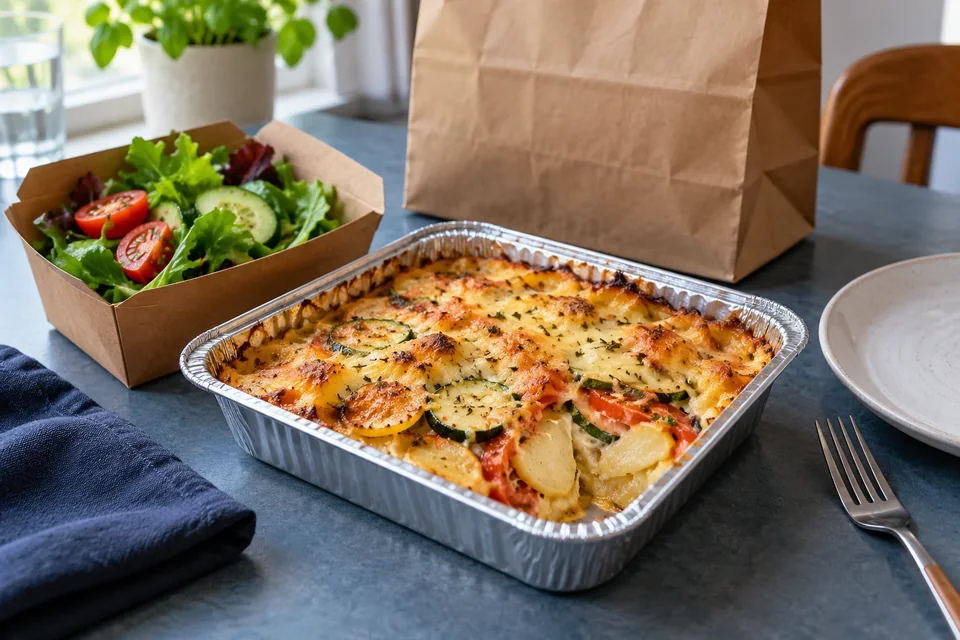
Quiche delivery: what arrives in the box
Quiche delivery means a caterer, bakery, restaurant or delicatessen bakes a savoury tart, with a filling bound by beaten eggs and milk or cream, and brings it to your home. The name comes from the Alsatian-Lorraine word Kuchen, meaning cake, and quiche Lorraine, built on smoked bacon, remains the historic benchmark.
In its traditional form the Lorraine version holds no cheese and no onion, only bacon, eggs, cream and a little milk. Variations are endless: leek, goat’s cheese and spinach, salmon and dill, mushroom, courgette and mint, or pumpkin in autumn.
The dish works well for delivery because it can be eaten warm, cold or reheated, cuts into even slices and needs only a salad beside it. It serves as a lunch, a picnic centrepiece and a buffet staple.
Quiche delivery is also a gentle answer to the question of what to bring when you visit: a whole tart arrives in a sturdy box, needs no cooking at the other end and feeds a table. Bakers who ship in this way tend to bake early in the day and pack once the pastry has stopped steaming, so condensation does not soften the base.
Pastry, custard and fillings: signs of a good quiche
Three things decide quality. First the pastry: a butter shortcrust should be golden on the base as well as the edges, never soggy. Puff pastry gives a lighter result but is more fragile in a bag.
Look also at the edges. A rim that has shrunk away from the tin, or a base that looks pale and damp, suggests the pastry was not blind-baked first, which is the step that keeps a delivered quiche crisp.
Next the custard, which should be set yet soft, trembling slightly at the centre when it leaves the oven, neither rubbery nor watery. Excess water usually comes from vegetables that were not drained, which is why leeks, spinach or courgettes are sweated first.
Finally the fillings must be recognisable and in good proportion: bacon that is properly browned, goat’s cheese with real flavour, salmon that has not overcooked. A quality quiche takeaway shows its ingredients when cut, instead of drowning them in custard.
Slices, mini tarts and whole quiches: how many to order
Providers sell quiche in several forms to suit different appetites.
- The single slice, about an eighth of a large tart, goes with a salad.
- The mini quiche, bite-sized, suits drinks parties.
- The whole quiche feeds four to six people and is cut at the table.
- The mixed platter brings several recipes together for a group lunch or a brunch.
Thinking about portions per head saves waste. With quiches delivered for a family lunch, one whole tart usually covers two adults and two children with salad, while a larger gathering benefits from two different flavours cut into slices.
When quiche is the main course, a generous slice with green salad and bread is enough. For a buffet with other dishes, count smaller slices and vary the flavours so everyone finds something, including a meat-free option.
Side salads for a delivered quiche
A quiche is rich in cream, eggs and fat, so a sharp salad provides balance: mixed leaves with mustard dressing, chicory and walnuts, beetroot, grated carrot with lemon or warm lentils with shallot.
Keeping the dressing apart is vital for delivery. A vinaigrette added too early wilts the leaves and makes the box look sad when opened. Ask for a small pot on the side, or season at the last minute yourself.
Other partners also work: vegetable soup in winter, tomato and basil salad in summer, seasonal raw vegetables or fresh cheese with herbs. For a more filling meal, add sautéed potatoes or a loaf of country bread.
Reheating slices of quiche without drying them
The oven is the best tool: put the slice on a tray, cover it with foil at first, then uncover it near the end so the pastry crisps. Gentle heat stops the custard tightening and weeping.
A covered frying pan over low heat works for a single slice. A microwave warms quickly but softens the pastry; if it is all you have, finish with a few minutes in an oven or toaster oven to bring back some crunch.
Whichever way you warm it, leave the slice to stand for a minute before eating, because the custard continues to set and cuts more cleanly.
Many quiches are just as good lukewarm or at room temperature, notably at lunchtime or on a picnic, because the taste of bacon and cheese comes through better when the tart is not scalding. The key point is that the centre must be hot if you serve it hot.
Storage, allergens and safety for a delivered quiche
An egg and cream filling is a fragile medium, so a quiche must not stay out of the fridge for long. After delivery, eat it within an hour or two, or refrigerate it in a closed box and use it within the time printed on the maker’s label.
On allergens, a quiche almost always holds gluten in the pastry, egg and milk, and depending on the recipe it may add fish (salmon), celery, mustard or nuts. In the UK, pre-packed food made on the premises must carry full ingredient labelling with allergens highlighted, and businesses selling loose or delivered items must be able to give you the same information. If you are allergic, state it when ordering and ask for the exact composition rather than assuming.
For pregnant women and vulnerable people, some cheeses and smoked fish are best avoided; a doctor or dietitian answers better than a general rule. A vegetarian quiche is not always free of animal fat, so check the pastry.
Choosing a baker or caterer for quiche takeaway
For quiche delivery, a few plain questions help. Is the pastry made in house? Do the eggs and cream come from local producers? Does the seller state the weight of slices, the baking time and the shelf life? A provider confident in its products answers without hesitation.
Everyday caterers, bakeries with online ordering, delicatessens and regional food workshops all serve this need well. Quiche takeaway from a specialist usually costs more than a supermarket tart, but the difference shows in the pastry. The most useful criterion is freshness: a tart baked that morning beats one made several days earlier.
Common mistakes in ordering quiches delivered include buying too many at once with no cold storage, forgetting vegetarian guests, skipping the side salad or leaving the box on a radiator in a heated hall. A little thought at checkout avoids all of them.
Frequently asked questions
What is the difference between a quiche and a savoury tart?
A quiche rests on a custard of eggs and cream poured over the filling. A savoury tart may skip the custard and simply place vegetables, cheese or fish on the pastry.
Can I eat a delivered quiche cold?
Yes, many are enjoyed lukewarm or at room temperature. If you prefer it hot, warm it in the oven and check that the centre is hot before serving.
How long can I keep a quiche once it arrives?
Refrigerate it within an hour or two of delivery, then follow the date on the label. Do not refreeze it after reheating.
Which quiches suit a vegetarian meal?
Leek, spinach and goat’s cheese, courgette and mint, mushroom or pumpkin all work. Check that the pastry and stock contain no animal fat or hidden bacon.