
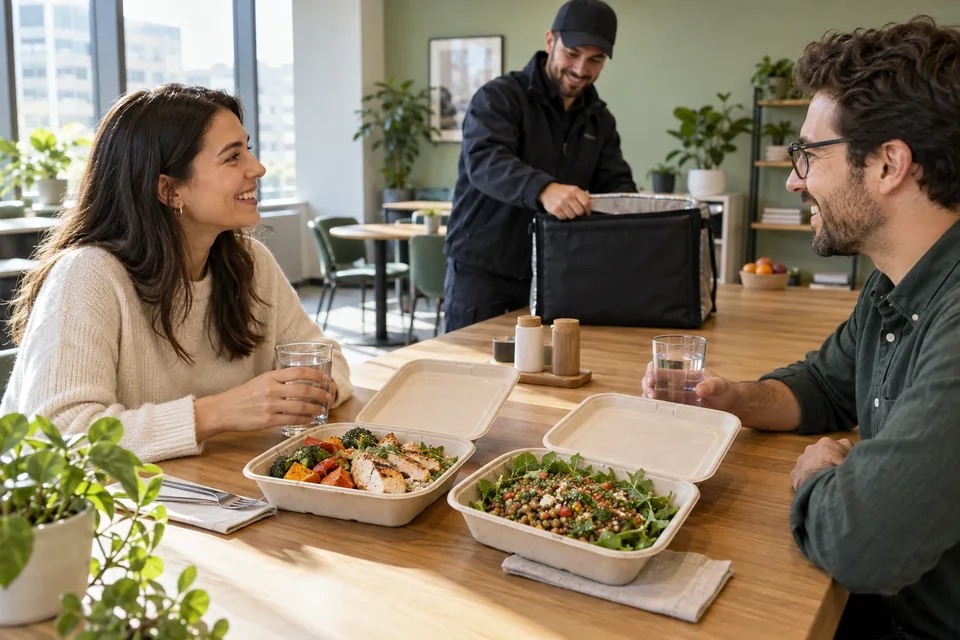
Poke bowl delivery: what a poke bowl actually is
Poke bowl delivery means a restaurant assembles a bowl of rice or another base, pieces of fish or a different protein, raw and pickled vegetables, a sauce and crunchy toppings, and brings it to your home. In Hawaiian, poke (said po-keh) means to cut into pieces, and the original dish was diced raw fish dressed with seasoning.
In Hawaii it was made with tuna, soy sauce, sesame oil, onion and seaweed. The bowl version, which spread from the American West Coast to the rest of the world, adds rice and a long list of vegetables.
Poke bowls delivered to your door answer a wish for a fast, bright, uncooked meal. They are also delicate: raw fish, cooked rice, fresh vegetables and sauce each react differently to time and warmth, so understanding the make-up helps you order sensibly.
Good poke bowl delivery therefore starts in the kitchen: fish kept cold until the last minute, rice cooled to a gentle temperature, and the bowl closed only when everything is ready. A shop that assembles bowls an hour before the rush cannot offer that freshness, however pretty the photo on the app looks.
The base: sushi rice, brown rice, quinoa or noodles
The base fills about half the bowl. Lightly vinegared sushi rice is the most common choice, with brown rice, quinoa, soba noodles or a bed of leaves for lighter versions.
During transport, lukewarm rice behaves better than steaming rice, which would cook the fresh ingredients sitting on top. Careful kitchens let it cool to a mild temperature before closing the lid. Quinoa and noodles absorb little sauce and keep their shape.
Portion balance matters too. A base that is too thin leaves a bowl that is mostly fish and sauce, while a very deep layer of rice makes the meal heavy. Many people find a half-and-half split between base and toppings gives the best bite, and it is reasonable to ask for extra greens if you want something lighter.
If you avoid gluten, check that the rice is not seasoned with a soy sauce made with wheat.
Protein choices: raw fish, salmon, tuna, chicken or tofu
Salmon and tuna are the classics, served raw and cubed. Not everyone wants raw fish, and a good menu offers alternatives.
- Cooked salmon, prawns or white fish.
- Teriyaki-style chicken.
- Marinated tofu or edamame for a plant-based bowl.
- Egg, for a protein-rich vegetarian option.
When ordering, ask whether the fish is served raw or cooked and where it comes from. Pregnant women, young children, older people and anyone with a weak immune system are often told to be cautious with raw fish, so a cooked protein is the easy choice for them; a doctor or dietitian can give advice that fits a personal situation.
Vegetables, fruit and toppings that keep their crunch
The usual vegetables are cucumber, carrot, red cabbage, radish, edamame and avocado. Pineapple or mango adds sweetness, and wakame seaweed brings salt and texture.
Pickled ginger, shredded nori and a few pickled vegetables bring acidity that cuts through the richness of fish and mayonnaise. They are tiny additions, yet they decide whether a poke takeaway tastes balanced or flat.
On the way, avocado can brown and fruit can release juice. Thoughtful kitchens add a squeeze of lemon or pack those items in a compartment of their own. Crispy toppings such as fried onions, sesame seeds, nuts or vegetable crisps travel separately so they stay crisp.
A poke takeaway also depends on the knife work: evenly cut pieces take sauce uniformly and look inviting when you open the lid.
Sauces and seasoning: add them with a light hand
The sauce is the signature of the bowl: sweet soy, citrusy ponzu, spicy mayonnaise, sesame dressing, ginger vinaigrette or avocado cream. It normally arrives on the side, so you decide the amount.
Pour it on at the last moment in small amounts and stir gently. An over-dressed bowl turns salty quickly, because soy concentrates on rice and fish.
Sauces also carry the allergens that matter: soya, sesame, egg in mayonnaise and wheat in some soy sauces. Tell the kitchen about any allergy at checkout and read the information supplied before you eat.
Storage, timing and food safety for a delivered poke bowl
Eat a delivered poke bowl within an hour, or put it in the fridge at once if it has to wait. Avoid leaving it at room temperature, especially when it contains raw fish, cooked rice and dairy.
It is not a dish to reheat: it is meant to be eaten cold or barely cool. If you do not finish your portion, throw away any raw fish. Cooked protein and rice can be kept briefly in the fridge if they were chilled quickly.
The same logic applies to the rest of the bag. Ask for the bowl to be delivered with a cold pack in summer, and open it at the table rather than carrying it around, because every minute out of the fridge counts.
Hot weather demands extra caution, so arrange to be home when the courier arrives instead of letting a bag sit on the doorstep.
How to order poke takeaway sensibly
Before confirming a poke takeaway order, check the contents, the weight of the portion and the origin of the fish. Many chains let you build a bowl by choosing base, protein and toppings, while others sell set recipes.
- Ask whether the fish is raw or cooked.
- State allergies: fish, soya, sesame, nuts, gluten.
- Request sauces and crisp toppings in separate pots.
- Choose a larger size if the bowl is your only dish.
The common mistake with poke bowls to your door is ordering far ahead for a meal you will eat much later. Poke belongs to the moment of delivery.
When poke bowls fit: office lunch, post-workout meal, friends
Poke bowls delivered to the office suit a working lunch, and they also suit a light dinner after exercise or an evening where each guest picks a favourite recipe. For a team meeting, poke bowl delivery works best when you order several different bowls and include at least one vegetarian choice and one without raw fish.
For a social evening, sharing platters with several bases and a range of toppings work well, provided you have bowls, chopsticks and spoons for everybody.
Poke delivery also works for people who share a flat or a household with different tastes: one person can have raw tuna, another tofu, a third chicken, and nobody needs to cook separately.
Children often like cooked versions with chicken, sweetcorn and mild sauce, and they can add their own toppings.
Frequently asked questions
Does a poke bowl always contain raw fish?
No. Many recipes use cooked fish, chicken, prawns, tofu or egg. State your preference when you order.
How long can I keep a delivered poke bowl?
Ideally eat it within the hour. Otherwise refrigerate it straight away and discard any leftover raw fish.
Can a poke bowl be reheated?
That is not the idea: it is eaten cold or just cool. Only cooked proteins can be warmed lightly, and separately.
How do I stop avocado going brown?
Ask for it in a separate pot or with lemon juice, and add it just before eating.