
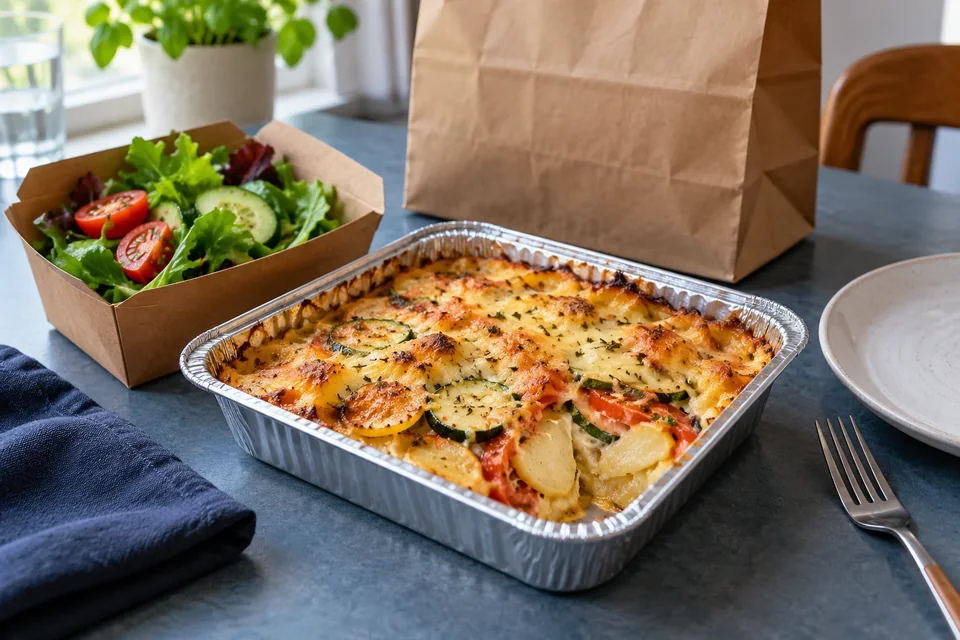
Meat-free meal delivery: what you actually receive
Meat-free meal delivery means ready-to-eat or ready-to-heat dishes that contain no meat, brought to your home by a restaurant, a specialist kitchen, a supermarket or a subscription service. Some are strictly vegan, others include dairy, eggs or fish, and the label on the box does not always say which.
People choose it for many reasons: ethics, health goals, religion, a partner who does not eat meat, or simply a wish to eat more vegetables during the week. Because motives differ, the first job is to decide what you personally mean by meat-free before you scroll through any menu.
A short written definition for your household, for example no meat, no fish, eggs allowed, helps you read ingredient lists quickly and avoids the awkward surprise of a fish stock hiding in a vegetable soup.
The same thinking applies if you are ordering for guests. A dinner party that includes one vegan, two vegetarians and a pescatarian needs a menu where every dish is labelled, and a good kitchen offering meat-free meal delivery will let you choose per portion rather than per tray.
Vegetarian, vegan and pescatarian are not interchangeable
Terms are used loosely by delivery businesses, so it is worth knowing the usual meanings.
- Vegetarian: no meat or fish, but dairy and eggs are normally included.
- Vegan: no animal products at all, including honey, dairy, eggs and gelatine.
- Pescatarian: no meat but fish and seafood are eaten.
- Flexitarian: mostly plant-based with occasional meat, which means a menu may mix categories.
Look for recognised vegetarian or vegan trademarks on packaging, and read the ingredient list even when a symbol is present. Where a dish says plant-based, treat it as a description to check, because it is not a legally protected promise in every country.
Where the protein comes from without meat
A filling meat-free dish usually leans on a few reliable sources: pulses such as lentils, chickpeas and beans, tofu and tempeh, eggs and dairy, nuts and seeds, and wholegrains like quinoa or oats. Combined in the same dish, they make a satisfying plate rather than a plate of side vegetables.
When you compare plant-based meals delivered to your home, look at the composition of the dish and not just the picture. A salad with a few chickpeas and a large amount of lettuce is a different meal from a lentil dal with rice.
Portion size matters too. Very small ready meals may leave an active adult hungry within a couple of hours, and a note on how much each container weighs helps you judge value.
Breakfast and lunch deliveries need protein as much as dinner does. Overnight oats with seeds, egg wraps, bean salads and hearty soups are common examples that keep people full until the next meal.
Animal ingredients that hide in vegetarian dishes
Even carefully labelled dishes can contain animal-derived items that surprise people. Typical examples are stock made from meat or fish, anchovies in sauces and dressings, gelatine in desserts, lard or animal fat in pastry, rennet in some cheeses and Worcestershire sauce.
A supplier who takes meat-free meal delivery seriously will publish a full ingredient list and allergen information for each dish, and will answer questions in plain language. If the answers are vague, treat that as a signal to choose another provider.
People who avoid meat for religious or ethical reasons should also ask about shared fryers and shared preparation surfaces, because cross-contact with meat can matter even when no meat is in the recipe.
Comparing vegetarian meal delivery services
Once your definition is clear, set the offers side by side using the same checklist.
- Variety over a month, not only the first week of sample dishes.
- Whether the menu rotates or repeats the same few recipes.
- Ingredient and allergen information shown before ordering.
- Packaging, which for chilled dishes should keep food cold until it reaches you.
- Delivery windows, skip or pause options and the notice needed to cancel.
Compare a full week of meat-free ready meals rather than a single dish, and treat any quoted price as illustrative until the basket total, delivery fee and any minimum order appear at checkout.
Nutrition points worth knowing when you skip meat
A varied meat-free diet can be perfectly balanced, but a few nutrients deserve attention in general terms: vitamin B12, iron, iodine, calcium and omega-3 fats. Vegans in particular are commonly advised by health bodies to consider a B12 source, and a delivered dish may not provide enough on its own.
This is general information only. Anyone who is pregnant, an older adult, a child or a person with a medical condition should discuss their diet with a doctor or registered dietitian before relying on vegan food delivery or other plant-based meals delivered as their main food.
Check the fibre and salt content on ready meals, because some plant-based products are surprisingly salty and others are very low in fibre.
World cuisines that make plant-based meals delivered easy
Many culinary traditions already have excellent meat-free food. Indian kitchens offer dals, paneer dishes and vegetable curries, Middle Eastern restaurants serve falafel, hummus and stuffed vegetables, Ethiopian fasting dishes are plant-based by custom, and Italian menus include pasta with tomato or pesto sauces and vegetable bakes.
Ordering from restaurants rooted in these traditions often delivers better flavour than a generic substitute for a meat dish. Check whether the dish uses ghee, fish sauce or meat stock, and ask for a vegan version if you need one.
A tasting order of three or four different cuisines is a low-risk way to learn which style your household enjoys, and it shows how each business packs and times its deliveries before you commit to a regular plan.
Storing and reheating delivered vegetarian dishes
Chilled meals should go into the fridge as soon as they arrive and be eaten within the date on the pack. Reheat until steaming hot throughout, and do not reheat rice or pulses more than once, since cooked rice kept warm for long can carry bacteria that cause food poisoning.
If you will not eat a dish within its date, freeze it on the day of delivery if the label allows freezing, and thaw it in the fridge overnight instead of on the worktop. Soups, stews and bean dishes generally freeze better than salads or dishes with fresh herbs and soft cheese.
Frequently asked questions
Is vegetarian meal delivery cheaper than meat dishes?
Not always. Ingredients can be cheaper, but specialist kitchens, packaging and delivery costs often outweigh the saving, so compare the total at checkout.
What should I do if a dish arrives with meat in it?
Do not eat it if you avoid meat. Photograph the label and the dish, contact the business straight away and ask for a replacement or a refund under its stated policy.
Can children eat delivered meat-free meals?
Many families do this, but children have particular nutritional needs. Ask a doctor or dietitian if the child will rely on such meals for most of their food.
How do I find a vegan food delivery near me?
Search local restaurants and independent kitchens as well as national apps, then confirm the vegan status of each dish with the business before ordering.