
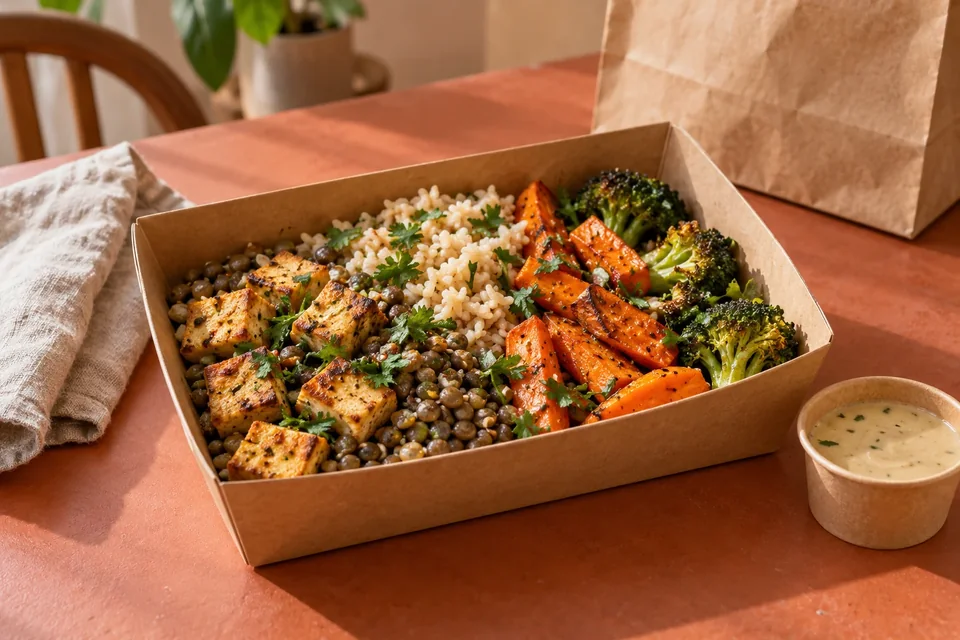
Convalescence meal delivery: the concept
Convalescence meal delivery means arranging ready-to-eat dishes to your door while you regain strength after an operation, an illness or a hospital stay. Unlike a long-term service it is usually temporary, from a few days to a couple of months, and it can be started or stopped as your health changes. It differs from ongoing meals on wheels because the goal is to rebuild independence, not to replace it indefinitely.
Convalescence meal delivery suits people who live alone, whose helper is exhausted, or who tire quickly when standing at a cooker. It is useful too for those with dressings, a cast or limited lifting, who cannot carry heavy shopping or stand for long.
It is not a treatment. Nutrition during recovery is a matter for your care team, and delivered meals are practical support alongside their advice.
Arranging meals after hospital before you go home
Discharge days are busy, and nobody feels like phoning caterers at the door of a ward. If your admission is planned, do the groundwork in advance.
- Ask the ward whether any dietary instructions come with discharge.
- Choose a provider that delivers to your address and can start within a day or two.
- Fill the freezer with a few dishes in the week before surgery, if allowed.
- Tell a relative or neighbour who will be at home when the first delivery arrives.
- Clear a shelf in the fridge and freezer so that chilled boxes fit.
Hospitals sometimes have a discharge team, an occupational therapist or social worker who knows local services, so ask for advice on short-term meal arrangements before you leave.
Remember to tell any delivery business your discharge date rather than the date of your operation, because the weeks that follow are when the service is needed most. Also keep your own emergency supplies, such as tinned soup, crackers and long-life milk, for days when a delivery is delayed.
Appetite and nausea: adapting recovery meal delivery
Recovery rarely follows a straight line. Some days appetite disappears, flavours taste odd, or medication makes you queasy. Food delivery after surgery should therefore come in small portions, with mild options, and ideally from a supplier that lets you change the order at short notice.
Cold, plain dishes can be easier to tolerate than strongly flavoured hot ones, and many people prefer small meals through the day. Soups, scrambled eggs, rice dishes, yoghurt and stewed fruit are frequently mentioned. Small snacks between meals, such as a banana or a handful of nuts if suitable, keep energy up when appetite is low.
If you are following a specific diet because of a medical condition, ask your dietitian or doctor for written guidance, and share it with the provider. A general menu cannot adapt to the details of a treatment on its own.
Protein, energy and fluids in meals during recovery
After surgery or illness the body often needs more energy and protein than usual, though the exact amount depends on the person. Many health services therefore encourage eating regularly and including a source of protein at each meal: eggs, fish, chicken, dairy, pulses or tofu.
Fluids matter as well, especially if you are on certain medicines or have a fever. Water, diluted juice, broth and herbal infusions all count.
When a menu carries nutrition information, use it to compare dishes, but remember that a label is not a prescription. If you lose weight unintentionally or cannot manage meals, speak to your GP or care team.
Ready meals sometimes contain more salt than people realise, so look at the label if you have been told to limit it. Frozen vegetables, fruit and wholegrains from your own cupboard can balance a delivered dish and add fibre, which helps if medication or reduced movement has slowed digestion.
Textures and special circumstances after discharge
Some patients need softer food for a while: after dental or throat surgery, a stroke, or a long period with a feeding tube. Texture advice comes from a speech and language therapist or doctor and should be written down.
People with diabetes, kidney problems or heart conditions often have dietary targets for salt, potassium or sugar. Ask suppliers of recovery meal delivery whether they publish nutrient values, and what portion sizes they use.
Allergies and religious or ethical diets should be mentioned at the first call, and a good provider will ask even before you volunteer the information.
Meals after hospital should also be practical to eat. Dishes in oven-ready or microwave trays, with easy-open lids, suit people with one arm in a sling or weak grip, and lightweight cutlery and plates at home make mealtimes less tiring.
Short-term plans: length, flexibility and organisation
A temporary service should be easy to start and finish. Ask whether there is a minimum number of weeks, how much notice you need to pause, and whether deliveries can skip a day if you are readmitted or visit relatives.
Think about storage too. A shelf of chilled meals requires fridge space, and a stack of frozen portions requires a freezer and a reliable microwave or oven. If lifting trays is a problem, ask whether the courier can put items on a table or in the kitchen.
Compare options in writing before paying, and treat any price quoted in a brochure as illustrative until your final order total is confirmed.
Who does what: relatives, neighbours and home help
Friends often ask how they can help, and food is one of the easiest answers. Agree who calls the provider, who unpacks the delivery, who reheats a dish and who checks that it has been eaten.
Professional home care, community nurses and reablement teams may reinforce the plan, and volunteers from charities sometimes run errands. Ask the discharge team or council whether short-term support is available and how to apply.
Keep a short list of contact numbers beside the phone, including the provider, your GP and a person you trust.
If a relative lives far away, they can pay for meals during recovery online and follow the order by phone, so they feel useful even when they cannot visit in person.
Questions to ask and errors to avoid
Useful questions include where the food is prepared, how ingredients and allergens are listed, what the use-by dates are and how complaints are handled. Frequent errors with convalescence meal delivery are over-ordering during the first days, forgetting that appetite changes, ignoring medical dietary instructions and letting the service run on after you no longer need it.
Frequently asked questions
How long should convalescence meal delivery last?
It depends on your recovery. Many people use it for a few weeks and then reduce deliveries as they regain energy.
Can I order meals after day surgery?
Yes, and ordering beforehand avoids last-minute stress. Follow any dietary instructions you were given by the hospital.
Do hospitals arrange meals after discharge?
Some offer short-term support through discharge teams or social services, but availability differs by place, so ask before you leave.