
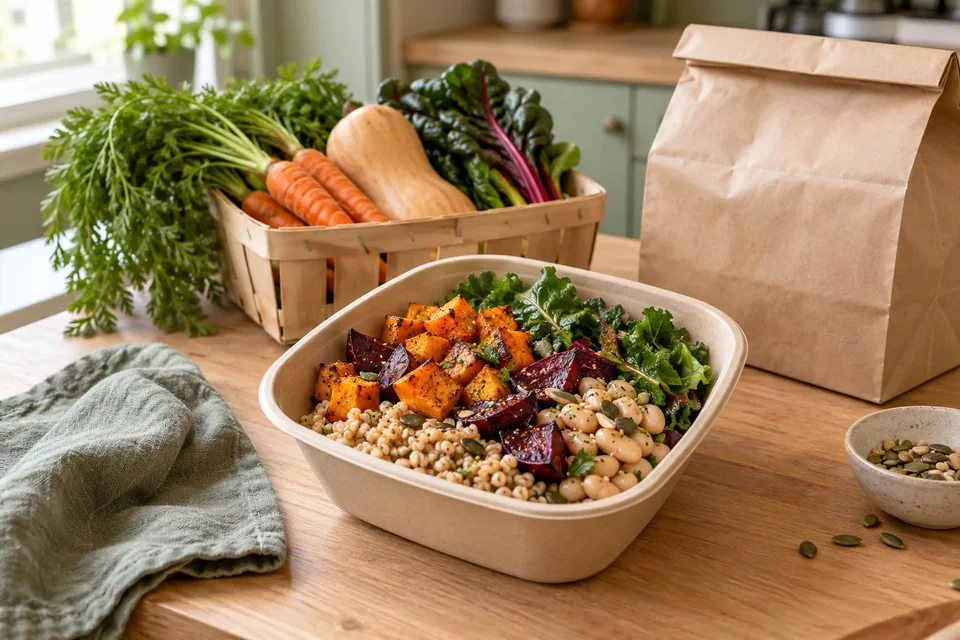
Work-from-home meal delivery: the lunch problem it solves
Work-from-home meal delivery means ordering or subscribing to lunches that arrive at your door on the days you work remotely, whether from a restaurant, a caterer, a delivery app or a cooked-meal service. It answers a very specific situation: the kitchen is a few steps from your laptop, yet there is rarely time to cook, and the temptation to graze standing up is strong.
A delivered lunch at home removes the last-minute shop, the sad sandwich and the argument with yourself at half past twelve. It will not fix a meeting-packed diary, but it can make the midday break a decision taken in advance rather than a scramble.
The best set-up depends on how predictable your week is. Someone with fixed remote days can plan around them; someone whose days change at short notice needs flexibility more than a bargain.
Lunch delivery at home: four formats for different weeks
Four main routes exist, and each suits a different working rhythm.
- A la carte orders from a local restaurant or caterer, ideal for unplanned days and for treating yourself on a Friday.
- Delivery platforms that bring together dozens of venues and often deliver within the hour in dense urban areas, handy when a call overruns.
- Ready-cooked trays ordered for several days at once, then reheated in the microwave or oven. They need fridge or freezer space but cut the daily decision-making.
- Ingredient boxes with recipe cards, suitable if you enjoy a twenty-minute cook as a break from the screen.
Many remote workers mix two: a few cooked trays for the busy days and a platform order as a safety net. Keep a note of what each channel actually costs once delivery and service fees are included, so that the convenience does not quietly become a habit you cannot afford.
Building a delivered lunch that carries you through the afternoon
In work-from-home meal delivery, as in any lunch, a heavy meal brings drowsiness, a light one leads to snacking at four o’clock. For a delivered lunch that supports concentration, aim for a simple balance of three elements.
- Vegetables, cooked or raw, to add volume and fibre.
- A source of protein such as chicken, fish, eggs, pulses or tofu.
- Some starch or wholegrain, such as rice, potatoes, bread or couscous, in a measured amount.
Salads with a proper protein, grain bowls, soups with bread, omelettes with vegetables and noodle dishes with plenty of greens are all reasonable choices. Be careful with fried food, creamy sauces and large sugary drinks on days when you need to stay sharp.
Water on the desk matters as much as the food. Keep a bottle within reach, and treat coffee as a complement rather than a replacement for lunch.
Delivery slots, packaging and the logistics of a midday drop
The food needs to arrive just before your break, not in the middle of a presentation. Delivery apps usually offer an immediate or scheduled slot, while cooked-meal services tend to give a window of several hours, sometimes starting early in the morning.
A few habits avoid disappointment. Give the floor, door code and a reachable phone number, because couriers cannot ring a bell if you are on mute. Set the delivery instruction to “leave with neighbour” or “leave in safe place” only if you are comfortable with it. Choose a slot fifteen minutes before you need to eat, so that a late courier does not push the meal into the afternoon.
Look at the packaging when it arrives. Leaky containers, crushed boxes and warm chilled items are worth reporting to the supplier straight away, with a photo, and most platforms have a refund process.
Storing and reheating a delivered lunch safely
Work-from-home meal delivery brings a chilled or frozen product into the house, and it needs careful handling. Put fresh dishes in the fridge as soon as they arrive, without waiting until the end of the morning. Frozen trays go into the freezer and should not be refrozen after defrosting.
- Stick to the use-by date on every tray.
- Reheat until steaming hot all the way through, stirring halfway if you use a microwave.
- Do not leave a cooked dish on the desk for hours before eating it.
- Throw away leftovers that have been out of the fridge for a long time, rather than keeping them for tomorrow.
Cold dishes such as salads and wraps should stay chilled until you are ready to eat. If you work in a warm room, keep them in the fridge rather than on the desk.
Paying for home-working lunches: vouchers, expenses and employer rules
Employees often wonder whether a delivered lunch can be paid for through a workplace perk. The answer depends on the employer, the voucher or card provider and the supplier: some accept meal cards or vouchers, others do not, and the rules on whether home-working lunches can be claimed as an expense vary between companies and countries.
The reliable method is to check the payment methods shown at checkout and to ask your HR or finance team for the internal policy. As an illustration, a company may offer a monthly lunch allowance for remote days, while another may treat the meal as personal spending.
Tax treatment of meals for people working from home depends on local law and your personal situation. For anything beyond a simple question, ask your employer or an accountant, since general guidance cannot replace tailored advice.
Turning a delivered lunch into a real break
The best lunch loses its value if you eat it in front of the inbox. Leaving the desk, even for ten minutes, improves digestion and the quality of the afternoon. A cleared corner of the table, a proper plate and a glass of water are enough to mark the break.
Plan the week on Sunday evening: identify the days with back-to-back video calls, the days you will cook, and the days you will order. A small calendar of this kind avoids the “what shall I eat?” moment altogether.
Remote-working lunches also work well as a social habit. Some people arrange a call with a colleague or a neighbour over lunch, or take the delivered meal outside to the garden or a bench. Whatever the routine, repetition makes it stick.
Frequently asked questions
Is work-from-home meal delivery more expensive than cooking?
Usually yes per meal, because you pay for preparation, packaging and delivery. Ordering several trays at once, using a cooked-meal service or combining delivery with home cooking can keep the overall cost reasonable.
Can I use meal vouchers or a work allowance for a delivered lunch?
It depends on the voucher provider, your employer and the supplier. Look at the payment methods at checkout and ask HR for the company policy.
How early should I schedule a delivered lunch?
Pick a slot about fifteen minutes before your break so a late courier does not eat into the afternoon. Always give clear access details and a phone number.
How long can a delivered meal stay on my desk?
Hot dishes should be eaten promptly and chilled dishes kept in the fridge until you are ready. Do not leave cooked food at room temperature for hours.