
Mediterranean-style meal delivery: what the label really means
Mediterranean-style meal delivery means dishes inspired by the cooking of the countries around the Mediterranean, prepared by a restaurant, caterer or ready-meal service and brought to your home. What links them is the weight given to vegetables, grains, pulses, fish and olive oil, and the relative absence of heavy, deep-fried or highly processed food.
The label covers very different realities: a Lebanese tabbouleh, a Greek moussaka, a Provençal ratatouille, a Tunisian chickpea stew or a Spanish paella. A single menu can mix several of them under one banner, so it is worth reading the descriptions instead of relying on the heading.
People choose Mediterranean-style meal delivery for several reasons: variety, lighter plates, a way of eating more vegetables without peeling them, or simple curiosity about a regional cuisine. For households tired of the same three suppers, it can widen the weekly menu without much effort.
Note that a Mediterranean diet, in the nutritional sense, is an overall way of eating, not a single dish. A delivered plate can follow its spirit without making any health promise by itself.
Mediterranean dishes across the shores: northern, southern and eastern traditions
There is no single Mediterranean cuisine. In the north, Provence, Italy, Spain and Greece lean on olive oil, tomato, herbs and grilled fish. In the south and east, the Maghreb and the Levant add spices, dried fruit, chickpeas and cereals such as couscous and bulgur.
Among the Mediterranean dishes most often seen in delivery, you might find:
- Ratatouille, fish soup and tapenade from the French coast.
- Moussaka, souvlaki, spanakopita and Greek salad from Greece.
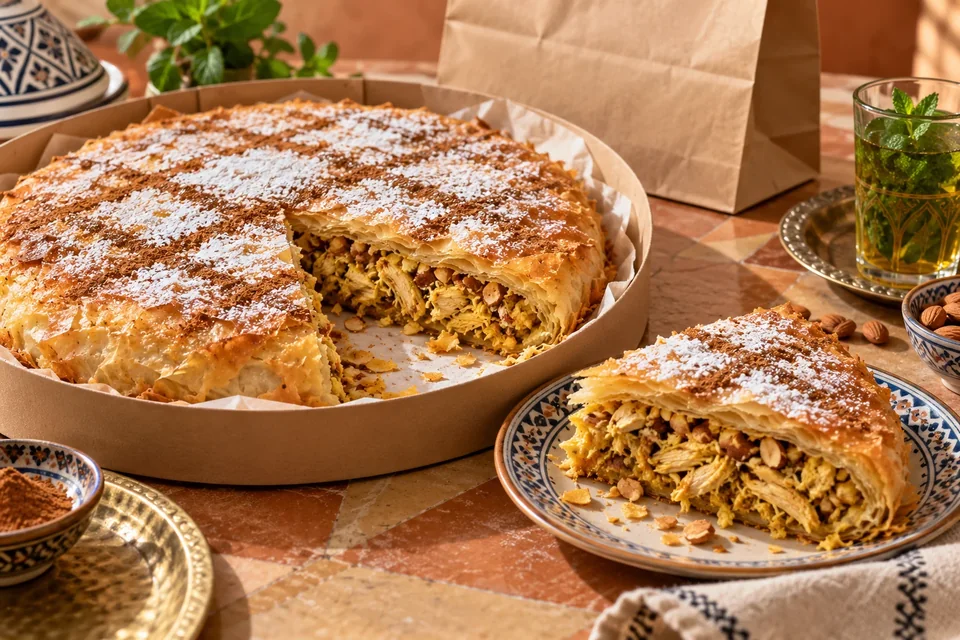
- Tagines, couscous and harira from Morocco, Algeria and Tunisia.
- Hummus, falafel, fattoush and grilled chicken from Lebanon and Syria.
- Paella, tortilla and gazpacho from Spain, and pasta, risotto and caponata from Italy.
Because each country has its own flavours, a caterer who specialises in one tradition usually does better than a menu that tries to cover them all.
Which dishes travel well from kitchen to table
Not every plate survives the trip. Stews and slow-cooked dishes, such as tagine, white beans in tomato sauce or ratatouille, ride well in a container and often improve after resting because their flavours develop with time.
Cold preparations built on grains or pulses, such as tabbouleh, chickpea salad or hummus, handle transport easily if kept cool. Grilled meat and fish are more delicate: they dry out when kept warm for long, so a short delivery time matters.
Fried items such as falafel, calamari or crisp pastries lose their texture within minutes in a closed box. If you order them, eat them straight away or reheat them in a hot oven rather than a microwave.
The cooking time also differs from one dish to another. A grilled sea bream is at its best within minutes, while a lamb tagine can wait an hour in a warm bag without harm. When choosing Mediterranean-style meal delivery for a dinner party, put the slow-cooked dishes in the centre of the table and treat the grilled items as a last-minute extra.
Bread, pitta and flatbreads can be refreshed with a few minutes in the oven wrapped in foil, while herb salads should be dressed at the last moment.
Reheating and completing a delivered Mediterranean meal
Delivered meals arrive hot, cold or in trays to be reheated. Hot dishes should be eaten soon after arrival, and trays should be kept to the date shown and heated until steaming through.
Roasted vegetables regain their texture in the oven rather than the microwave. Couscous and bulgur should be reheated with a spoonful of water so that they do not dry out. Fish reheats best gently, covered, for a short time.
You can improve a simple order at home: squeeze fresh lemon over grilled fish, add chopped parsley or mint to a salad, serve a green salad alongside a stew, or finish with fresh fruit, such as figs, oranges or melon, instead of a heavy dessert.
Choosing a caterer or restaurant for Mediterranean food delivery
Several kinds of provider bring these dishes home: local Lebanese, Greek, Italian, Turkish or North African restaurants, specialist caterers who deliver to offices and households, delivery platforms and ready-meal services. Each answers a different need, from tonight’s supper to a spread for friends or a weekly stock.
Before ordering, check the delivery area, the cut-off time, whether you can order a day or more ahead, and whether trays or sharing platters are available. For a group, a platter of mezze, grilled skewers and salads is often more satisfying and easier to organise than individual dishes.
Compare two or three menus before settling. The range of Mediterranean meals delivered in a large city can be wide, while a small town may only have one or two places, in which case a phone call often gets you more than the app.
Ask about vegetarian and vegan choices, which are plentiful in this cuisine, and about halal sourcing if relevant. A caterer who can answer calmly about ingredients and preparation is usually one worth trusting.
Frequently asked questions
Is Mediterranean-style meal delivery healthy?
It can be, because the cuisine leans on vegetables, pulses, grains and olive oil. But healthiness depends on the actual dish, its salt and fat content and the portion. If you have a medical condition, ask your doctor or dietitian.
Which Mediterranean dishes reheat best?
Stews, tagines, bean dishes and ratatouille reheat well and often taste better the next day. Fried foods and grilled fish are better eaten soon after delivery.
Are there vegetarian options in Mediterranean food delivery?
Yes, many. Hummus, falafel, stuffed vegetables, lentil soups, spinach pies and vegetable tagines are common, but check whether stock, cheese or animal fat are used.
Which allergens deserve attention?
Sesame (tahini), nuts, gluten (couscous, bulgur, pitta), fish, eggs and dairy appear in many dishes. Ask for full ingredient information before ordering.