
Meal delivery after hospital discharge: why it helps
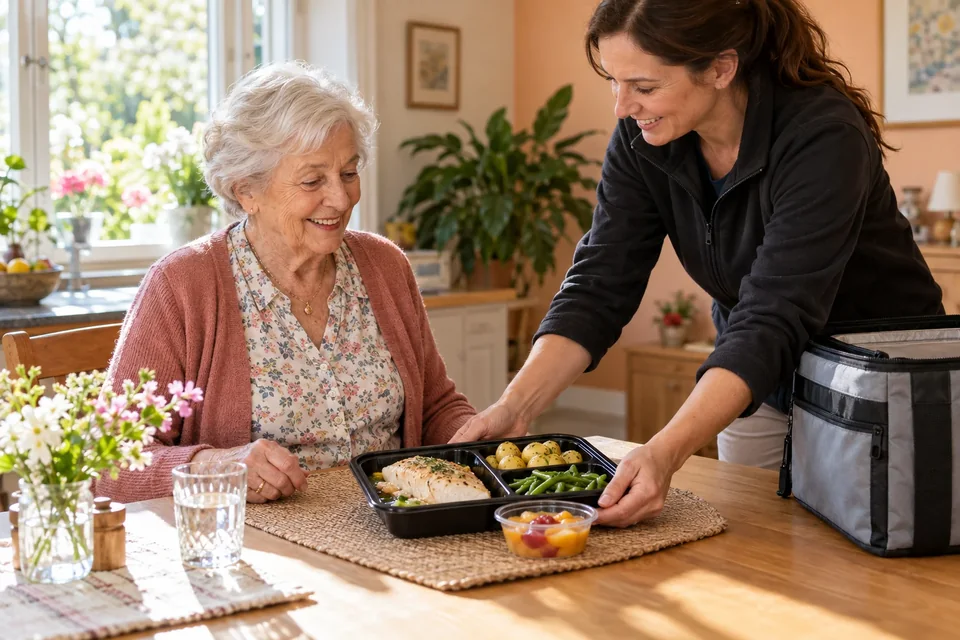
Meal delivery after hospital discharge means having prepared meals brought to your home in the weeks that follow a hospital stay, while strength and independence come back. The need is simple: on the day you leave you are tired, perhaps sore, often unsteady on your feet, and neither shopping nor cooking is easy.
Many people return to an empty fridge, or one full of out-of-date food. An older patient living alone may then skip meals, make do with biscuits or graze, which deepens the tiredness and slows recovery. A balanced meal arriving at a regular hour restores a routine and reassures relatives.
Hospitals are under pressure to free beds, so a discharge can be confirmed at short notice, sometimes within a day. Families who have already looked at two or three suppliers, written down the patient’s diet and agreed who will open the door are in a much stronger position than those starting from scratch on the afternoon of departure.
The arrangement can be short, a few days or weeks for the convalescence. It can also lead to a longer-term service if the loss of independence proves lasting.
Planning meal delivery after hospital discharge before leaving the ward
The best moment to organise meal delivery after hospital discharge is before discharge, not on the day itself. As soon as the medical team mentions a leaving date, raise it with the ward nurse and the hospital social worker, who know the services in the area and can point to a provider or start a request for help.
A few questions to the team are worth asking. Will the person be able to stand long enough to cook? Has a diet been prescribed, such as salt-free, diabetic or adapted texture? Is rehabilitation planned? The answers decide which kind of meals to order.
For the homecoming, a relative can prepare the house: buy basic groceries, check that the fridge and microwave work, clear a path for a walking frame, and make sure someone can receive the first delivery.
Funding home-delivered meals after a hospital stay
Several schemes exist to back a discharge and the meals that follow. In France, for example, the national health insurer runs Prado, which supports the return home in certain situations once the hospital agrees. Pension funds may grant a short-term help after a hospital stay to retirees, on conditions.
Private health top-up insurers often offer discharge assistance that can include home help or meals, depending on the policy. Read the cover or phone the insurer before a planned admission, because some benefits need prior approval. In other countries the equivalent might be a council reablement service or a charity scheme, and the hospital team can explain what applies locally.
The local social action centre and the département can also step in, for example through the personal autonomy allowance for eligible people. The precise rules depend on each scheme and each situation, and the hospital social worker remains the most useful guide.
Which home-delivered meals to choose while convalescing
The choice of menu depends on the person’s condition. After an operation, a light, digestible meal with enough protein is often advised by carers, but only the medical team can say what suits each case. A doctor or dietitian remains the reference for medical advice.
A few practical points help to choose:
- texture: some patients need blended or minced dishes, notably after throat or digestive surgery;
- diet: salt-free, no added sugar, low-residue or low-fat, according to the prescription;
- portion size: a small appetite calls for smaller, more frequent servings;
- allergies and intolerances, to be reported when ordering;
- ease of reheating, when movement is limited.
Convalescence meals vary by supplier, and some providers say their menus are designed by dietitians and suited to people recovering or losing independence. It remains to be sure that the prescribed diet is really available.
How long and how often: meals on wheels after discharge
The pace of meals on wheels after discharge depends on the person. For a short stay and a quick recovery, one to two weeks may be enough. After major surgery, a fall with a fracture or an illness that weakens, the period can stretch to several weeks, with regular reviews.
For meal delivery after hospital discharge, a no-commitment, renewable package suits a convalescence, because it can be stopped or prolonged without penalty. Before signing, ask about the notice period, the option to pause after a new hospital stay and what happens to meals already prepared.
It is also possible to start with a few meals a week and add simple items bought by a relative: yoghurts, fruit, bread, stewed fruit. The aim is not to hand everything over but to secure the main meals.
Food safety and storage at home
With home-delivered meals after a hospital stay, the dishes are fresh or chilled goods that depend on the cold chain. On receipt they must go into the fridge quickly. Respect the use-by date on each tray and reheat a dish only once.
A weakened person is more exposed to food poisoning. Do not leave a dish at room temperature, heat it right through and throw away anything that looks or smells doubtful. A relative can check the fridge during visits.
If medicines come with dietary precautions, certain blood thinners for instance, speak to the doctor or pharmacist before changing eating habits, even with an adapted menu.
When recovery drags on: from convalescence meals to a long-term plan
Sometimes a convalescence reveals a lasting need. If the person still cannot prepare meals after a few weeks, it is time to request an assessment of independence from the local authority, the social action centre or a home-help body.
For post-hospital meal service needs that persist, the assessment makes it possible to consider a full care plan: meals, washing and dressing help, cleaning, shopping support, a personal alarm. Each element may be funded in part by separate schemes, which is why a review with a professional pays off.
Keep a short record as the weeks pass: what was eaten, which dishes were left, any weight loss noticed by a relative and any new difficulty with swallowing. Such notes give the doctor or social worker something concrete to work from, and they make a request for further help easier to justify.
Relatives can also seek support. The family doctor, a district social worker or a carers’ association offer an outside view, useful when deciding between staying at home and another form of accommodation.
Frequently asked questions
Who should I talk to about meals before leaving hospital?
The ward nurse and the hospital social worker. They know the providers in the area and can start a request for help before the return home.
How long should convalescence meals last?
From a few days to several weeks, depending on the situation. A package with no commitment lets you adjust the length.
Is there help to pay for meals after a hospital stay?
Depending on the case: a pension fund grant, a private insurer, the personal autonomy allowance or a municipal aid. The social worker helps to identify them.
Can I order a special diet?
Many providers offer common diets such as salt-free or no added sugar. Confirm that the prescribed diet is available before ordering.
Who should receive the delivery?
The person if able, otherwise a relative or neighbour. Agree this before discharge so that meals are not left on the doorstep.