
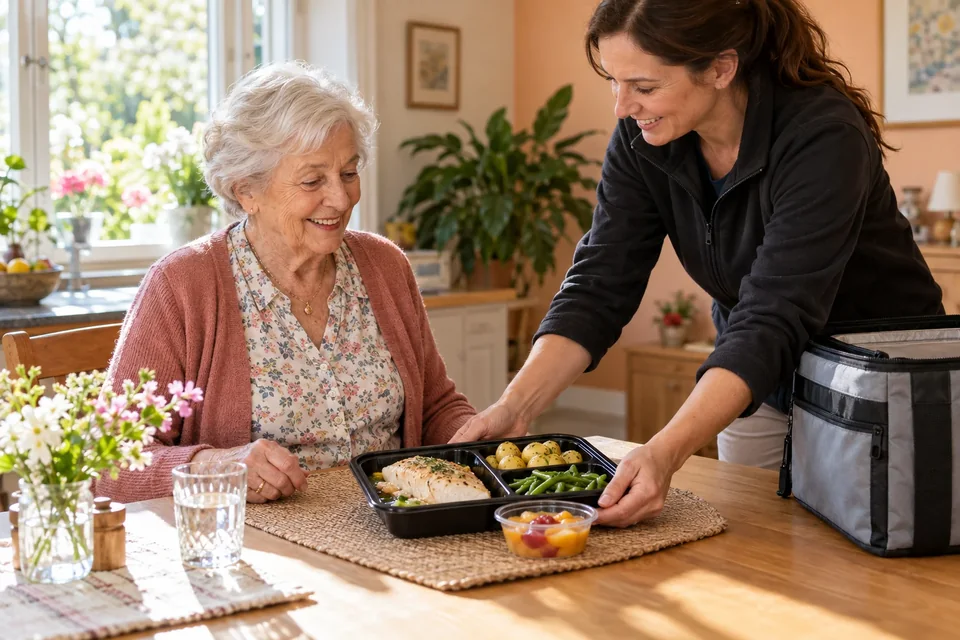
Free meals delivered at home: what the phrase really covers
Free meals delivered at home are hot dishes, chilled portions or food parcels that a charity, volunteer group or public body brings to a person’s door without charging for the food itself. Full free delivery is less common than people hope. More often, the food is free but must be collected, or the delivery is offered at a reduced price that depends on income, age or health.
Behind the label of free meals delivered at home there are several quite different services. Emergency food parcels from a food bank are one. A weekly hot lunch from a volunteer-run community kitchen is another. A council meals on wheels round, with a modest charge that can be reduced after an assessment, is a third. Each has its own rules, and knowing which one you are dealing with saves a great deal of wasted effort.
Availability also depends on where you live. A large city usually has more projects, but rural areas often have a strong network of village halls and volunteer drivers. Opening times and referral rules change, so always contact the organisation before travelling or relying on a promised delivery.
Food banks, community kitchens and charity projects
The first call for many households is a food bank or a community food project. Some operate on referral, where a doctor, health visitor, social worker, school or advice centre issues a voucher. Others accept anyone who walks in. A few deliver to people who cannot leave the house, although volunteer capacity is often the limit.
Community kitchens and pay-as-you-feel cafés sit between charity and restaurant. They cook large batches from surplus ingredients, serve a free or donation-based meal and sometimes lend a hand with packed portions for housebound neighbours. Faith groups, mutual aid networks and housing associations run similar projects, and many advertise on community noticeboards and social media pages.
When you contact a project, ask the practical questions straight away: is the food suitable for your diet and allergies, does it include something you can eat without cooking, and is there a limit on how often you can use the service? Ask whether the project can point you to other help such as debt advice, energy support or benefit checks, since many are linked to these services.
Council schemes and subsidised meals for older or vulnerable adults
Local authorities and health boards sometimes run or fund meals on wheels, lunch clubs and meal vouchers. Where charges apply, they may be set at a flat rate for everyone, or reduced for those on a low income. A person with high care needs may qualify for a larger contribution after an assessment.
To find the right contact, search for adult social care or older people’s services on your council website, or phone the main switchboard and ask who deals with meals. In Ireland, the local community organisations and the Health Service Executive may be the starting point; in Canada, provincial and municipal programmes vary widely; in the United States, the area agency on aging can connect you to home-delivered meals funded under the Older Americans Act.
These subsidised meals, which are sometimes the closest thing to free home meals, often come with a short welfare check by the person delivering. That small contact matters a great deal to people who live alone. Ask the scheme what happens if you are not at home when the driver calls, and who is told if you do not answer the door.
Who qualifies for subsidised meals: income, age and situation
Rules for low-cost home-delivered meals vary from one scheme to the next, but several criteria recur and are worth preparing for.
- Household income. Judged against a threshold, using recent payslips, a benefit award letter or a tax document.
- Age or frailty. Meals on wheels often require a minimum age or evidence that you cannot cook safely.
- Referral. A social worker, nurse, doctor or advice worker may need to vouch for your situation.
- Time limit. Many services help for a few weeks or months and then review the case.
- Residence. Councils and local charities normally serve people living inside a particular area.
None of these criteria is a judgement of your character. They simply allow a limited budget to reach the people it was intended for. If you are close to a threshold, ask the organisation to explain how it counts income and whether it allows for extra costs such as rent or disability expenses.
Applying for low-cost home-delivered meals: preparation
A little preparation avoids repeated trips and phone calls. Begin by listing the places nearest to you: the council, a community centre, a branch of a national charity, a food bank, a church or mosque hall. Then gather the paperwork they are likely to request.
- Photo identification and proof of address.
- Evidence of income or benefits, such as an award letter.
- Details of any medical condition that limits cooking or travel.
- A note of dietary needs, allergies and foods you cannot eat for religious or health reasons.
- A contact person who can speak on your behalf if you are unwell.
When you ring, explain your situation in two or three clear sentences and ask what the next step is. Write down the name of the person, the date and what they promised. If the first service has a waiting list, ask whether they can arrange an interim parcel or direct you to a faster one. Apply to several projects at once, because it is common for one to reply within days and another to take weeks.
Scams and false promises around free food offers
Offers of free meals delivered at home are sometimes used as bait. Genuine help does not require you to pay to qualify. Be cautious if an advertisement for free meals asks for a card number, a subscription fee, an upfront deposit or your online banking details. Some firms advertise a free first box and then bill monthly for a plan that is hard to cancel; read the cancellation terms before giving any payment details.
Treat unexpected phone calls, texts or social media messages offering food aid in exchange for personal data with suspicion. Charities and councils do not need your bank password. If someone calls claiming to represent a food scheme, hang up and ring the organisation using the number printed on its official website or on a letter you already hold.
Keep an eye on doorstep callers too. A genuine delivery volunteer should carry identification and be expected. If you are unsure, ask a neighbour to be present, or ask the project to confirm the visit by phone before they arrive. Report anything suspicious to your local trading standards office or consumer protection body.
Frequently asked questions
Are there really free meals delivered at home?
Yes, in some areas. Volunteer groups, charities and local authorities deliver free or heavily reduced meals, mostly to older, housebound or low-income people. Availability and eligibility depend on your location.
How do I find reduced-cost meals near me?
Contact your council’s adult social care team, a community centre, or a national charity branch, and ask about meals on wheels, lunch clubs and food projects. Your doctor or an advice centre may also refer you.
Do I need to prove my income?
Often, yes. Many schemes ask for a benefit letter, payslips or a tax document, though emergency food projects may accept a referral or a simple statement of need.
Is a free trial meal box a genuine offer?
It can be a normal marketing offer, but it is not charity aid. Check the cancellation terms and never give card details unless you are happy to pay if you forget to cancel.
Social grocery shops and solidarity restaurants
Not all help is a free parcel, and reduced-cost meals can stretch a tight budget further. Community shops and social supermarkets sell groceries at deep discounts to members who meet certain criteria, typically living in a defined postcode area or being referred by an agency. Members usually cook at home, so they suit people who can handle basic preparation.
Solidarity restaurants and community cafés offer reduced-cost meals, sometimes with a suspended meal system in which earlier customers pay for a meal that a later visitor can claim. These are not delivery services, but some will pack a portion for a neighbour or relative who cannot attend. It is worth asking, politely, whether this is possible.
Both options help the budget without the stigma that some people feel when asking for emergency food. Because membership is often time-limited, ask how long you can use the shop and whether the scheme offers cooking classes, budgeting help or advice on benefits during that period.