
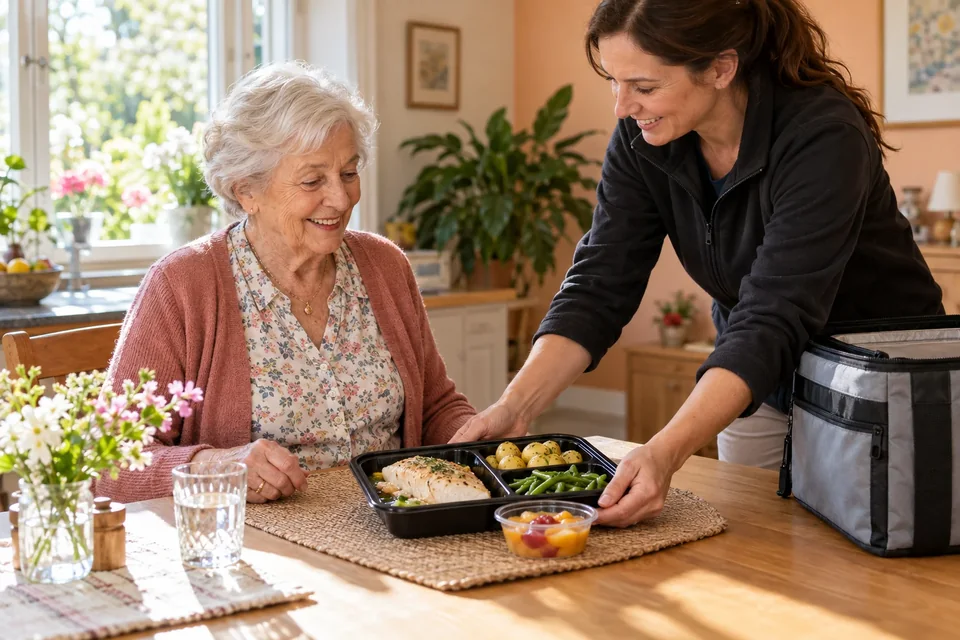
Grocery and meal delivery: two services with one aim
Grocery and meal delivery describes two separate services that households increasingly use together: an online shop that brings raw and packaged ingredients, and a supply of ready-cooked dishes that need only heating. One feeds your own cooking, the other replaces it on the days when you cannot or would rather not cook.
The difference shows up in the basket. A grocery order contains milk, fruit, tins, cleaning products and everything you will turn into meals yourself. A prepared-meal order contains finished portions: a casserole, a curry, a shepherd’s pie, a soup. Many people discover that either one alone leaves a gap. Groceries without cooking energy end up in the bin, and prepared meals alone can get expensive and repetitive.
Putting the two together is sensible for older people, for carers, for people recovering from illness and for anyone with a long working week. Getting the best from grocery and meal delivery means understanding how each works, how to organise them side by side and how to watch the costs and the food safety details.
Grocery delivery: the main ways to order
Grocery delivery comes in several forms, and each suits a different lifestyle.
- Home delivery from an online supermarket. You build a basket, pick a time slot and a driver brings the bags to your door, sometimes into the kitchen.
- Click and collect. You order online and collect from the shop or a locker. There is no driver, but you need transport.
- Convenience and quick-commerce apps. Small baskets arrive in under an hour, usually at a higher price per item.
- Recipe boxes. Pre-portioned ingredients with a recipe card, delivered weekly, for people who want to cook but not plan.
- Local producers. Veg boxes, butchers, dairies and bakeries that deliver on set days.
Time slots fill up quickly before weekends and bank holidays, so book early. Check the substitution policy as well: you can usually allow or refuse substitutes for each item, which matters if you have an allergy or a medical diet.
Prepared meals delivered: fresh, frozen or hot
Prepared meals delivered to the door cover a wide range. Restaurant platforms bring hot dishes in under an hour. Meal subscription brands supply fresh chilled dinners for the week. Frozen meal specialists offer long shelf life and larger menus, and community meals on wheels schemes bring a hot or chilled lunch on certain days.
For most households, chilled and frozen options are the most practical combination with groceries because they can be stored and used when needed. Check the reheating method before ordering: a microwave-only meal is no use without a microwave, and a dish that needs oven cooking takes more effort than someone with limited mobility may want.
Menus matter. Look for a clear nutritional breakdown, allergen labelling on each portion and options that match your diet, whether that is vegetarian, halal, kosher, low salt, diabetic-friendly or soft food. If a supplier cannot tell you what is in a dish, choose another.
Three ways to combine a weekly shop with ready meals
Different households need different mixes. These three patterns work well and can be adjusted to your own habits.
- The weekly base. One grocery delivery for staples, fruit, vegetables and breakfast items, plus three or four prepared meals for the busiest evenings.
- The meal-led week. A subscription of ready dishes for lunch and dinner, topped up by a small grocery order for bread, milk, fruit and drinks.
- The stock-up fortnight. A large order every two weeks of frozen items and cupboard food, with fresh top-ups from a local shop or a short-notice delivery app.
Start with the pattern that is closest to your current routine and change it after a month. Note what you threw away, what you ran out of and which days felt hardest. That record shows quickly whether you need more meals, fewer groceries or a different delivery day.
If you support a relative, a shared online account makes it possible to place or adjust orders from a distance and to see what has been delivered.
Keeping food fresh: cold chain and unpacking
Fresh and frozen food should not wait on a doorstep. Use a delivery slot when someone is home, or ask whether the supplier uses insulated bags and ice packs. If a driver has to leave an order with a neighbour, agree this beforehand.
When the delivery arrives, put chilled and frozen items away first and check the use-by dates. Reject anything that feels warm, has damaged packaging or has an unusual smell. Reputable suppliers will credit or replace such items if you report them promptly, so keep photographs and contact them the same day.
- Keep the fridge cold enough to store chilled food safely.
- Label prepared meals with the date they arrived.
- Reheat until piping hot all the way through, and do not reheat more than once.
- Keep raw meat on the bottom shelf, away from cooked dishes.
Older people and anyone with a weak immune system should be particularly careful with leftovers and with reheated rice or chicken.
When a carer or relative is a better answer than a meal service
A driver drops off the food; they do not unpack, cook, or notice that someone is eating less than before. If the difficulty goes beyond logistics, a home carer who cooks, shops and keeps an eye on wellbeing offers something that no grocery and meal delivery arrangement can replace.
Watch for warning signs: expired food in the fridge, untouched deliveries, weight loss, confusion about the day or the time of a meal. These may call for a conversation with a doctor, a social worker or the family. Relatives who live far away can use a shared online account to place orders and phone at meal times.
For the person receiving the food, small habits help. Keep a short list of favourite items, ask for the same delivery driver where possible and set a regular day, so the routine is easy to remember. A good meal service and a regular grocery order should make life simpler, not add paperwork.
Frequently asked questions
Can I get groceries and ready meals in one delivery?
Sometimes. Some online supermarkets sell ready meals alongside groceries, so they arrive in the same slot. Specialist meal suppliers usually deliver separately, so you may need two orders.
Is it cheaper to order groceries or prepared meals?
Groceries usually cost less per portion, but only if you cook and avoid waste. Prepared meals cost more but save time and effort. Many households combine them to balance cost and convenience.
How do I keep delivered food safe?
Put chilled and frozen items away straight away, check dates, reheat meals until piping hot and report any warm or damaged goods to the supplier the same day.
Can a relative order for an older person?
Yes. Many suppliers allow a second person to manage the account, pay online and choose the delivery day, as long as the person receiving the food agrees.