
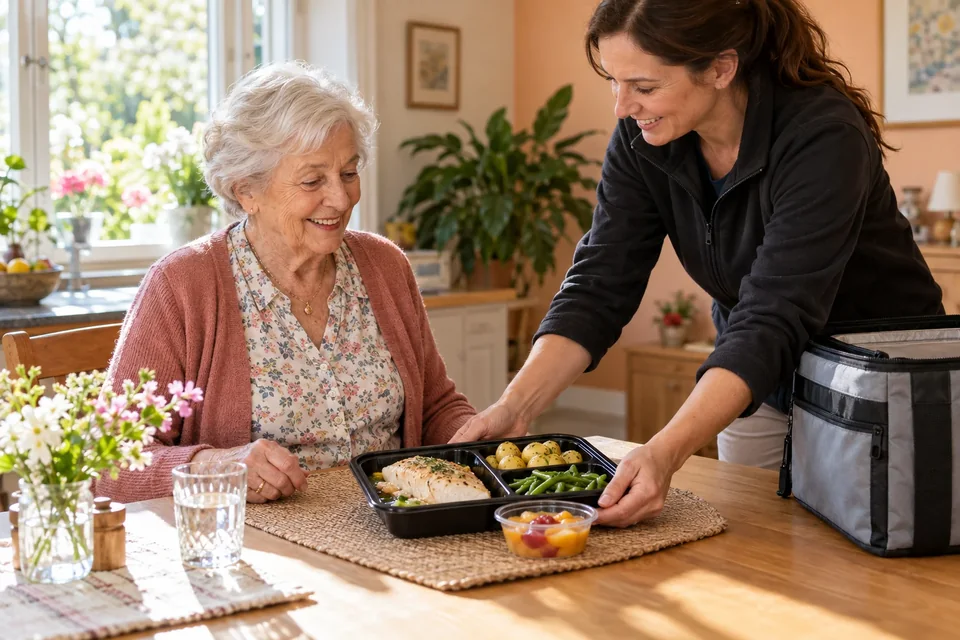
What meal delivery in rural areas involves
Meal delivery in rural areas is a service that brings prepared dishes to people living in thinly populated villages, hamlets or isolated farms, where there may be no restaurant nearby and no shop selling cooked food every day. It matters most to older people, to those recovering from illness or living with a disability, and to anyone who no longer drives or cannot cook daily.
Rural meals on wheels follow different rules from the urban kind. Geography is the big difference from a city. An urban driver can drop several meals in one street, while in the countryside every mile counts. That affects timing, how often a visit is possible and sometimes the price, which is why the offer differs so much from one district to the next.
Before anything else, ask a basic question: is my address covered, and by whom? The answer can change from one parish to the next.
Who might run rural meals on wheels
Several kinds of organisation can bring food to a country address, and it is worth asking all of them rather than stopping at the first refusal.
- The local council or social services: some areas run their own scheme, with a central kitchen or a contract with a caterer.
- Home-help associations: in France, the ADMR network is strongly rooted in rural districts and says it offers meal and shopping deliveries through a local branch you must identify by your town.
- National private companies: some ship across the whole country through a chilled courier, usually within two to three days.
- Local restaurants, caterers and shops: a village pub, a deli or a butcher will sometimes drop off a few dishes if asked.
A farm in the countryside and a cottage in a remote village may sit on different rounds, even when both are in the same parish. Keep notes of each reply, including who you spoke to and what they said about future availability.
Understanding delivery rounds in the countryside
In sparsely populated places the service runs in rounds: a vehicle leaves the kitchen at a set time, follows a fixed route and drops food at each registered address. Delivery rounds in the countryside are long. A single round can last several hours and cross several villages, which limits the number of days on which it runs.
Ask three practical things: which days the van calls, roughly what time, and how the meal is handed over. A visit between eleven and noon suits a same-day lunch. A morning drop of several meals at once means they must be kept cold and reheated later.
If your home is at the end of a track, explain the access: a gate, a dog, a postbox far from the house or a lane that turns to mud in winter. A driver who knows these details wastes less time and leaves the food in the right place.
How often will the driver call?
In a rural setting, frequency is often what decides whether a service works. Daily calls are still possible in some market towns, but many areas offer two or three visits a week with chilled meals to reheat. The hot lunch carried to the door every day, long the picture of meals on wheels, becomes rarer as distances grow.
That is not necessarily a drawback if you organise yourself well:
- check how much room there is in the fridge and, if needed, the freezer;
- ask for the use-by date of each dish at the handover;
- learn the microwave or hot-water reheating routine from the packaging;
- keep a back-up meal that needs no fridge in case a delivery is missed.
For someone living alone, even a short regular visit has value beyond the food, because it is a fixed point in the week.
Winter, snow and difficult roads
Weather weighs more heavily on meal delivery in rural areas, especially in hills and mountains. An icy road, late snow, a flooded lane or a closed bridge can delay a round or cancel it for the day. Ask the provider what happens then: a postponed visit, extra meals left the day before, or a phone call to warn you.
Plan ahead on your side, because meal delivery in rural areas has little slack when the weather turns. Keep a few long-life dishes in the cupboard, such as cartons of soup, tinned vegetables and ready meals, plus some frozen portions. Make sure the path to your door is clear on delivery days and give a phone number that is answered.
Summer brings its own risks: in a heatwave, food left in a letterbox or on the step spoils fast. Agree a safe place in the shade or a cool box, or arrange to be home on delivery day.
Other options when nobody delivers nearby
When no scheme reaches your village, alternatives to meal delivery in rural areas exist. A home carer or a community lunch club may fill the gap, and some of these alternatives suit people in remote villages better than a van does. Some parishes run a weekly shared lunch in a hall or care home, with transport offered to those who need it. Mobile shops and producers’ vans call at fixed days in country districts and may carry cooked dishes. A home carer can prepare several meals during a visit, which are then frozen in portions.
You can also ask elderly neighbours whether they would like a joint order. A provider who finds several addresses along one road may find the route worthwhile and agree to extend its area. The parish or town council knows local needs and is the right body to pass that request on.
Paying for it and getting organised
The cost of food delivery to the countryside may include a contribution to travel expenses, depending on the provider. Request a full quote for a typical week before committing, listing delivery charges and any supplements.
Different forms of help may apply according to age, level of independence and income. In France, for example, they include the departmental personalised autonomy allowance, help from a pension fund, farm-workers’ social insurance for its members and support from the commune. Each is assessed separately and nothing is guaranteed in advance.
Finally, put together a small file: the provider’s contact details, delivery days, dietary needs and a person to call. Kept somewhere visible, such as on the fridge, it helps both a carer and the emergency services if they are needed.
Frequently asked questions
Can an isolated village get meals delivered?
In many cases yes, but it depends on the provider and its distance from the kitchen. Contact the council, a local home-help association and, if needed, a national company that ships by chilled courier.
Why are rural deliveries less frequent than in towns?
Because each round covers long distances for few addresses. Many services call two or three times a week and supply meals to reheat.
What if snow stops the delivery?
Ask the provider in advance about its procedure: postponement, spare meals the day before or a phone call. Also keep a few long-life or frozen dishes in reserve.
How do I find out who delivers in my area?
Start with the town hall or social services, then the home-help association for your district. In France, the ADMR network has a tool to find the local branch for meal deliveries.