
Meals on wheels service: what it is and who uses it
A meals on wheels service is an arrangement under which meals are prepared in a central kitchen or by a caterer and then carried to a person’s home on an agreed rhythm, typically several days a week. In France the same idea is called "portage de repas", and a British reader living or retiring there will meet that term on town hall and charity leaflets.
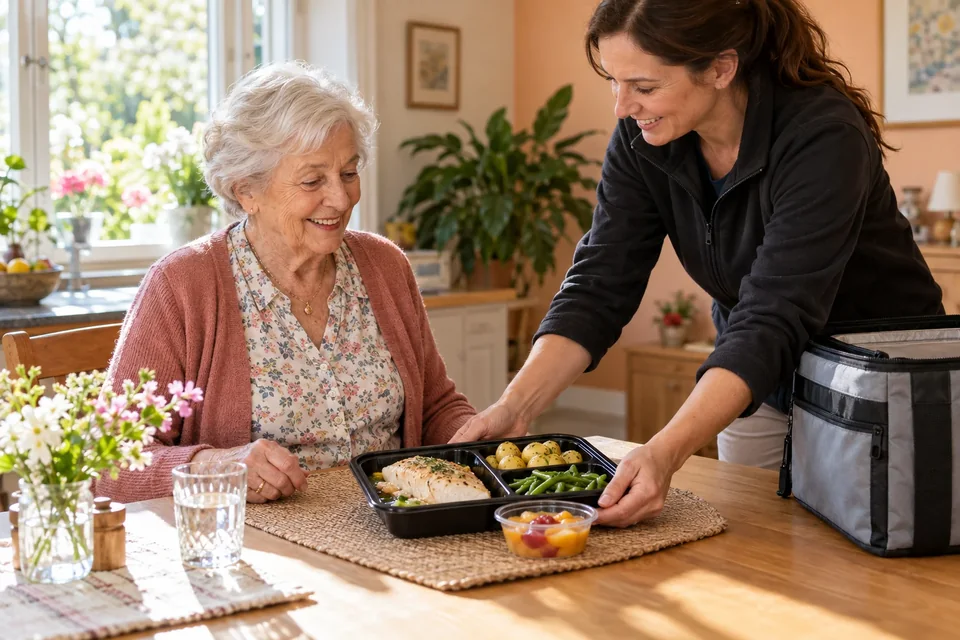
The meals on wheels service is aimed first at older people, yet it also helps adults with a disability, people leaving hospital and anyone for whom shopping and cooking have become too tiring. The meal is normally handed over in person, so the delivery round also gives a few minutes of conversation and a quick look at how the person is doing.
That human contact is part of the value of a meals on wheels service, and of home-delivered meals in general. A tray left on a doorstep is a different thing from a handover by someone who notices when the curtains are still drawn at noon.
From first request to the first tray: how sign-up works
Setting up home-delivered meals starts with a request to an organisation. It may be the town hall, a local social-action centre, a home-care charity or a specialised company. A registration form collects identity, address, the contact details of a relative, the number of meals wanted each week and any special needs such as a diet, an allergy or a texture.
The request is then studied. Depending on the body, an officer phones or visits to check the entry conditions, explain how things work and learn what the person likes to eat. A written confirmation follows, with the days and the time slot, and the first round begins once the paperwork is complete.
- Contact the organisation and describe the situation.
- Complete the registration form with a relative if possible.
- Receive the assessment call or visit.
- Get the written timetable and price terms.
- Receive the first delivery and give feedback after a week.
Allow some lead time for meals delivered at home to be arranged. After a hospital stay is planned, applying early avoids a gap in meals.
Hot or chilled: two ways a delivery round works
Meals on a delivery round arrive in one of two ways. With the hot method, the food is cooked and kept hot in an insulated container until it is handed over. It can be eaten straight away, but food-safety rules require quick distribution after cooking, which limits how long a round can be.
With the chilled method, the dish is cooked, cooled fast, packed in single-portion trays and carried in a refrigerated vehicle. The person reheats it when ready. This gives more freedom, since several meals can be dropped off in one visit, and it suits scattered rural areas.
A published account from an intercommunal social centre in the Dordogne shows the trade-off. The service there judged the hot rules almost impossible to meet over long rural routes and chose chilled delivery, which allowed seven meals a week with weekend dishes brought on the Saturday. The account also admits that taste may be slightly lower than with a freshly cooked hot meal.
Receiving, storing and reheating delivered meals safely
When the tray arrives, put chilled items straight into the lower part of the fridge, where the temperature is steadiest. A label usually shows the contents, the use-by date and the reheating instructions.
Reheat in a microwave or a pan of simmering water, removing the film as the instructions say. The dish should be piping hot all the way through, stirred halfway, and a reheated portion that has been started should not go back into the fridge.
- Check the date before each meal.
- Keep the trays in their original packaging until use.
- Tell the provider if a tray arrives warm or damaged.
- Do not keep leftovers from a reheated dish.
If eating alone has become difficult, mention it to the delivery person, who can pass the message on.
Who runs a meals on wheels service: council, charity or company
Several kinds of body run a meal delivery round, each with its own rules. Town halls and their social-action centres often serve older residents, while groups of municipalities organise it across a wider area. Home-care charities, including the ADMR network, also deliver meals, frequently alongside other help.
Private companies fill the gaps with menus à la carte and offers that carry no age condition. Some public bodies hire them to cook or deliver under a public contract, so the van at the door may not belong to the organisation you applied to. Asking who prepares the food and who delivers it avoids confusion.
The status of the provider affects the price, the eligibility criteria and who deals with complaints, so it is worth knowing before signing.
Questions to put to the provider before signing up
A few questions prevent unpleasant surprises, and the answers should appear in writing in the rules or the contract.
- Which days and what time slot, and what happens if nobody answers the door?
- How can the arrangement be paused or cancelled, and with how much notice?
- Are the meals hot or chilled, and how many components come in each?
- What is the procedure for an allergy or a special diet?
- Does the price depend on income, and which documents are required?
Tasting a first meal and trying regular meal delivery for a short trial and agreeing a trial week gives a fair picture. If the food, the timing or the manner of the driver does not suit, say so early, because a good regular meal delivery service works only when it fits daily life.
Frequently asked questions
Is a meals on wheels service only for older people?
No. Older people are the main users, but adults with disabilities, people recovering after hospital and anyone unable to shop or cook comfortably may also use it, depending on the provider’s rules.
Are the meals delivered hot?
Some rounds deliver hot food in insulated containers, while many deliver chilled trays in a refrigerated vehicle for the person to reheat. Ask which method is used before signing up.
Can I choose my own dishes?
Usually from a menu that rotates over several weeks. Substitutions, diets and textures can often be requested, but the range depends on the kitchen.
Who can ask for the service on behalf of a parent?
A relative, neighbour or health professional can start the request, although the organisation will normally want to meet or call the person who will receive the meals.