
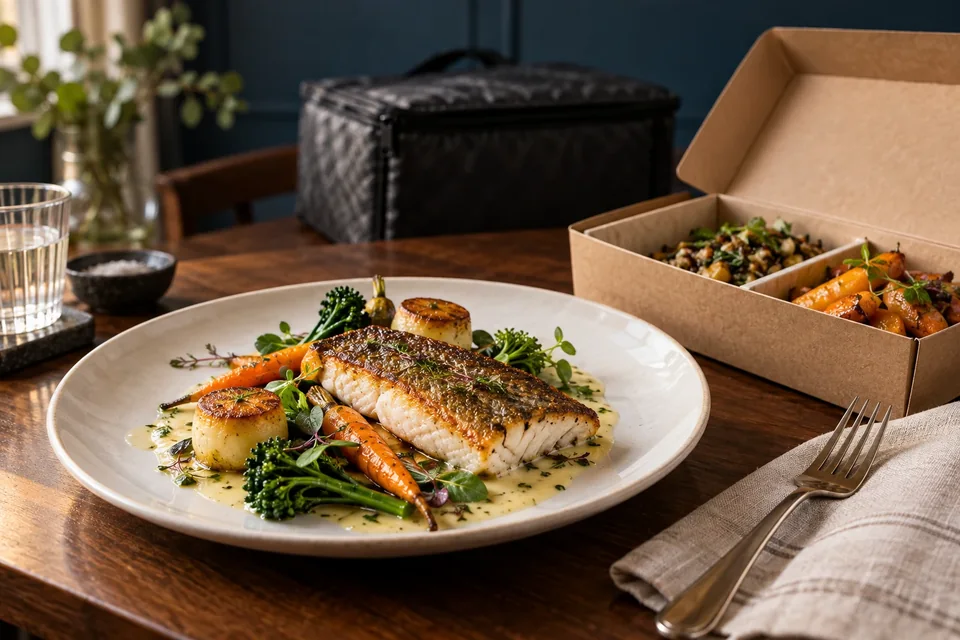
Athlete meal delivery: what it covers and who uses it
Athlete meal delivery means a food service that brings cooked or part-cooked dishes to your door, built around regular physical training rather than general eating. The box may hold chilled trays, frozen portions, bowls to be reheated in minutes or a full week of meal prep, and the labels usually state calories, protein, carbohydrate and fat for each portion.
The customers are more varied than the name suggests. Club runners building towards a half marathon, gym-goers following a lifting programme, cyclists with long weekend rides, rugby and football players on a training schedule and swimmers who leave for the pool before breakfast all turn to sports meal delivery when their timetable leaves no room for batch cooking.
These meals are a convenience, not a coaching service. They do not replace an individual plan from a registered dietitian or sports nutritionist, and they cannot know your injuries, medication or allergies unless you tell the provider and read the label yourself.
What a good set of training meals contains
General sports nutrition guidance rests on three building blocks, with vegetables, fruit and water around them.
- Carbohydrates for fuel: rice, pasta, potatoes, sweet potato, oats, wholemeal bread, couscous;
- Protein for repair: chicken, fish, eggs, dairy, tofu, beans and lentils;
- Fats in moderate amounts: olive or rapeseed oil, nuts, seeds, avocado, oily fish.
A tray labelled high-protein meals is not automatically right for your effort. Look at the whole plate. A portion with 40 grams of protein and a spoonful of rice may suit someone cutting weight on a rest day and leave a marathon runner hungry by mid-afternoon. Fibre matters too: a meal packed with beans and raw vegetables can be fine at dinner and uncomfortable before an early session.
Matching athlete meal delivery to your discipline
Different sports ask different things of a plate, and a provider that offers only one macro split for everybody is a weak fit for most athletes.
Endurance sports such as running, cycling and swimming lean on carbohydrate, so look for generous portions of rice, pasta or potato and the option to add a side. Strength training puts more weight on protein across the day and on enough total energy, particularly for people trying to gain muscle. Team sports sit in between and are shaped by match days, when a heavier carbohydrate meal the evening before is common.
Weight-class sports, such as boxing, judo or rowing, call for careful handling. Rapid weight loss through very small portions is a health risk, and a delivery service should not be used as a crash-diet tool. A qualified professional can set targets; the box then simply makes them easier to follow.
Recreational exercisers who walk, swim twice a week or join a fitness class rarely need specialist formulas. For them, a balanced chilled meal with vegetables and a decent protein source is usually enough.
Timing meals before and after a session
When you eat can matter as much as what you eat. Common guidance suggests a meal rich in carbohydrate and moderate in fat and fibre a few hours before hard training, with a small snack closer to the start if needed. After the session, a combination of protein and carbohydrate helps recovery, and it does not have to be eaten the second you finish.
Training meals make this easier because you can plan the day in advance. Many people set aside one tray for the post-workout window, keep it in the fridge at work or in a cool bag in the gym locker and heat it when they are ready. Lunch-sized portions that reheat quickly are more useful here than elaborate dinners.
Hydration sits alongside food. Sauces and soups count towards fluid intake, but plain water, and electrolyte drinks for long sessions in the heat, are the main tools.
Portions, reheating and how well meals travel
Portion size is the most common complaint about training meals. Calorie needs vary widely with body size and training load, so a standard 400-calorie tray can be too little for a heavy-training adult. Check whether the provider sells small, regular and large sizes or lets you add extra protein and carbohydrate portions.
Delivery quality of any meal prep delivery deserves a look as well.
- Fresh dishes should arrive cold, in insulated packaging, and be eaten within the use-by date;
- Frozen meals keep longer but need freezer space;
- Microwave reheating is quick, though rice can dry out and fish can turn rubbery, so ask whether the tray suits the oven or a pan instead;
- Leave-safe boxes and delivery windows matter if nobody is home during the day.
Never reheat a dish more than once, and keep chilled meals in the fridge until you are ready to eat them.
Allergens, supplements and food safety
Allergen information must be shown on food sold to the public, and good providers repeat it clearly on every tray. Gluten, milk, eggs, nuts, soy, fish and sesame are among the usual items to check. If you have a coeliac condition or a severe allergy, ask how the kitchen avoids cross-contact rather than relying on a free-from claim alone.
Protein powders, creatine and similar supplements are separate from meal delivery. Some athletes who compete under anti-doping rules must be especially careful, and contaminated supplements are a known risk. Anyone who competes at a regulated level should speak to the governing body or a sports doctor before adding products.
People with kidney disease, diabetes or another medical condition should ask their healthcare team before moving to a very high-protein or low-carbohydrate pattern.
How to choose a provider for training meals
A short checklist helps cut through marketing language when you compare athlete meal delivery offers:
- Is the full ingredient and nutrition panel visible before you pay?
- Can you change portion size, pause a week or skip a delivery without penalty?
- Are meals cooked fresh in the region, or do they travel a long way?
- Is there a delivery slot that fits your training, including early mornings and weekends?
- What is the minimum order, and does the delivery charge change with it? Treat any figure you see as an example until you have checked the current terms.
Order a small trial box first. You will learn more from three meals eaten after real sessions than from any menu page.
Planning the week around training and rest days
A practical approach is to map the week before ordering. Mark hard sessions, easy days and rest days, then match heavier carbohydrate meals to the hard days and lighter, vegetable-led dishes to the rest days. Keep one or two flexible slots for social meals, because rigid plans are the ones that fail in week three.
Mix delivered meals with simple home cooking. Boiled eggs, yoghurt, fruit, tinned fish and a bag of frozen vegetables fill gaps cheaply. Many athletes use sports meal delivery for lunches and weekday dinners and cook at weekends.
Review the plan every few weeks. A change in training volume, an injury or a new season should lead to new portion sizes. If energy dips, sleep suffers or weight moves in the wrong direction, talk to a dietitian rather than adding or removing meals blindly.
Frequently asked questions
Is athlete meal delivery suitable for building muscle?
It can be convenient, since protein portions are weighed and labelled. Muscle gain still depends on total energy, training and sleep, so check that the portion sizes are large enough and speak to a nutrition professional for a personal target.
Can I order sports meal delivery if I have a food allergy?
Yes, but read the allergen panel on every tray and ask the provider how cross-contact is managed. If the allergy is severe, treat free-from labels with caution and ask for written information.
How long do delivered training meals last?
Fresh chilled dishes carry a use-by date set by the producer, often a few days, while frozen portions keep much longer. Follow the label and keep chilled food in the fridge on arrival.
Do I need supplements as well as meals?
Not necessarily. Whole food covers most needs for recreational athletes. Competitors under anti-doping rules should take advice from their governing body before using any supplement.