
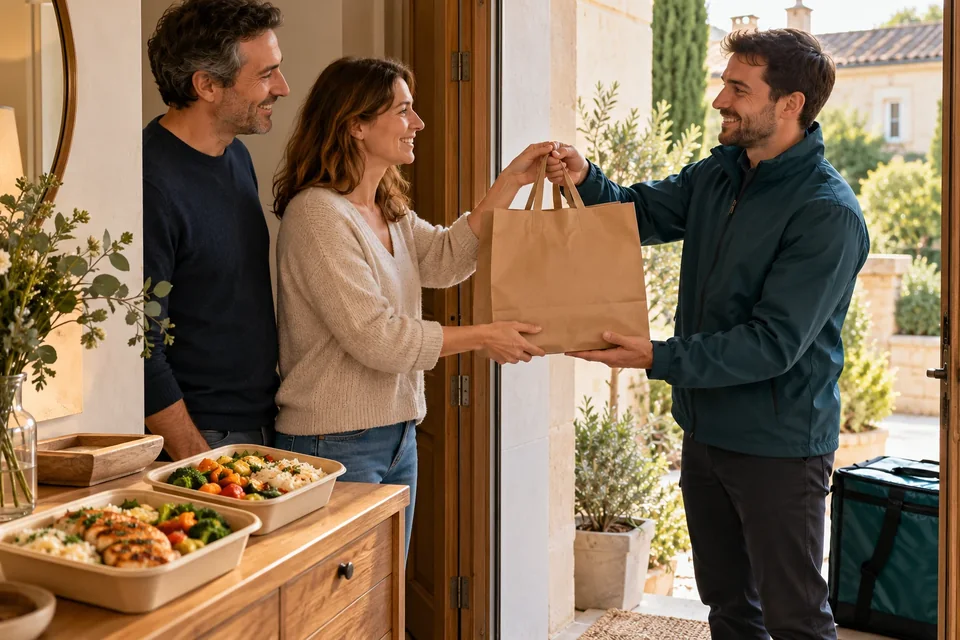
What salad delivery means
Salad delivery means that a restaurant, a fresh-food chain or a caterer prepares a cold dish of raw or cooked vegetables, grains, protein and dressing, then sends it to you in a closed bowl or box. You eat it straight from the bag or after a short rest in the fridge, with no cooking and almost no washing up.
The format is popular because it is quick, and salad bowls delivered at midday fit a short break. You order around noon, lunch arrives at your desk or kitchen table and nothing needs heating. Many people also use it to eat more raw vegetables, fibre and pulses over a busy week.
Salads delivered to the door suit office workers, sports fans, people watching what they eat and anyone who wants something light on a hot day. A plain salad of leaves alone, however, rarely satisfies a big appetite or someone who longs for a hot, filling meal.
Teams sometimes order lunchtime salad delivery together: each colleague picks a bowl, with their own exclusions, so nobody has to plan a shared lunch or queue at peak hours. Weekday lunchtime remains the busiest slot, and every bowl has to stay fresh through the journey.
What goes into a balanced salad bowl
Most menus follow the same simple build, and knowing it helps you read a description.
- The base: lettuce, rocket, spinach, baby leaves, or grains such as bulgur, quinoa, rice and couscous.
- The vegetables: tomato, cucumber, carrot, beetroot, peppers, fennel, avocado, roasted squash.
- The protein: chicken, tuna, salmon, egg, feta, chickpeas, lentils, tofu.
- The crunch: nuts, seeds, croutons, crispy onions.
- The dressing: vinaigrette, yoghurt sauce, pesto, tahini or soy.
A bowl of leaves and a few cherry tomatoes will not last until evening. Look for a starchy element and a source of protein to keep hunger away. Fresh-food chains rotate creative recipes through the year, such as buckwheat noodle salads, chicken tabbouleh or roast squash with lentils and feta.
Seasonal combinations make repeated salad delivery less dull, because the menu changes with the market: beetroot and walnut in winter, heritage tomatoes in summer, asparagus in spring.
Keeping salads delivered crisp on the way to you
Moisture is the enemy. A dressed leaf turns limp within minutes, which is why careful suppliers send the sauce in a small sealed pot. You pour it on only when you are ready to eat.
Wet ingredients such as sliced tomato, cucumber or fruit are sometimes kept apart by a layer of grains. Crunchy toppings travel in a separate pouch. A bowl that is filled to the brim, a habit of good salad bowls delivered at lunch, with little trapped air, also copes better with bumps in the road.
Open the box when it arrives, whether it holds a leafy bowl or a grain salad. A tight lid, a clean seal and a cool feel are good signs. If leaves look pale, brown or slimy, do not eat them. If the salad cannot be eaten at once, keep it in the fridge without dressing and finish it within the hour after taking it out.
Dressings and sauces in salad delivery: flavour, calories and allergens
The dressing makes the salad, so it deserves a careful look. A classic vinaigrette is oil, vinegar or lemon, mustard, salt and pepper. Creamy sauces add yoghurt, mayonnaise or cream and become much richer. Asian-style dressings often contain soy, sesame and sometimes peanuts.
To keep the calories down without losing taste, pour only part of the pot, toss, taste and add more if needed. A well-seasoned bowl does not have to swim.
Dressings are also an allergen hotspot. Mustard, egg, milk, sesame, soy, tree nuts and fish, as in a Caesar dressing, appear often. If you have an allergy, ask for the full list, including the little pots and crunchy toppings added at the last moment.
In summer, ask for sauces in a cool pouch. A creamy dressing warmed by the sun quickly turns unpleasant.
Food safety for home-delivered salads
A salad is eaten raw, so no cooking step removes germs. Washing quality, chilling temperature and speed of eating therefore matter. Do not leave a bowl on a worktop or in a bag without a cool pack for long, especially in hot weather.
Some toppings need extra care: chicken, egg, smoked salmon, cured meats, unpasteurised cheese and sprouted seeds. Pregnant women, young children, older people and anyone with a weakened immune system follow specific advice, which a doctor or midwife can explain.
On delivery, check that the box is intact, sealed and cool to the touch. Respect the date on the label and never keep an opened salad until the next day.
Salad bowls for different diets and goals
A salad meal can be vegetarian, vegan, gluten-free, high in protein or light, but the name alone does not tell the whole story. A "vegetarian" bowl may include cheese or egg, a "gluten-free" bowl may carry croutons that have only been picked off, and a "light" bowl may be drowned in sauce.
For weight loss, muscle gain or managing a health condition, speak to a doctor or dietitian rather than relying on the label. What you can do yourself is read the ingredient list and compare the portions of starch, protein and dressing.
For halal or kosher needs, ask for the supplier’s certification and the origin of any meat and cheese.
Choosing a reliable salad delivery supplier
A fresh-food chain, a healthy restaurant, a deli or a caterer can all deliver salads. Look at how clear the menu is, how precisely ingredients are listed and whether allergens are detailed.
- Is the dressing packed separately?
- Is the container airtight, and insulated for a long journey?
- Do delivery hours match your lunch break?
- Are gluten-free, vegan or high-protein options offered?
A supplier that explains its ordering system, delivery areas and hours inspires more trust than one that stays vague. Some large brands announce delivery without giving details, so look at the ordering page for your own town before you decide.
Try a few places on ordinary days before placing a big order. How consistent a bowl is from one day to the next tells you more than the menu does.
Delivery windows matter as much as the recipe. Many kitchens stop taking orders for lunch at a set hour, and a courier stuck in traffic can leave a bowl waiting. Ask whether the box is insulated and whether home-delivered salads travel with a cool pack during warm months.
Finally, think about waste. Reusable bowls, recyclable cartons and a sensible quantity of cutlery sachets are worth noticing when you compare similar menus.
Frequently asked questions
Why does the dressing come in a separate pot?
It stops the leaves going soft during the journey, which is why salad delivery usually separates the sauce. You pour it on when you eat, which keeps vegetables crunchy.
Can a delivered salad be kept until tomorrow?
It is best eaten the same day. If you must keep it, store it in the fridge without dressing and follow the date on the label.
Is a salad enough for a full meal?
Yes, provided it includes starch and protein. A bowl of leaves alone is not very filling and hunger returns quickly.
How can I spot allergens in a salad?
Read the ingredient list, including sauces and crunchy toppings. If you are unsure, ask the supplier before ordering.