
Food delivery in Los Angeles: a sprawl where the neighbourhood decides
Food delivery in Los Angeles means the services that bring a prepared meal to a home or hotel in a metropolis stretching from the Pacific coast to the inland valleys. Unlike New York, where life happens on foot, the city is crossed by car, and the distance between kitchen and customer is the first constraint on any order.
That changes how people choose. In Santa Monica, Venice or Silver Lake dozens of venues sit a few minutes away; in the residential streets of the San Fernando Valley the delivery area is tighter and waits are longer. Residents therefore compare several delivery apps and watch the arrival time more than the price.
The variety of communities enriches the map: Mexican, Korean, Thai, Armenian, Persian, Ethiopian, Vietnamese and Japanese cooking all sit side by side. Wellness-minded prepared-meal companies, very present in California, come on top.
Koreatown, San Gabriel and Westwood: dishes by district
Anyone planning food delivery in Los Angeles should think by district first, since each area has its own specialities and its own reach.
Koreatown, in the heart of the city, lines up grill restaurants, stews and noodle kitchens open late; several send out meals delivered to neighbouring districts. Thai Town in Hollywood and Little Ethiopia on Fairfax Avenue gather places known for curries and shared platters.
In the San Gabriel Valley to the east, towns such as Alhambra and Monterey Park hold a great many Chinese and Vietnamese restaurants: noodle soups, dim sum and braises. Glendale is tied to Armenian cooking, with skewers and flatbreads, and Westwood to Persian cuisine, rich in fragrant rice, herbs and stews.
Tacos remain the emblem of the city, from trucks and stands to neighbourhood restaurants in Boyle Heights and East Los Angeles. To get a good taco home, order toppings and tortillas separately when possible and eat quickly. Stews and soups travel better than breaded dishes.
Apps, cars and gridlock: how takeout reaches you
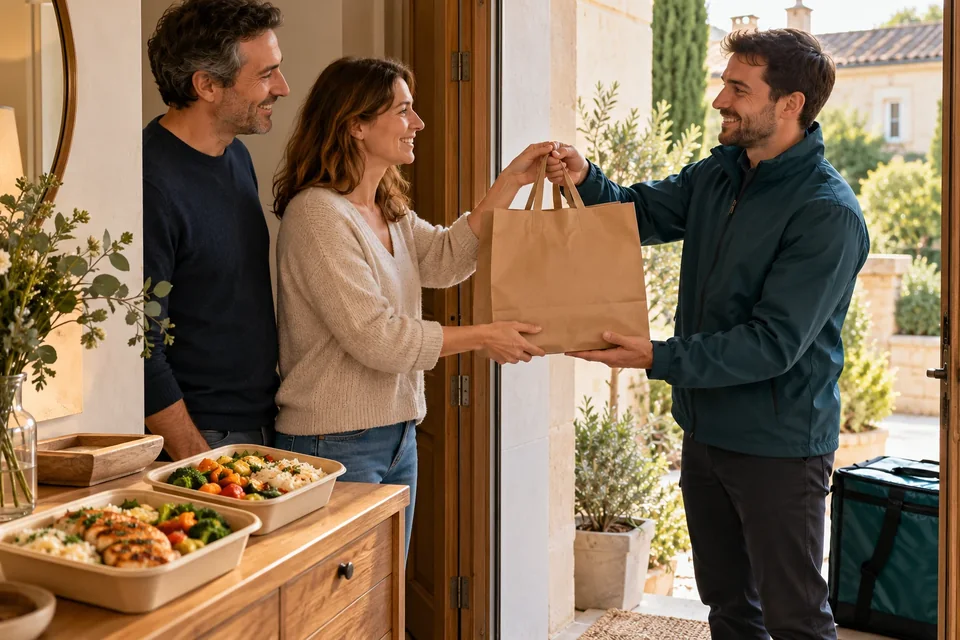
For meal delivery in Los Angeles the large American delivery apps cover the metropolis, among them DoorDash, Uber Eats and Grubhub. Drivers use cars, occasionally scooters or bikes in dense areas. Traffic, especially late in the afternoon, can double a journey, and the estimate shown is only an average.
Delivery-only kitchens, called ghost kitchens, have grown: these premises cook for several virtual brands without a dining room. For the customer, the brand chosen may have no shopfront, and the pickup address differs from a normal restaurant.
Food delivery in Los Angeles is rarely instant, and meals delivered across the freeways ride in the back seat for a while. Takeout from a restaurant ten minutes away can still arrive late at rush hour.
Service charges, delivery fees and the tip add up as in New York. A tip is expected and is usually raised for long distances, bad weather or a heavy order. In gated communities, give the gate code so the driver can reach the door.
Healthy and prepared meals: California’s wellness habit
Los Angeles is a testing ground for health-oriented prepared meals. Grain and vegetable bowls, pressed juices, plant-based dishes and gluten-free or low-carb menus are sent by the week, and many customers order several meals at once to store in the fridge and reheat.
These plans are convenient but call for vigilance. Labels such as gluten-free or high-protein do not carry the same weight at every supplier, and cross-contamination remains possible. For a specific health goal, weight loss or managing an illness, a dietitian or doctor should guide the choice.
Think about shelf life: a meal prepared for four days is not for the seventh. Check the date, the reheating method and your fridge temperature, and ask whether the packaging is recyclable, a criterion that matters to many residents.
Farmers markets and halls: the alternative to ordering in
Having food brought over does not replace the pleasure of a market. The Original Farmers Market, at Third Street and Fairfax Avenue, has existed since 1934: grocers, restaurants and shops share an open space with Mexican specialities, pizza and fresh produce. It is a good place to spot dishes to take away and reheat at home.
Downtown, Grand Central Market, opened early in the twentieth century, gathers food stalls, tacos, pupusas, sandwiches and stews. Several districts, Santa Monica included, host producers’ markets selling California fruit, vegetables and citrus.
Seasonal produce shapes local cooking: avocados, citrus, tomatoes, stone fruit and herbs. Prepared-meal firms that claim a local approach put these forward, so ask where the ingredients come from and how they are stored before the courier arrives.
Meals delivered to seniors and people with limited mobility
In a city built around the car, losing the ability to drive sharply limits access to groceries. Programmes that bring meals to older people exist, run by charities and by city and county services; they offer hot or chilled meals, sometimes adapted to a diet, depending on the age and situation of the person.
Eligibility rules, waiting lists and areas covered change from one programme to the next. Relatives living abroad can enquire by phone or email, preparing the address, age, dietary needs and health situation of the person concerned.
Private restaurants and caterers fill the gaps: some deliver stews by the week, others blended meals. Direct contact with the cook often settles textures and forbidden ingredients; for medical advice only a health professional counts.
Heat, wildfire season and wind: adapting orders to the climate
The climate is mild and dry, with very hot summers inland. In a heat wave, a meal left ten minutes on a doorstep can pass the safe temperature, so favour hand-to-hand delivery, an insulated bag or a precise time slot, especially for dishes with meat, fish or dairy.
Dry winds and fire risk can disturb traffic and, in some areas, cause precautionary power cuts. Keep a few simple meals in reserve and follow local instructions. In an evacuation or heavy smoke, postpone an order.
Winter is milder but rainy at times, and slick roads slow drivers. In any season, an order placed before the rush, between eleven and noon or before six in the evening, usually arrives faster.
When staying in the city, a few terms are enough: to go for takeaway, delivery fee, service fee, tip and curbside for kerbside handover. Give the floor and room number, and tell the hotel desk that an order is coming.
Check that your bank card is accepted by the app; some require a US phone number to reach the driver. If not, use the front desk or order directly from the restaurant. Kitchens often close early away from the main boulevards.
Finally, remember the distance. A restaurant that is next door on the map can be twenty minutes away at rush hour. Choosing a venue in your own district lowers the risk of a lukewarm meal.
Frequently asked questions
Which apps should I use for food delivery in Los Angeles?
DoorDash, Uber Eats and Grubhub cover the metropolis. Many restaurants also deliver themselves or take orders by phone, which helps with a special request.
Which districts are known for world cuisine?
Koreatown for Korean food, Thai Town for Thai dishes, Little Ethiopia on Fairfax Avenue, Glendale for Armenian, Westwood for Persian and the San Gabriel Valley for Chinese and Vietnamese.
Is tipping compulsory for a delivery driver?
Tipping is the custom in the United States. It is paid in the app or at handover, and people tend to add more for long distances, bad weather or a bulky order.
Are meals available for older people in Los Angeles?
Yes. Charities and city and county services offer home-delivered meals to seniors, with age, situation and area criteria that vary by programme.