
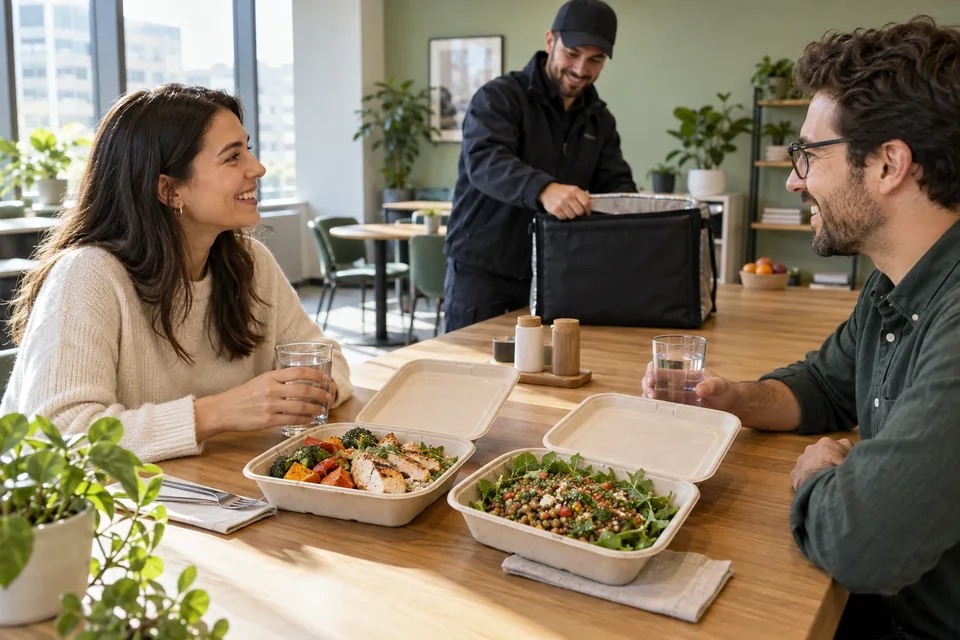
What fast food delivery means in practice
Fast food delivery means having burgers, fried chicken, kebabs, wraps, pizza slices or similar quick-service dishes brought to your address by a rider or driver after you order by phone, app or website. In the UK, Ireland and Canada the same thing is often called a takeaway; in the United States it is usually just "delivery".
Two models sit behind most orders. Some chains employ their own riders or run a branded app. Many independent shops, from the corner chicken counter to the late-night kebab house, instead list themselves on a delivery platform that supplies the courier, the payment system and the customer-service desk.
Quick-service food adapted early to home delivery because the menu is short, the recipes are standardised and a meal can leave the kitchen within minutes. The convenience is real. What is less obvious is how much of the final result depends on choices made before the order is placed: which outlet, which time of day, and how far the bag has to travel.
Waiting times and the evening rush
Delivered burgers and other quick meals arrive fastest outside the peaks. Friday and Saturday evenings, Sunday lunchtime, match nights and rainy days put pressure on kitchens and reduce the number of available couriers at the same moment, so estimates stretch and mistakes become more frequent.
A few habits shorten the wait. Choose an outlet close to home, because preparation time stays the same while the journey shrinks. Make sure the address is complete, with the door code, floor and a working phone number; a rider who has to hunt for an entrance can lose ten minutes. Check when the kitchen stops taking delivery orders, which is often earlier than the shop’s opening hours suggest.
The time shown in an app is an estimate, not a promise. If the order is for children or guests with a fixed bedtime or departure, add a margin or order a little ahead of the moment you want to eat.
Delivered fast food: what travels well and what does not
Not every item copes with a twenty-minute ride in a closed bag. A well-wrapped burger usually holds up for a while, though steam softens the bun. Chips lose their crunch quickly because trapped moisture turns the coating limp, while onion rings and breaded chicken tend to cope better. Ice cream and milkshakes melt, and fizzy drinks can leak.
Some simple tricks help once the bag arrives.
- Ask for sauces on the side so they do not soak the coating.
- Open the bag at once and let the steam out instead of leaving it sealed on the table.
- Crisp chips for a few minutes in a hot oven or air fryer, uncovered.
- Skip frozen desserts when the trip is longer than a quarter of an hour.
Items sold as wraps, kebabs or flatbreads are often the most forgiving, because the filling is held together by the bread. Pizza is a different story: a thin base can go soft, while a thick one travels better.
Allergens, hygiene and handling the bag
With fast food delivery, as at the counter, allergens are part of the menu. Wheat in buns and batter, milk in sauces, eggs in mayonnaise, sesame on buns, mustard and celery all appear regularly. Under UK and EU rules, food businesses must be able to tell you which of the fourteen listed allergens are in what they sell, and that includes orders placed remotely. Look for the allergen table before ordering and, if needed, message the outlet.
Cross-contact in shared fryers and on shared grills cannot be ruled out by any kitchen, so a person with a severe allergy should talk to the outlet directly and not rely on a filter in an app.
On hygiene, speed is the main protection. Hot food is best eaten soon after it arrives, and cold items such as salads, dips and desserts belong in the fridge if they are not eaten at once. A burger left in its bag for hours should be thrown away rather than reheated and trusted.
Lighter choices and special diets in delivered meals
Delivered quick-service food tends to be rich in fat, salt and sugar, but there is room to adjust without giving up the pleasure. A single patty instead of a double, a shared portion of chips, water in place of a sugary drink and a side salad all lower the load. Children’s menus are often more modest than adult ones.
Special diets are better served than they once were. Plant-based burgers and nuggets are now common, many independent shops advertise halal meat, and some outlets offer gluten-free buns. Availability changes a lot from one address to the next, so read the exact wording on the outlet’s page. A "vegetarian" label does not always mean the fryer is separate.
People following medical diets, for example for diabetes or kidney disease, should treat takeaway food as an occasional extra and discuss their plan with their own doctor or dietitian.
Choosing an outlet and ordering with fewer surprises
Ratings are useful, but the date of the latest reviews matters more than the overall score, because it shows whether standards have slipped. Confirm that the outlet delivers to your postcode at the time you want, and that the menu shown matches what the open kitchen can actually make.
Common slips are easy to avoid. Read the extras list before adding toppings, check the saved address, and open the bag in front of the rider if something looks wrong. For a missing item or a cold meal, report it in the app within a few hours and attach a photo; most platforms and chains handle refunds or credits through that route.
For burger delivery in particular, a chain’s app and an independent shop’s own site can quote very different totals for the same meal. Takeaway delivery from a neighbourhood grill may come with a bigger portion, while the national brand offers consistency. Whichever way you lean, delivered fast food and other fast-food orders rewards a little comparison before the first order.
Comparing two outlets for the same burger delivery over a fortnight is the quickest way to learn which one suits you.
Chains often run loyalty points and app-only deals, while independent shops may give better portions for the price when you phone or order through their own site. Trying both for the same dish over a couple of weeks shows which one suits your habits.
Frequently asked questions
Why does fast food delivery cost more than eating at the counter?
Because delivery fees, service charges and sometimes higher menu prices are added. Compare the final basket total, not the headline price of the meal.
How can I keep chips crisp after delivery?
Open the bag straight away and put the chips in a hot oven or air fryer for a few minutes, uncovered. A closed bag traps steam and softens the coating.
Can I order halal or vegetarian fast food for delivery?
Yes, many outlets offer both, but the range depends on the address. Read the description on the outlet’s page or ask when ordering, especially about shared fryers.
What should I do if my order is cold or incomplete?
Report it quickly through the app or the outlet’s customer service, with a photo if possible, so a refund or credit can be arranged.