
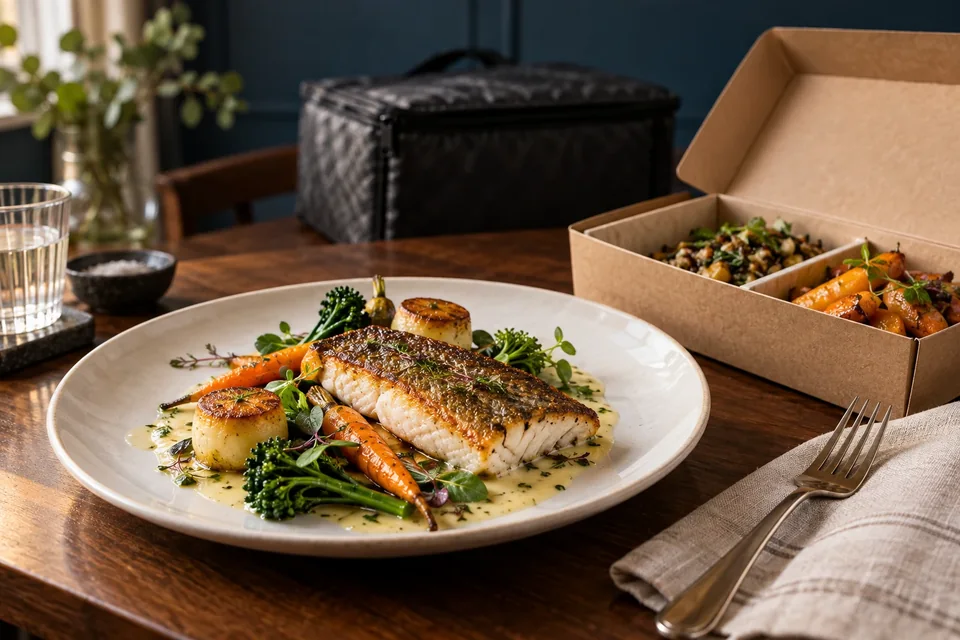
What balanced meal delivery means in practice
Balanced meal delivery means a service that cooks or assembles complete dishes and brings them to your home, presenting them as a sensible mix of starchy food, protein, vegetables and fats. In Britain and Ireland there is no legal definition of the word "balanced" on a menu, so the claim is the supplier’s own judgement. That is why the useful question is never whether a dish is labelled balanced, but what is actually on the plate and in the nutrition panel.
The balanced ready meals category is wide. It includes weekly subscription boxes of chilled ready meals, frozen ranges from freezer specialists, local caterers who cook to order, and restaurants that add a lighter section to a delivery menu. Each model has its own strengths, and the same word can describe very different food.
A balanced plate by the usual public-health yardstick
The reference most British households know is the Eatwell Guide, which shows roughly a third of food from starchy carbohydrates, a little over a third from fruit and vegetables, some protein, a small amount of dairy or alternatives, and only a little oil or spread. Applied to a delivered tray, it gives a quick visual test: is half the container vegetables or salad, or is it mostly pasta, rice and sauce?
Colour is a rough but helpful clue. A tray of beige food with a single green garnish rarely matches the guide, while a dish with pulses, several vegetables and a modest portion of wholegrain starch usually sits closer to it. Compare what the photo promises with the ingredient list, because styling can flatter a recipe.
Fats deserve a mention too. Olive or rapeseed oil in a tomato sauce is a different proposition from a cream-and-butter sauce, and the nutrition panel will show the difference in saturated fat. A balanced dish does not need to be fat-free; it needs the fat to come in a sensible amount and form, alongside plenty of fibre.
Reading the nutrition panel on home-delivered meals
Pre-packed balanced meals delivered to consumers must carry nutrition information, normally per 100 g and often per portion as well. Look at four figures first: energy, saturated fat, sugars and salt. A nutritionally balanced meal service will usually show the panel online, and many suppliers also use traffic-light colours, which make a fast comparison possible across brands even when portion sizes differ.
- Check whether the figures are per portion or per 100 g before comparing two dishes.
- Notice the salt value, since ready meals can be high in it even when they taste mild.
- Look for fibre, which tends to rise when pulses, vegetables and wholegrains are present.
- Read the first three ingredients, because they make up most of the recipe by weight.
Portion size in balanced meals delivered to your door
A dish can be well composed and still be wrong for the person eating it. A retired woman who walks little and a builder on a long shift do not need the same energy at dinner. Public guidance quotes average daily energy figures of about 2,000 kcal for women and 2,500 kcal for men, but these are averages for healthy adults and not targets for any individual.
When a service offers small, medium and large sizes, treat the choice as part of the balance. With balanced meal delivery, ordering a bigger portion of vegetables or a side salad is often easier than shrinking a heavy main course, and many kitchens will accommodate it.
Healthy home-delivered meals: fresh, chilled or frozen
Chilled ready meals taste closest to home cooking but have a short shelf life, often only a few days after delivery. Frozen balanced ready meals keep for weeks, which suits people who cannot shop often or who live alone and want flexibility. Recipe boxes sit in between, delivering ingredients to be cooked at home, which shifts effort onto the customer.
For a household that wants healthy home-delivered meals without cooking, the real comparison is between chilled convenience and frozen flexibility. Delivery windows, freezer space and the ability to skip a week matter as much as the nutrition table.
Dietary needs, allergens and balanced eating together
A well-balanced menu is not automatically safe for everybody. Anyone with a food allergy needs the full allergen information, which in the UK and Ireland covers fourteen named allergens, including milk, eggs, peanuts, gluten-containing cereals and sesame. Vegetarians and vegans should check how protein is supplied, since a meat-free dish can be low in protein if it relies on pasta and sauce alone.
People managing a health condition, such as diabetes or kidney disease, should follow the advice of their doctor or dietitian instead of assuming that any delivered meal fits. A general service cannot tailor food to a medical plan.
Balanced meal delivery and the language of marketing
Words such as clean, wholesome, light or fit are not regulated terms on a menu. Nutrition and health claims, on the other hand, are controlled: a pack can say "high in fibre" or "low in saturated fat" only if it meets set thresholds. Treat the regulated phrases as evidence and the loose adjectives as decoration.
- A single star ingredient on the front does not make the whole dish balanced.
- "No added sugar" says nothing about salt or fat.
- A photograph is not a portion guide.
Questions worth asking before the first order
Before committing to a weekly balanced meal delivery plan, ask whether the full nutrition and allergen details for each dish are visible before checkout, how the food is chilled in transit and what happens if you are out when the courier arrives. A good provider answers without fuss.
Try a small first order rather than a month’s plan. One week shows you how filling the meals are, whether the vegetables hold their texture after reheating, and whether the delivery slot genuinely suits your routine. Then adjust the mix before settling on a rhythm.
Keep a short note of what you ordered and how it went. After three or four deliveries a pattern appears: perhaps the fish dishes reheat well while the rice dishes dry out, or the lunch portions are generous but the evening ones leave you hungry. That personal record is worth more than any glossy menu, and it lets you ask the supplier for precise changes rather than general ones.
Households with several eaters can also split the plan, taking vegetable-rich dishes for adults and simpler versions for children, as long as every person’s allergen needs are checked dish by dish.
Frequently asked questions
Is there an official definition of a balanced meal for delivery services?
No. In the UK and Ireland the word is not defined for menus, so each supplier decides what it means. The Eatwell Guide offers a common reference for judging a plate.
What should I look at first on a nutrition label?
Start with energy, saturated fat, sugars and salt, then check whether the figures are per portion or per 100 g. Traffic-light colours, where shown, give a quick comparison.
Are frozen balanced ready meals as good as chilled ones?
They can be. Freezing keeps food for weeks, so nutrition is not the main difference. The deciding factors are taste, texture after reheating and how often you can receive deliveries.
Can balanced meals replace medical dietary advice?
No. A delivered meal is an ordinary food product. People with a health condition should follow guidance from their doctor or dietitian.