
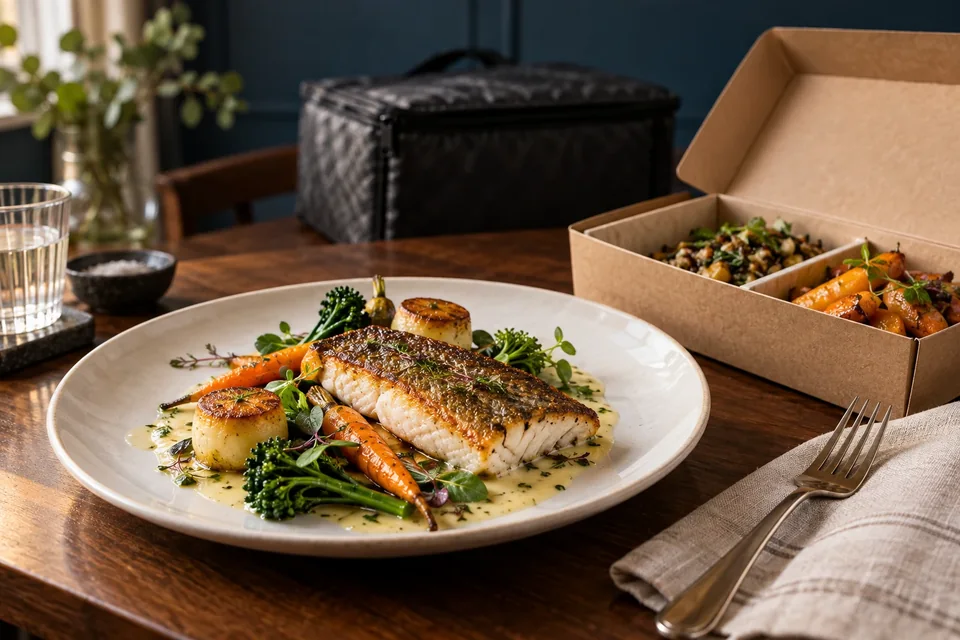
Meals on wheels Kópavogur: a town with its own service next to the capital
Meals on wheels Kópavogur is the municipal service, also called heimsendur matur, that brings a hot meal to residents who cannot cook for themselves. Alongside it sits a second world: dishes ordered from restaurants and shops through delivery apps. The town lies immediately south of Reykjavík and forms one continuous built-up area with it, yet it keeps its own rules, staff and online services.
It is Iceland’s second most populous municipality. Hamraborg is the administrative and cultural centre, Kársnes faces the sea, and newer residential areas such as Salir, Lindir and Vatnsendi climb the hillsides. Distances are short, but slopes and wind should not be underestimated.
For someone who has just moved in and wants home-delivered meals, the first question is which council they belong to, because a request for help goes to the authority of the place where they live.
Home support and meals on wheels Kópavogur: what the council covers
The council groups meals under a wider heading, home support. That includes help with daily living, housekeeping, reassurance during personal care and some light physical activity. It is aimed at people who live at home but are made vulnerable, in the short or long term, by frailty, disability, family circumstances, overload or illness.
The meals themselves are for people who cannot prepare food and also cannot go to a senior centre to eat. They are packed in trays and brought to the door around lunchtime.
The audience is therefore wider than elderly people alone. A person with a disability, an adult recovering from surgery or an exhausted parent after a difficult birth can fall within it, provided the council recognises the need.
A separate page for older residents lets you book an appointment with an adviser for information and help, a useful first contact before filing anything.
Applying through Minn Kópavogur or the service desk
Requests go through the council’s personal portal, Minn Kópavogur, or on a paper form handed in at the residents’ service desk, the þjónustuver. There are two forms, one for home support and one for delivered meals. Once the request arrives, the council assesses the need before processing it.
A few practical points when preparing an application:
- gather proof of identity and proof of residence in the municipality;
- describe plainly what prevents you from cooking, without exaggerating or playing it down;
- say whether a relative can help on days without a delivery;
- mention diets and allergies from the start.
The forms and menu headings are in Icelandic. Anyone who does not read the language will avoid mistakes by filling in the fields with a relative or friend.
Applicants for meals on wheels Kópavogur are well advised to book the adviser appointment first, since a conversation often clarifies which of the two forms is the right one and what evidence the council will want to see.
Home-delivered meals: order and cancellation deadlines, the day-before rule
The meals service works to precise cut-off times. From Monday to Thursday, orders and cancellations must reach the council before 15:00 the previous day. For Monday meals, the order or cancellation is made on Friday before 11:30.
These limits matter in three situations. When someone goes into hospital, deliveries must be suspended in time or trays will be prepared and left with no one to take them. When they come home, the restart should be arranged ahead. And for a trip or a stay with family, a simple cancellation prevents a pointless delivery.
The timetable describes a weekday operation, which leaves weekends to the person or their family. Keep portions in the freezer for those days, or order from a neighbourhood restaurant.
If a meal does not arrive or is incomplete, contact the council quickly with the date and expected time.
Families who plan around meals on wheels Kópavogur should treat the cut-off times as part of the service, much like a bus timetable: miss one and the change simply takes effect a day later.
Food delivery by app: Smáralind, Dalvegur and Engihjalli
Outside the council scheme, Wolt lists several businesses in the municipality, notably in Smáralind, the biggest shopping centre in the country, and on Dalvegur and Engihjalli. Residents can also order from restaurants in neighbouring Reykjavík where their address is covered.
The flow is the familiar urban one: enter your address, pick a venue, follow the courier. Evening hours are shorter than in a large European city, and the range of cuisines thins out beyond the commercial zones.
Many locals simply buy ready-cooked dishes at supermarkets and bakeries, which is handy when you get home late. In outlying residential streets, a short drive often beats waiting for a courier, especially when snow is piling up.
For people without the council scheme, this kind of food delivery is the practical route, and it can also fill the gaps on weekends when no municipal tray is brought round.
Everyday Icelandic cooking and takeaway food
Table habits in the town are those of the whole country. Fish, whether boiled, pan-fried or dried, remains central, served with potatoes and butter. Harðfiskur, dried fish eaten spread with butter, keeps for ages and travels without special care, which makes it a common snack.
Lamb, found in the traditional soup and in stews, is the other pillar, and dairy products such as skyr fill out breakfasts and snacks.
Many families of foreign origin live in Kópavogur, and they have brought Thai, Polish, Indian and Arab restaurants, often with takeaway. For halal or vegetarian food, phone and ask how meat and oils are handled instead of trusting a menu label.
A hot dish carried for more than half an hour in winter cools noticeably, and an insulated container makes a big difference.
Ready meals and baked goods from local bakeries are another easy fallback when the weather is bad.
Winter, transport and other help alongside delivered meals
Winters in the area are long and dark, and snow can block access to buildings on the hills. Delivery rounds allow for this, but an unusual delay is possible. Keep a few reserve dishes and tell the service when the entrance has been cleared.
The council also runs a transport service for older and disabled people who cannot use public transport or their own car. It can take them to leisure centres for seniors, where lunch is shared with others, a way to avoid eating alone over a tray.
Residents whose condition calls for an assessment of capacity and health with a view to a care home go through a separate assessment committee. It has nothing to do with meals, but it explains why a request for help can lead to several interviews.
None of these services replaces a doctor’s or dietitian’s advice on the diet of someone who is ill.
Frequently asked questions
Who can get meals on wheels in Kópavogur?
People who cannot prepare food and cannot eat at a senior centre because of frailty, disability or illness. The council assesses the need before accepting a request.
How do I apply for home-delivered meals?
Online through the personal portal Minn Kópavogur, or in writing at the residents’ service desk. One form covers delivered meals and another covers home support.
What is the cut-off for cancelling a meal?
Monday to Thursday, before 15:00 on the previous day. For a Monday meal, the cancellation must arrive on Friday before 11:30.
Can I order restaurant food delivery in Kópavogur?
Yes. Wolt lists venues in the municipality, notably at Smáralind. The range is narrower than in the centre of the neighbouring capital.