
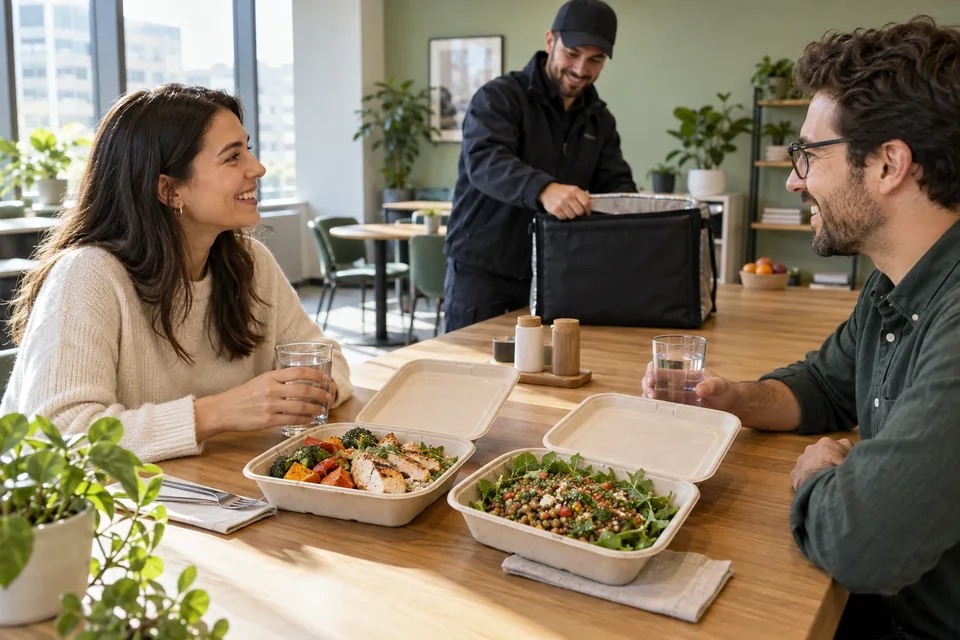
Meal delivery in Dublin: two worlds side by side
Meal delivery Dublin means every service that brings a ready-to-eat meal to the door of a home in the Irish capital: a restaurant dish ordered through an app, a subscription to prepared meals, or a regular meals-on-wheels round for people who no longer cook. Locals say takeaway for the first category and Meals on Wheels for the second, and the two almost never meet.
The first is commercial, fast and very present in the centre and the dense suburbs, with hot food arriving in roughly half an hour depending on the time and the weather. The second rests on neighbourhood associations, volunteers and kitchens that prepare balanced meals for a vulnerable public.
Anyone arranging food delivery in Dublin should start by naming the real need: a one-off dinner, regular meals for an older parent, a special diet or a family event. Each need points to a different kind of provider, with its own waiting times, zones and way of communicating.
Dublin 1, Dublin 4, Dublin 15: reading the address before you order
Dublin is located by numbered postal districts, from Dublin 1 north of the centre to Dublin 24 in the west, with even numbers south of the Liffey and odd numbers north of it. Every rider knows the convention, and it prevents many mix-ups between streets of the same name. On top of that comes the Eircode, a seven-character postcode unique to each address, which many apps now request to pinpoint a home.
The capital spreads across four local authorities: Dublin City Council, Fingal to the north, South Dublin to the west and Dún Laoghaire-Rathdown to the south-east. A restaurant near those boundaries may serve one side of a road and not the other, which surprises new arrivals.
- City centre and around Grafton Street: deliveries often arrive by bicycle or on foot.
- The coast, from Clontarf to Dalkey: service depends on the coast road and late-afternoon traffic.
- Western estates: addresses are scattered, and the Eircode is worth more than a description of the route.
Apps and platforms: food delivery in Dublin neighbourhood by neighbourhood
For meal delivery Dublin has several platforms, notably Deliveroo, Just Eat, Uber Eats and Wolt, with catalogues that change from one district to another. The principle is the same everywhere: enter your address, browse the venues available and follow the rider on screen. The list you actually see depends on where the home is, not on the reputation of the city.
A few habits help you choose without disappointment. Compare the displayed delivery zone with your Eircode rather than with the name of the area. Look at kitchen hours, which are often shorter than the dining-room opening times. Read the allergen notes before confirming the basket, and keep the option of collecting the dish yourself when the restaurant allows it.
Many independent outlets also have their own phone or online ordering. It is common to pay different terms for the same dish depending on the channel, which is worth checking for a regular order.
Meals on Wheels groups: help for older and recovering people
For older people or those convalescing, meals on wheels in Ireland runs through local Meals on Wheels groups, often staffed by volunteers and community associations, within a general framework linked to the public health system, the Health Service Executive. Access, delivery days and the contribution requested vary by area and by the group running the round.
An Irish producer of chilled and frozen meals for these organisations states that it serves Dublin among other places, but it does not deliver to individuals; partner groups bring the trays to homes. A family looking for home-delivered meals for a relative should therefore approach the local branch, the parish or the community centre in the neighbourhood first, or the hospital social work department after a stay in hospital.
On the first call it is worth asking about the days of delivery, whether an adapted menu exists (no added salt, modified texture, gluten-free), the procedure if the person is out, and who to contact if a meal does not arrive.
Coddle, boxty and fish and chips: what Dublin can deliver
Traditional Dublin cooking is sturdy and slow-cooked, which makes it forgiving in transit. Coddle, a stew of sausages, bacon, potatoes and onions, takes a journey well because it reheats without losing character, and Irish stew behaves the same way. Boxty, the potato pancake, loses crispness in a closed box but is perfectly acceptable if fried again for a few minutes. Soda bread travels perfectly and slices the next day.
Fish and chips is the trickiest case: the batter softens in the steam of the packaging. Chip-shop orders placed through meal delivery Dublin apps are best eaten within twenty minutes, or put briefly in a very hot oven. The small fried-fish shops of the centre, some of them established for decades, will offer reheating advice if asked. Seasonal treats such as barmbrack, the fruit loaf made around Halloween, are usually ordered ahead from local bakers.
Markets, producers and world kitchens across the city
Dublin does not live on fast food alone, and takeaway delivery in Dublin is not limited to chains. The Temple Bar food market runs on Saturdays in Meeting House Square and brings together producers, cheesemongers and caterers, while Moore Street keeps its open-air fruit and vegetable stalls. These places inspire small artisans who sell baskets and prepared dishes and sometimes deliver themselves within a limited radius.
The city also has great culinary diversity: Indian, Chinese, Italian, Lebanese, Polish or Nigerian. Communities who settled here created venues offering both dining in and delivery. For anyone following a precise diet, this variety opens up halal, vegetarian or gluten-free options, provided you ask the restaurant how preparations are kept separate. Neighbourhood bakeries and caterers often accept group orders for a birthday or a family gathering, with a longer wait than an app but more flexibility in the menu.
Rain, traffic, tipping and alcohol: customs around delivery in Dublin
Dublin’s oceanic climate brings frequent rain and wind, especially in autumn and winter. Riders deliver regardless, but waiting times stretch, and an insulated delivery bag remains the best ally of a hot dish. At rush hour traffic on the Liffey quays and towards the M50 slows journeys. On tipping, a small extra is common in restaurants where service is not already included; for a delivery it stays optional and is often paid through the app. The currency is the euro.
Alcohol is for adults only, and both restaurants and platforms may ask for identification at handover. Around St Patrick’s Day and the end-of-year holidays, orders multiply, so ordering early or choosing a quiet hour limits unpleasant surprises.
On allergens, restaurants in the European Union must be able to tell customers about the fourteen allergens that require declaration, and Ireland applies the rule under the national food safety authority. A good restaurateur can say whether a dish contains gluten, tree nuts, milk or celery. Useful questions before ordering: is the dish prepared in a kitchen that also handles the allergens concerned, how long can it be kept after delivery, will the container go in the microwave, and how do I contact the restaurant if it arrives lukewarm? Leftovers for a frail person should be chilled quickly and not kept beyond a day.
Frequently asked questions
Which apps offer food delivery in Dublin?
Several platforms operate in the capital, including Deliveroo, Just Eat, Uber Eats and Wolt. The choice depends on the address entered, so give your full Eircode before comparing restaurants.
How does meals on wheels work for an older person in Dublin?
Local Meals on Wheels groups, community associations or parishes provide it. Contact the branch in your neighbourhood to learn the delivery days, the menu and the conditions of access.
Can I order a meal without an Irish bank card?
Apps generally accept cards issued in other euro-area countries, along with some digital wallets. Payment on delivery depends on the restaurant and is not always offered.
Which Dublin dish reheats best?
Slow-cooked dishes such as coddle or lamb stew reheat very well over a gentle heat. Fried food is better eaten quickly or returned briefly to the oven.