
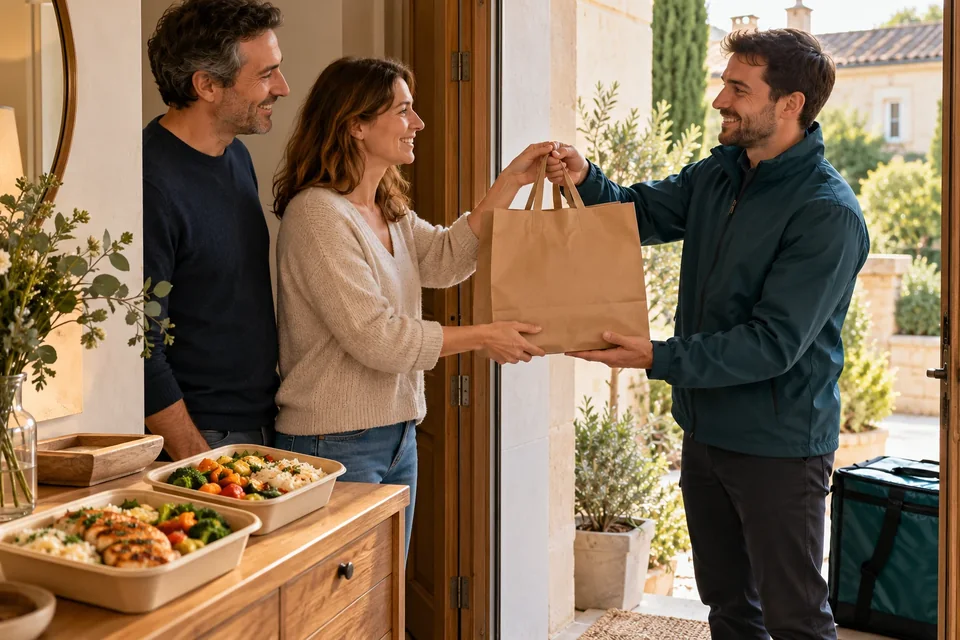
Meal delivery in Antananarivo: how people really order
Meal delivery in Antananarivo, which residents often shorten to Tana, means having a prepared dish brought to your home or office by a restaurant, a small caterer, a well-known local eatery or a hotel. It takes many forms: a phone call to a restaurant in the neighbourhood, a message on social media to a cook who prepares to order, or a mobile app that links customers and couriers.
For an English speaker, French is widely understood in restaurants, but Malagasy is the language of daily life. A few words help: sakafo is the meal, vary rice, hena meat and ravina leaves. Payment is most often in cash in ariary on delivery, even if mobile payment is spreading.
The city climbs over several hills at around 1,300 metres above sea level. Steep alleys in the Upper Town and low districts that flood in the rainy season explain a good deal about waiting times and about what it is realistic to order.
Which areas get the smoothest food delivery
For meal delivery in Antananarivo, business and residential districts such as Ankorondrano, Ivandry, Andraharo, Alarobia and Ambatobe gather restaurants, supermarkets and expatriate housing, and that is where delivery is quickest. The historic centre, around Analakely, Antaninarenina and Isoraka, has many small addresses, but traffic, crowded pavements and the climb to the Upper Town slow couriers down.
Further out, towards Ambohimanarina, Ankadimbahoaka, Anosibe or Ambohijanaka, the offer is often limited to neighbourhood vendors and cooks who deliver through a relative or a motorbike driver.
- North and north-east: many modern restaurants and dependable daytime delivery.
- Centre: great variety, but variable times at peak hours.
- South and suburbs: orders placed mostly by phone, with few areas covered by apps.
Always give a visible landmark such as a pharmacy, a school or a crossroads. Formal addresses count for less than reference points, and a courier circling for ten minutes ruins a hot plate.
Malagasy dishes that survive the ride
Highland cooking is built on rice served with a laoka, the side dish of meat, fish or vegetables. Romazava, a beef broth with greens and ginger, reheats very well and handles transport. Ravitoto, pounded cassava leaves cooked with pork, keeps for days and suits group orders. Henakisoa (pork), akoho sy voanio (chicken in coconut milk) and tsaramaso (beans) travel happily in plastic trays.
Vary amin’anana, rice cooked with brèdes mafana, is an office-lunch classic. By contrast, mofo gasy (small rice breads) and sambos (stuffed fritters) are best eaten warm rather than after a trip. Koba, a peanut and banana cake steamed in leaves, travels very well as a dessert or snack.
As for drinks, ranon’ampango, the toasted-rice water served at the end of a meal, is a fixture of Malagasy tables. Ask for it hot, because it does not travel cold.
Apps, motorbikes and direct calls for home-delivered meals
Several apps have tried to establish meal delivery in Antananarivo with mixed fortunes, and services appear, change or vanish fairly fast. Rather than rely on one, keep the numbers of two or three dependable restaurants and check at ordering time which platform is truly active in your area.
Many restaurants employ their own motorbike courier. Others work with independent drivers. In both cases, a message confirming the time and the total price, delivery charge included, prevents misunderstandings. Say whether you are paying cash and have small notes ready, because a rider may not be able to change a large one.
- Order home-delivered meals before 11:30 for lunch and before 18:30 for dinner.
- Avoid office closing time, when jams are heavy.
- Ask for a phone number that reaches the courier.
Rain, power cuts and water: three everyday constraints
For meals delivered in Tana, the rainy season counts, and so does the weather for any delivery service. It runs roughly from November to April, with late-afternoon storms that make streets slippery and journeys longer. In the southern-hemisphere winter, between June and August, evenings are cool and a delivered dish cools fast, so ask for insulated packing or a meal that can be reheated.
Power cuts, frequent in some neighbourhoods, complicate storage and reheating. If you receive several meals for the week, keep part of them cold in a cool box with ice packs and have a back-up way of cooking.
On water, choose bottled water opened in front of you. For raw vegetables, salads and fresh juice, ask how the produce was washed. A traveller or recent arrival does well to be cautious in the first weeks. If you suspect food poisoning, see a doctor.
Hotels, chefs and caterers: other ways to be served
Upmarket hotels and their restaurants sometimes offer takeaway, even food delivery in the vicinity. A large waterfront hotel in Antananarivo, for instance, mentions a takeaway service on its page while also listing traditional Malagasy dishes on its menu. That can be a practical answer for a business meal or for entertaining without cooking.
When hosting, home cooks and small caterers will lay out a buffet from family recipes: romazava, coconut chicken, vegetable salads and koba for dessert. Fix the menu, the number of guests, the delivery time and the tableware beforehand, and ask whether the supplier brings chafing dishes or whether you must provide a way to keep food warm.
Sunday is family and church day, so demand is strong: book several days ahead, especially around Christmas, New Year and 26 June, Independence Day.
Regular meals for seniors, convalescents and relatives abroad
In Madagascar, meals on wheels organised as in France or Britain are not the rule. Family solidarity remains the first support for older people, and many diaspora families look for a way to have a meal delivered to a parent who stayed in Tana. The answer usually runs through a trusted restaurant or cook, a weekly arrangement, or a family helper who cooks on site.
If you organise this from far away, appoint a local contact who takes delivery, checks freshness and reports back. Ask for well-cooked, simple Malagasy dishes and avoid raw produce. Soups, rice, cooked vegetables and a well-cooked protein are easier to digest. For a parent with diabetes or high blood pressure, speak to their doctor before changing the diet.
For ongoing meal delivery in Antananarivo, keep a record of payments and exchanges: a written message is worth more than memory if there is a disagreement. And remember that a provider may lack ingredients on some market days, so agree a substitute dish.
Frequently asked questions
Which Malagasy dishes are easiest to have delivered?
Romazava, ravitoto, coconut chicken, henakisoa and tsaramaso hold up well in trays. Fritters and small rice breads are better eaten warm and travel less well.
How do I pay for a delivery in Tana?
Payment is often in cash in ariary on receipt, sometimes by mobile payment. Have small notes ready and confirm the total price, delivery charge included.
Can I order for an elderly parent who stayed in Antananarivo?
Yes, through a trusted restaurant or cook, with a local contact who takes the meals and checks that they are fresh.
Are water and raw vegetables a concern?
Prefer bottled water opened in front of you and ask how raw vegetables are washed. When in doubt, choose well-cooked dishes.