
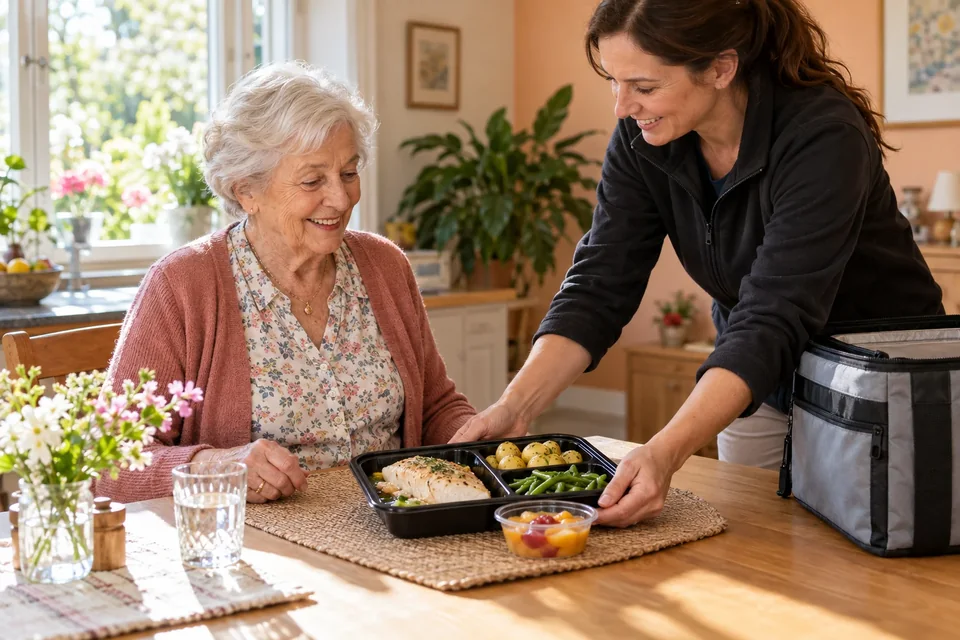
Meal delivery San José: what the phrase covers
Meal delivery San José means a ready-cooked dish, made by a neighbourhood soda, a restaurant, a professional kitchen or a weekly meal-prep business, being brought to your front door in the capital of Costa Rica. In Spanish the useful terms are comida preparada for the food itself, a domicilio for delivery and para llevar for takeaway.
People use it in very different ways. A team in Barrio Escalante orders lunch to the office, a family in Escazú has dinner arrive after a long day of working from home, a small kitchen drops off a week of portioned meals on Sunday evening, and an expatriate without time to shop asks for a traditional plate. The paragraphs below look at where food actually travels, what survives the trip, which apps are involved and how the weather changes the picture.
Where food delivery works in the valley
San José is the heart of a much larger urban area. Escazú, Santa Ana, Curridabat, Heredia and Alajuela all belong to the same daily commuting basin, so a kitchen rarely thinks in terms of the city limit. It delivers first to the streets closest to its stove.
A rough mental map helps when you decide where meal delivery San José kitchens will bring your order from:
- Barrio Escalante: a street of chef-led restaurants, craft beer bars and kitchens that also sell takeaway sets.
- Barrio Amón and Barrio Otoya: older districts of timber and brick houses, with cafés and small caterers.
- Paseo Colón, La Sabana and Rohrmoser: offices and embassies, and therefore a strong weekday lunch trade.
- Escazú and Santa Ana: affluent suburbs with many international restaurants and a large expatriate community.
Streets in Costa Rica are often described by landmarks instead of numbers, so give the courier a clear pin on the map and a landmark in plain words.
Casado, gallo pinto and other prepared meals that travel
The reference plate for food delivery is the casado: rice, black beans, salad, fried plantain and a portion of meat, fish or omelette. It fits naturally into a compartment tray, so nothing runs into anything else on the way, and the sauce from the beans does not soak the salad. Gallo pinto, the fried mixture of rice and beans, is a breakfast staple but is ordered at any hour.
Slow-cooked dishes also hold up well: olla de carne, a beef and root-vegetable stew, and sopa negra, a black bean soup served with egg. Prepared meals with lots of sauce suit a deep container; fried items, ceviche and anything with a crisp coating lose quality quickly in a closed box, so order them only from a kitchen close to home.
Whenever home-delivered meals are ordered for a group, variety matters less than reliability. If you are unsure what to choose, ask for the lunch special of the day. A busy soda will usually have one dish prepared in quantity, which is also the dish most likely to arrive in good condition.
Apps behind home-delivered meals in the capital
International platforms cover the metropolitan area. Rappi, for example, presents on its Costa Rican page restaurants, supermarkets, pharmacies and local shops delivered across the agglomeration, and Uber Eats also offers restaurant and grocery orders. What you see depends entirely on the address you enter, because each app lists only the places that really deliver to that spot.
Beyond the big names, food delivery also works through small businesses. Some independent kitchens manage their own couriers and take orders by WhatsApp or phone, often with a short daily menu posted the same morning. These home-delivered meals are paid for in different ways: by card in the app, by bank transfer or in cash at the door. Check the delivery fee and the estimated time before confirming, as both change with distance, demand and weather. A minimum order is common, so a shared order with a colleague or neighbour can make a small meal worthwhile. Keep the courier’s phone number open, because many addresses are found by calling.
Traffic, the rainy season and timing
The traffic jam, known locally as the presa, is a constant topic in the capital. At peak hours a journey of a few kilometres can take twice as long, which is one reason motorbike couriers dominate. A weekday driving restriction based on number plates applies in the central area, which pushes more deliveries onto two wheels.
The year divides roughly into a drier season from about December to April and a wetter one for the rest of the year, with the heaviest showers usually in the afternoon. For meal delivery San José in the wet months, anyone planning an evening order in the wet months is better off ordering a little earlier, before the afternoon downpour slows the roads, and asking for lids that seal properly.
Support for older relatives and home-delivered meals
Council-organised meals on wheels, as known in Britain or Ireland, are not widespread in Costa Rica. Older residents of San José more often rely on family, day centres, residential homes and charitable associations, and sometimes on care networks linked to social security. Access depends on each person’s situation and should be discussed directly with the relevant service.
For a relative abroad who wants to help a parent in the capital, the most common solution is practical: arrange a regular delivery from a trusted soda or caterer close to the parent’s home, agree the days in advance and ask the kitchen to call the neighbour or caretaker on arrival. Many cooks are happy to pack a portion for the evening in a separate container, labelled with the day, so that the parent does not have to decide what to heat when tired.
Heat, allergens and storing prepared meals
Cooked food tolerates heat badly, and Costa Rica is warm for much of the year. Prepared dishes should not stay at room temperature for more than about two hours; after that, put them in the fridge. Cooked rice deserves special care: cool it quickly, keep it chilled and reheat it until it is steaming hot.
On allergens, be careful with meat-based stocks, industrial sauces and fried foods cooked in shared oil. Say clearly what you cannot eat when you order, because casado delivery looks simple but the side dishes are sometimes cooked with meat, and call the kitchen if the answer in the app is vague. If a box arrives warm, leaking or damaged, do not eat it. Leftovers should go into shallow containers so that they cool faster, and soup is best reheated only once. Vegetarians and people avoiding pork or lard should ask directly, since beans are often cooked with meat or fat.
Frequently asked questions
What is the Spanish term for meal delivery in San José?
Most people say comida a domicilio or simply a domicilio. Comida preparada refers to the cooked meal itself and para llevar means takeaway.
Which dish is the safest choice for delivery?
The casado is the usual answer: rice, beans, salad, plantain and a main item sit side by side in one tray and survive the journey well.
Are there council meals on wheels in San José?
The British-style municipal service is uncommon. Older people tend to depend on family, day centres, associations and care networks, so ask the relevant local service about what applies.
Does rain really affect delivery times?
Yes. Afternoon downpours in the wet months and the daily traffic jams can add considerable waiting time, so order earlier than you normally would.